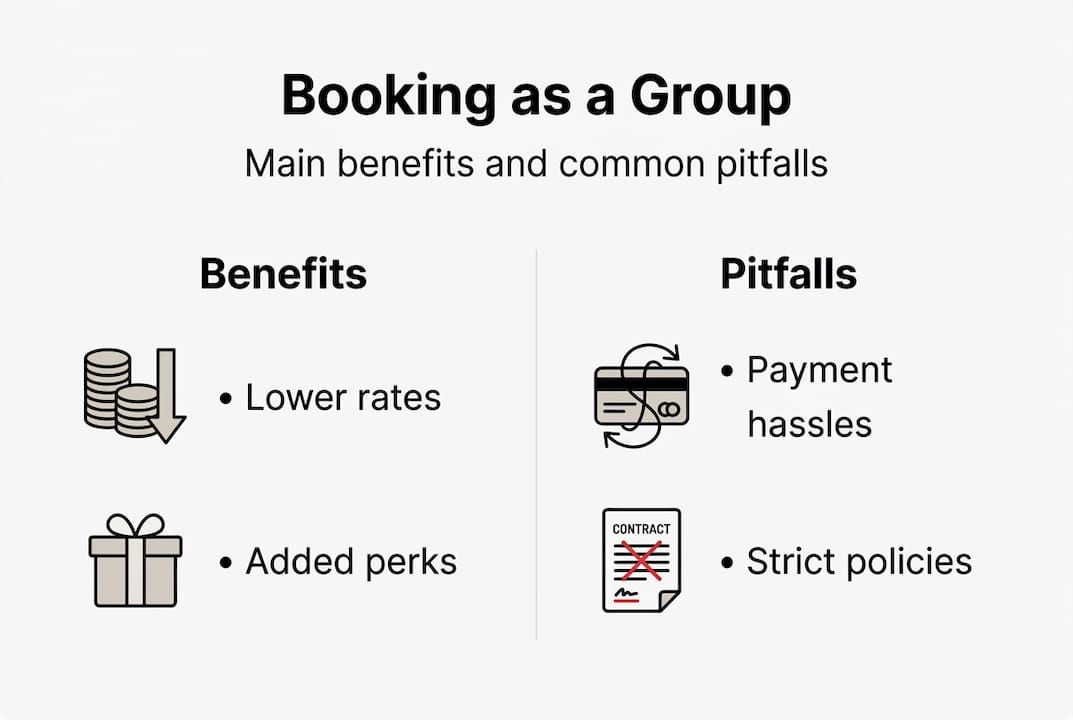
Group bookings typically involve reservations for 8 or more travelers with a designated lead organizer.
Effective planning includes early headcount confirmation, direct provider communication, and clear role assignments.
Understanding policies on deposits, cancellations, and flexibility helps avoid costly surprises and delays.
Organizing group travel sounds exciting until the email chains start multiplying, someone asks about refunds, and nobody agrees on dates. Whether you’re coordinating a family reunion, a corporate retreat, or a sports team tournament, the logistics can spiral fast. The good news is that group bookings follow a predictable structure, and once you understand the rules, you can cut costs, avoid headaches, and actually enjoy the process. This guide walks you through everything: what group booking means, how to secure the best rates, what the fine print really says, and how to keep your group on track from start to finish.
Key Takeaways
Point
Details
Group booking basics
Understand what qualifies as a group and the core responsibilities of group leaders.
Key benefits and risks
Group bookings offer discounts but require careful coordination to avoid pitfalls.
Efficient booking steps
Follow a step-by-step process for research, communication, and payments.
Policy awareness
Always review and negotiate payment, modification, and refund terms up front.
Pro planning tips
Smart leaders set clear roles and use digital tools to make group travel a breeze.
The basics of group travel bookings
With that context in mind, let’s clarify what group travel booking actually involves. At its core, a group booking is a reservation made for multiple travelers under a single agreement, usually with one person acting as the lead guest. That lead guest is responsible for coordinating with the hotel, airline, or tour operator and is often the one who signs contracts and manages deposits.
Most providers define a group as 10 or more travelers, though some hotels set the threshold at 8 rooms. According to this guide to group travel, the exact number varies by property and destination. Airlines typically require a minimum of 10 passengers traveling on the same itinerary to qualify for group fares.
Group bookings show up in many scenarios:
Family reunions: Extended families booking a block of hotel rooms or vacation rentals
Corporate travel: Companies booking flights and accommodations for conferences or team offsites
Sports teams: Teams and their supporters traveling together for tournaments or competitions
School and educational trips: Student groups requiring coordinated lodging and transport
Wedding parties: Couples securing room blocks for out-of-town guests
A key term you’ll encounter is room block: a set of rooms reserved under a group agreement, often at a negotiated rate. The hotel holds these rooms until a release date, after which unsold rooms go back to general inventory. Missing that release date can cost your group significantly.
For anyone planning family travel, understanding these mechanics early prevents costly surprises. The lead guest role carries real responsibility, so it’s worth choosing someone organized and available to manage vendor communication throughout the process.
The lead guest isn’t just a name on a contract. They are the single point of contact who keeps the booking alive, manages deadlines, and ensures the group’s needs are communicated clearly to every provider.
Benefits and pitfalls of booking as a group
Now that you know what group booking is, let’s look at the pros and cons before you start. The appeal of group travel is real: providers offer meaningful incentives to fill rooms and seats in bulk. But the coordination challenges are just as real, and ignoring them upfront leads to frustration.
Factor
Benefit
Potential pitfall
Pricing
Discounted group rates
Non-refundable deposits
Perks
Free rooms, upgrades, amenities
Perks tied to minimum attendance
Coordination
Single point of contact
Miscommunication among members
Payments
Centralized billing
Uneven contributions or late payments
Flexibility
Negotiable terms
Rigid modification policies
Group rates typically run 10 to 30 percent below standard rates, and many hotels throw in extras like complimentary meeting space, welcome receptions, or one free room for every 20 booked. These benefits of group offers can add significant value when negotiated well. The NYTimes group trip tips recommend treating your group’s business as leverage: the more rooms you commit to, the more bargaining power you hold.
The pitfalls, though, are worth taking seriously. Payment collection is one of the biggest pain points. When 20 people owe money at different times, tracking who paid what becomes a part-time job. Miscommunication about costs, room types, or itinerary changes can create conflict that derails the whole trip.
To coordinate travel logistics effectively, assign roles early. One person handles vendor communication. Another manages the money. A third keeps the group chat organized. Dividing responsibilities prevents any single person from burning out.
Pro Tip: Ask the hotel or tour operator for a “one free per X” deal in writing before you sign anything. This is standard practice in group bookings and can save the group hundreds of dollars on the lead guest’s accommodation.
Step-by-step: How to book group travel efficiently
Once you weigh the advantages and drawbacks, you’re ready to dive in. Here’s how to tackle group booking step by step.
Lock in your headcount and dates first. Nothing moves forward without these two pieces of information. Set a firm deadline for RSVPs and stick to it. Providers won’t hold space indefinitely.
Choose your destination and accommodation type. Decide whether you need a hotel room block, a vacation rental, a resort buyout, or a cruise. Each has different booking processes and timelines.
Contact providers directly for group quotes. Many hotels have a dedicated group sales department. Call or email them directly rather than booking through a general consumer site. You’ll get better rates and more flexibility.
Compare group booking platforms. Sites that specialize in group travel can aggregate quotes and simplify the process. These platforms often have pre-negotiated rates and can save time on research.
Review and sign the group contract. Read every clause. Pay attention to the release date, minimum room commitments, and cancellation terms before anyone signs.
Set up a payment system. Use a shared platform or app to collect contributions. Transparency here prevents disputes later.
Communicate the itinerary clearly. Share a single document with all booking confirmations, check-in details, and contact information. Must-have travel apps can centralize this for the whole group.
A solid workflow for group booking keeps everyone informed and reduces the number of “what time do we check in?” messages you’ll receive. The step-by-step group booking process from Condé Nast Traveler also emphasizes confirming all details in writing, not just verbally.
Pro Tip: Send a single “trip brief” document to every group member at least two weeks before departure. Include the hotel address, check-in time, emergency contacts, and a packing note. One document beats 40 individual text messages.
Understanding policies, payments, and flexibility
Booking a group is only half the battle. The rules on payments and changes can make or break your plans. Group contracts come with specific financial terms that differ significantly from standard individual bookings, and understanding them protects your group’s money.
Hotels and travel platforms often require non-refundable deposits for group bookings, sometimes as high as 25 to 50 percent of the total cost. These deposits are due at signing and are rarely returned if the group cancels.
Here’s a quick comparison of common policy types:
Policy type
Deposit required
Refundable?
Modification allowed?
Non-refundable
Yes (25-50%)
No
Limited
Partially refundable
Yes (10-25%)
Partial, up to X days
Yes, with fees
Flexible group rate
Yes (10%)
Yes, within window
Yes
Attrition-based
Yes
Partial
Depends on contract
Key terms to know:
Attrition clause: If your group doesn’t fill the minimum number of rooms, you may owe a penalty for the unused rooms
Release date: The date by which unbooked rooms in your block are released back to general inventory
Cutoff date: The last day group members can book at the negotiated rate
Force majeure: A clause that may excuse cancellation due to extraordinary events like natural disasters
Always ask what flexibility is available before you sign. Some providers will allow you to reduce your room block by a small percentage without penalty, which is a valuable buffer if attendance drops. Reviewing the refund policy details for any platform you use is essential before committing funds. Additional group booking tips from Booking.com highlight the importance of negotiating modification windows upfront.
Why most group bookings fail: What planners overlook
Here’s the uncomfortable truth: most group bookings don’t fail because of bad hotels or expensive flights. They fail because of people. Specifically, they fail because the planning process becomes a democracy when it needs a leader.
Decisions-by-committee are expensive. Every round of “let me check with the group” delays the booking, and providers raise rates or reduce availability in the meantime. We’ve seen groups lose negotiated rates simply because they couldn’t confirm a headcount within 48 hours.
The other silent killer is unclear financial expectations. When people don’t know the exact cost upfront, they hesitate, and hesitation creates attrition. Set a firm per-person price early, communicate it once, and give a payment deadline with consequences.
Using streamlined workflows shifts the dynamic from reactive to proactive. Manage by exception: assume everyone is in until they opt out, not the other way around. This one mindset shift alone can save weeks of back-and-forth and thousands of dollars in lost opportunities.
Plan your next group adventure with Around Travel
Ready to put efficient group travel booking into action?
Around Travel makes group travel booking straightforward, whether you’re organizing 10 travelers or 100. The platform brings together hotels, flights, tours, and car rentals in one place, so your group doesn’t have to juggle multiple vendors. You can compare options, review real traveler feedback, and lock in competitive rates without the usual back-and-forth. For added peace of mind, Around Travel’s refunds and flexibility policies are clearly outlined, so your group knows exactly what to expect if plans change. Start planning your next group trip today and turn what’s usually a stressful process into something your whole group actually looks forward to.
Frequently asked questions
What qualifies as a group booking for most hotels?
Group bookings typically start at 8 rooms, though many hotels set the threshold at 10 or more. Always confirm the minimum with the property directly, as policies vary widely.
Can you negotiate rates or perks when booking as a group?
Yes, and you should. Negotiating group perks such as free rooms is standard practice, and most hotels expect it. The larger your group, the more leverage you have to request upgrades, complimentary amenities, or discounted food and beverage packages.
What are common payment terms for group travel?
Deposits and staged payments are standard for group bookings, with initial deposits often non-refundable. Final payment is typically due 30 to 60 days before arrival, depending on the provider.
How can group organizers avoid communication breakdowns?
Using digital tools and clear coordination improves planning significantly. Assign one person to manage all vendor communication, use a shared document for trip details, and set firm response deadlines to keep the group moving forward.
An avid traveler and seasoned writer who has journeyed across more than 40 countries, sharing his unique experiences and insights with a growing audience of adventure seekers and travel enthusiasts. With a passion for discovering hidden gems and immersing himself in diverse cultures, Jonas's travel blog combines practical tips, stunning photography, and captivating storytelling. Whether he's navigating bustling city streets or exploring remote landscapes, Jonas offers readers an authentic glimpse into the world's most fascinating destinations, inspiring them to embark on their own unforgettable journeys.
Providing You With Access To The Top Travel Destinations. Book Now and Enjoy!
TESTIMONIALS
Travelers Reviews
Planning a trip used to be a stressful event, until I found Around
Travel. The website made everything so easy and convenient and really has made
travelling a relaxing experience. I highly recommend using them.
Sam Wistan Marketing Consultant, USA
I travel a lot for business and making reservations used to take up so
much time. Around Travel offers me quick access to all my booking needs.
Jonas DuPont Investment Advisor, London
I am a spur of the moment type of girl and I like to book trips at a
whim. Around Travel always has great deals and options for me to choose from.