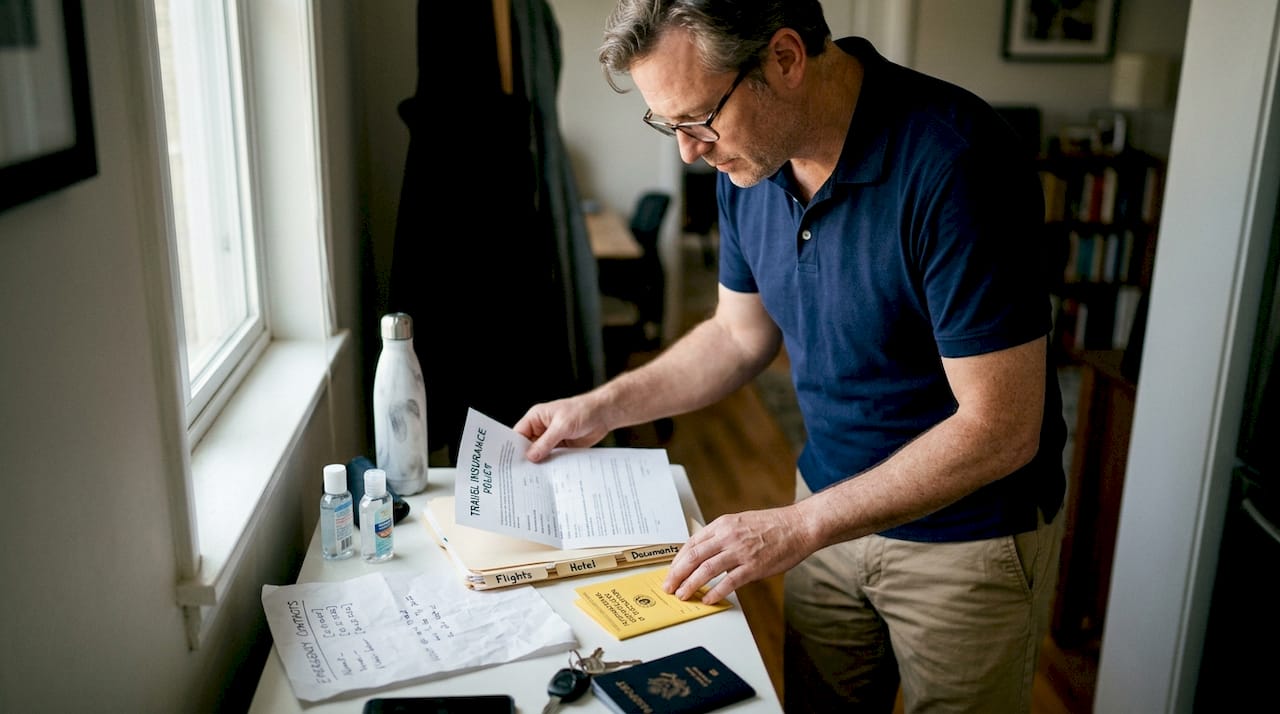
Starting travel planning 6 to 12 months early ensures all documents and permits are secured on time.
Travelers should carry both physical and digital copies of essential documents for security and ease of access.
Proper health preparation, including vaccinations and travel insurance, is critical to avoid emergencies abroad.
You packed everything, double-checked your bag, and arrived at the airport with time to spare. Then you realize your passport expires in four months, and your destination requires six. That single oversight can cancel an entire trip. Research consistently shows that travelers who follow a structured checklist report far fewer last-minute emergencies and significantly less pre-departure stress. This guide walks you through a complete, evidence-backed travel planning checklist built for both leisure and adventure travelers. Whether you are heading to a beach resort or a remote mountain trail, these steps will help you stay organized, stay legal, and actually enjoy the journey.
Key Takeaways
Point
Details
Start early
Begin travel planning 6–12 months before your departure to avoid surprises.
Double-check documents
Ensure all passports, visas, and travel papers are valid and accessible in both paper and digital form.
Prioritize health and safety
Schedule health checks, obtain vaccines, and secure travel insurance well before you leave.
Pack with purpose
Use a clear, concise packing list tailored to your trip type—whether leisure or adventure.
Remain adaptable
Update your checklist for special needs such as kids, pets, or unique destinations.
Set your travel foundations
Every smooth trip starts months before you leave home. For international travel, experts recommend beginning your research and bookings 6 to 12 months ahead, especially if your destination requires visas, permits, or specific vaccinations. Waiting until the last few weeks almost always means paying more for flights and scrambling for documents.
Here is a numbered framework to get your foundations in place:
Choose your destination and travel dates. Lock these in first. Everything else depends on them.
Set a realistic budget. Include flights, accommodation, daily expenses, insurance, and a 15% buffer for surprises.
Book flights and hotels early. Prices for international routes typically rise sharply within 90 days of departure.
Check government travel advisories. The State Department checklist outlines a clear 5-step process every international traveler should follow.
Confirm visa and entry requirements. Some countries require visas that take 4 to 8 weeks to process.
Review health entry requirements. Several destinations still require proof of specific vaccinations at the border.
For families coordinating multiple schedules and needs, a shared planning document or a collaborative app can prevent miscommunication. Our family trip planning guide breaks this down further, and if you want a repeatable system, the vacation planning workflow article covers automation tools that save hours of back-and-forth.
Pro Tip: Use a shared Google Doc or a dedicated travel app to assign tasks to each traveler in your group. Explore the best travel planning apps to find the right tool for your style.
“The biggest mistake travelers make is assuming they have more time than they do. A permit or visa that takes six weeks to process does not care about your departure date.” — Experienced international travel coordinator
Starting early is not about being overly cautious. It is about keeping your options open and your stress low.
Prepare your documents and legal requirements
Once your destination and travel window are set, you will need to handle the essential paperwork for a smooth border crossing. Missing or mismatched documents are among the top reasons travelers are delayed or turned away at customs.
Here is your core document checklist:
Passport valid for at least 6 months beyond your return date
Visas (check if eVisa options are available through our eVisa guide)
Printed itinerary including hotel addresses and flight confirmations
Travel insurance policy with emergency contact numbers
Immunization records if required by your destination
International driver’s license if you plan to rent a vehicle
Minor travel consent letter if traveling with children without both parents
Pet health certificate and rabies certificate if traveling with animals
One real-world scenario worth noting: a traveler books a flight under a nickname but their passport shows a full legal name. CBP advises matching ticket names exactly to travel documents and checking country-specific entry rules before departure. A single mismatched letter can trigger a secondary screening or a denied boarding.
For detailed guidance on visa and travel documentation, including country-specific requirements, it is worth reviewing the full requirements well in advance.
Pro Tip: Store one set of physical photocopies in a separate bag from your originals, and keep digital scans in a secure cloud folder. If your wallet is stolen, you will still have access to everything you need to prove your identity and continue your trip.
Last-minute document issues do happen. If your passport is expiring soon, many passport agencies offer expedited processing for an additional fee. Act on this the moment you book, not the week before you fly.
Health, safety, and insurance essentials
With your travel documents secure, the next step is protecting your health and safety on the road. This is the area most travelers underestimate, often because the consequences only appear after departure.
The CDC recommends scheduling a pre-travel consultation with your doctor or a travel health clinic at least 4 to 6 weeks before you leave. Some vaccines require multiple doses spread over several weeks, so waiting until the last minute simply does not work.
Here are the key health steps in order:
Schedule a travel health appointment 4 to 8 weeks before departure.
Review destination-specific vaccines such as hepatitis A, MMR, typhoid, and yellow fever.
Ask about malaria prevention if traveling to sub-Saharan Africa, Southeast Asia, or parts of Latin America.
Assemble a travel health kit with prescription medications, pain relievers, antidiarrheal medicine, bandages, and rehydration salts.
Confirm your insurance coverage for international medical care.
Your standard U.S. health insurance plan almost certainly does not cover emergency care abroad. A dedicated travel insurance policy typically covers emergency evacuation, hospitalization, and trip cancellation, which can each run into tens of thousands of dollars without coverage.
Here is a quick emergency reference list to keep accessible during your trip:
Local emergency number at your destination
Nearest U.S. embassy or consulate contact
Your insurance provider’s 24-hour international line
A copy of all prescription names and dosages
Blood type and allergy information
For broader trip health and insurance tips, reviewing your coverage before you leave can prevent a medical emergency from becoming a financial one as well.
Packing and preparation for all journey types
Once health and safety are addressed, you can focus on what goes into your suitcase and what stays behind. The biggest packing mistake most travelers make is overpacking for leisure and underpacking for adventure.
Packing light is not just a preference, it is a strategy. Travel expert Rick Steves advocates for a carry-on only approach built around a capsule wardrobe: neutral colors, mix-and-match pieces, and fabrics that dry quickly. Adventure travel, on the other hand, requires specialized gear, and the State Department advises checking permits and gear months ahead for high-risk or remote destinations.
Here is a side-by-side comparison to help you decide what to bring:
Category
Leisure travel
Adventure travel
Clothing
5 to 7 mix-and-match pieces
Moisture-wicking, layered, activity-specific
Footwear
2 pairs max
Broken-in hiking boots plus sandals
Tech
Phone, charger, adapter
GPS device, satellite communicator
Safety
Basic first aid kit
Full wilderness first aid kit
Documents
Standard travel docs
Permits, park passes, emergency contacts
Extras
Lightweight day bag
Trekking poles, water filter, headlamp
Items travelers consistently forget for both trip types include:
Portable power bank for long travel days
Photocopies of all documents stored separately from originals
Snacks for transit especially on long-haul or connecting flights
Medication in carry-on luggage never in checked bags
Local currency for arrival before you find an ATM
For families, the family packing checklist covers child-specific items in detail. If you are planning a quick international getaway, a streamlined packing list can make the difference between a relaxed departure and a frantic one.
Pro Tip: Wear your bulkiest shoes and heaviest jacket on the plane to free up bag space. A slim money belt worn under your clothes is one of the most effective ways to protect cash and cards in crowded destinations.
Why most travel checklists fail and how to plan smarter
Here is what most checklist articles will not tell you: having a checklist is not the same as using it well. The travelers who still end up stranded at gates or turned away at borders are often the ones who checked every box without thinking critically about edge cases.
Standard checklists rarely account for traveling with minors, bringing pets across borders, visiting countries under travel advisories, or navigating destinations with sudden policy changes. These are exactly the situations where preparation either saves you or costs you.
The best travelers we have seen treat their checklist as a living document. They update it after every trip, adding the things that nearly went wrong. They also ask recent travelers, not just travel blogs, about current conditions. A hiking permit policy that changed three months ago will not show up in an article written last year.
Packing light is also about more than luggage weight. When you are not dragging a heavy bag through an airport, your mental energy stays focused on what matters. Simplifying your smarter travel prep process reduces decision fatigue before you even board.
Triple-check document validity. Digitize everything. Build in a backup plan for your backup plan. That mindset is what separates a genuinely smooth trip from one that just got lucky.
Simplify your next trip with Around Travel
You now have a solid framework covering every stage of trip planning, from early research to packing strategy. The next step is putting it into action without juggling a dozen separate platforms.
Around Travel brings your entire travel checklist to life in one place. Need transportation sorted before you land? You can rent a car directly through the platform or book a taxi for seamless airport transfers. From flights and hotels to tours and destination guides, Around Travel handles the logistics so you can focus on the experience. Start your next trip the right way at aroundtravel.net.
Frequently asked questions
What is the most commonly forgotten travel document?
Travelers most often forget to check passport expiration and secure required visas. The State Department recommends confirming your passport is valid for at least 6 months past your return date before booking any international trip.
How far in advance should I start travel planning?
Experts recommend starting international travel planning at least 6 to 12 months in advance to secure flights, permits, and required documents without rushing.
What vaccines are necessary before traveling abroad?
Common travel vaccines include hepatitis A, MMR, and typhoid. The CDC emphasizes a pre-travel health consultation to assess your specific destination risks and vaccination needs.
What extra steps are needed for adventure travel?
Adventure travel requires advance permits, specialized gear checks, and sometimes medical clearance. The State Department advises confirming gear readiness and permit availability months before your departure date.
Why do I need both paper and digital copies of documents?
Carrying both formats protects you if your phone dies or is stolen. CBP recommends keeping duplicates in separate locations as a standard security measure that also speeds up border crossings.
An avid traveler and seasoned writer who has journeyed across more than 40 countries, sharing his unique experiences and insights with a growing audience of adventure seekers and travel enthusiasts. With a passion for discovering hidden gems and immersing himself in diverse cultures, Jonas's travel blog combines practical tips, stunning photography, and captivating storytelling. Whether he's navigating bustling city streets or exploring remote landscapes, Jonas offers readers an authentic glimpse into the world's most fascinating destinations, inspiring them to embark on their own unforgettable journeys.
Providing You With Access To The Top Travel Destinations. Book Now and Enjoy!
TESTIMONIALS
Travelers Reviews
Planning a trip used to be a stressful event, until I found Around
Travel. The website made everything so easy and convenient and really has made
travelling a relaxing experience. I highly recommend using them.
Sam Wistan Marketing Consultant, USA
I travel a lot for business and making reservations used to take up so
much time. Around Travel offers me quick access to all my booking needs.
Jonas DuPont Investment Advisor, London
I am a spur of the moment type of girl and I like to book trips at a
whim. Around Travel always has great deals and options for me to choose from.