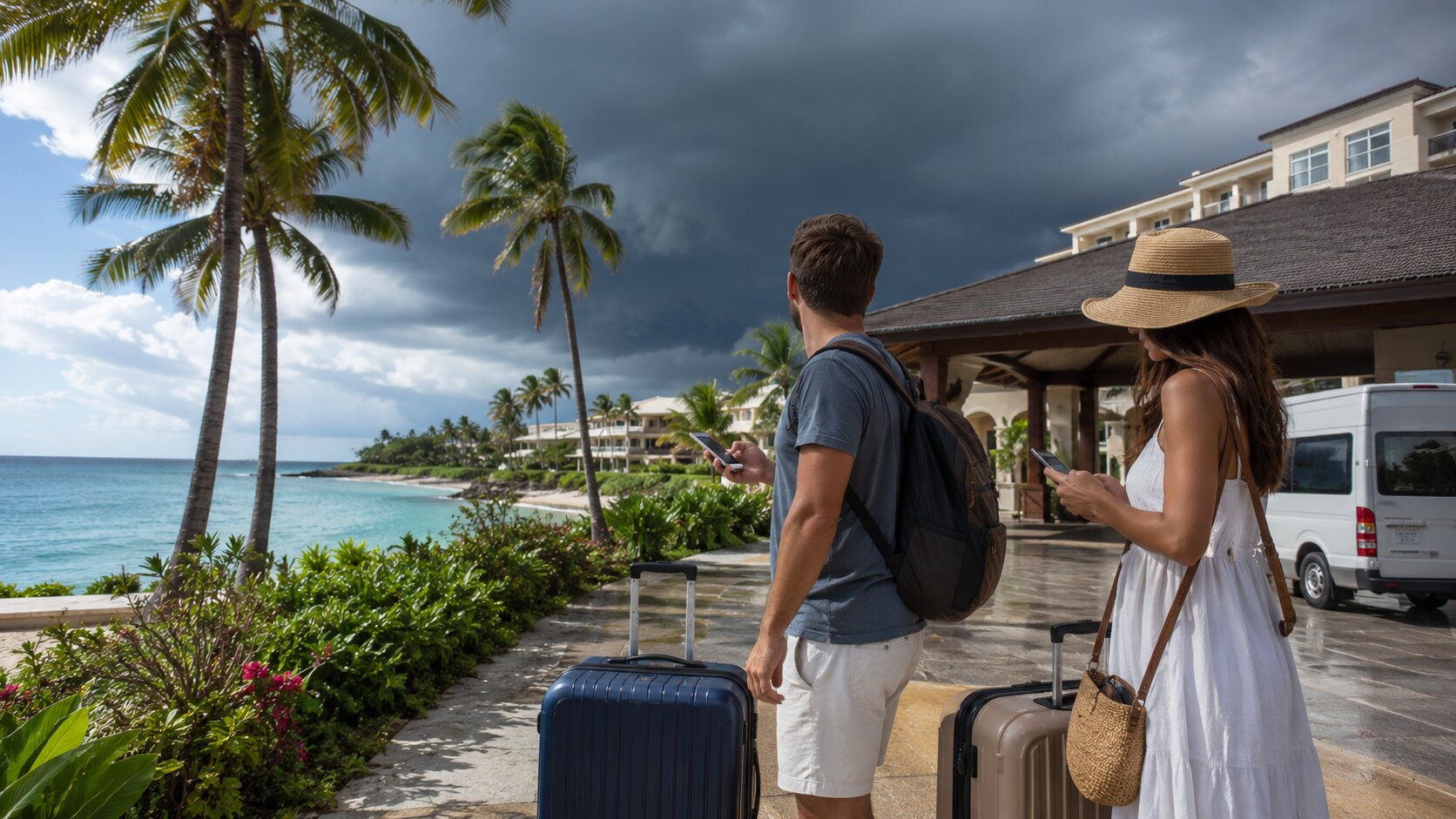
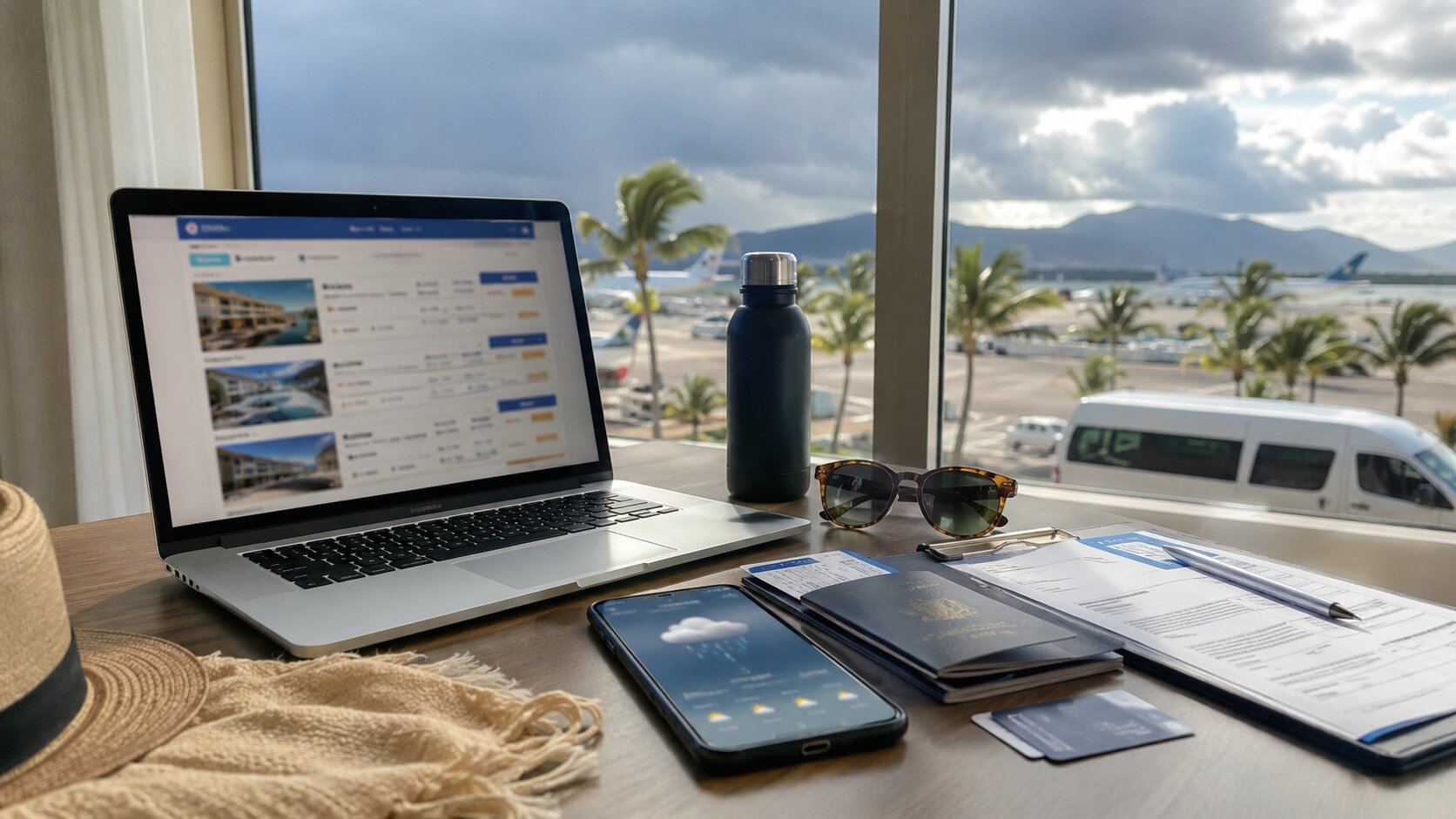
The 2026 Atlantic hurricane season is forecast to be quieter than average, but that does not make any individual Caribbean trip storm-proof. Travelers with fixed dates should generally book now using refundable hotels, flexible flights and suitable travel insurance rather than waiting for a reliable long-range storm forecast that will not arrive. Those traveling from mid-August to mid-October should be especially careful about cancellation terms, connections and airport transfers.
Booking a Caribbean holiday during hurricane season creates an awkward decision. Reserve early and you may secure the hotel, flight schedule or family room you want, but you could also commit money before the weather risk becomes clear. Wait too long and you may lose suitable accommodation or face less convenient flight connections without gaining much useful certainty about storms.
The outlook for 2026 is more encouraging than in many recent seasons. NOAA’s May forecast gave the Atlantic a 55% probability of a below-normal season, while Colorado State University reduced its forecast again on July 8 as developing El Niño conditions were expected to suppress storm formation. Nevertheless, seasonal activity is not the same as destination-level safety. One storm crossing the wrong island can still disrupt airports, hotels, roads, cruises and utilities.
The practical question is therefore not simply whether to book or wait. It is whether you can structure the booking so that a forecast change does not turn into a major financial loss. This guide explains how to choose your travel window, compare island exposure, protect flights and hotels, and plan transfers that remain manageable if conditions deteriorate.
Key Takeaways
Point
Details
The season is forecast to be quieter
NOAA predicts 8–14 named storms, 3–6 hurricanes and 1–3 major hurricanes, with a 55% chance of below-normal overall activity.
Peak risk is still ahead
Atlantic hurricane activity normally peaks around September 10, with most activity occurring from mid-August to mid-October.
A quieter season is not a destination forecast
Seasonal forecasts estimate basin-wide activity and cannot tell travelers which island, hotel or airport may be affected.
Flexible bookings matter more than prediction
Refundable accommodation, through-ticket flights and clear change terms reduce the financial consequences of disruption.
Insurance wording must be checked
Look specifically for cancellation, natural disaster, travel disruption and additional accommodation cover.
Island risk is not uniform
Aruba, Bonaire and Curaçao historically experience fewer direct hurricane impacts than many northern Caribbean destinations, but tropical storms and indirect disruption remain possible.
The 2026 Outlook Is Quieter, but Not Risk-Free
NOAA’s forecast, issued on May 21, called for 8–14 named storms during the June 1 to November 30 Atlantic season. It projected 3–6 hurricanes and 1–3 major hurricanes, with 70% confidence in those ranges. NOAA attributed the below-normal outlook mainly to El Niño, which tends to create stronger vertical wind shear that makes it more difficult for Atlantic tropical systems to organise.
Colorado State University lowered its outlook again on July 8 and described the expected season as well below normal. Its researchers also projected a below-average probability of major hurricane activity in the Caribbean, while repeating that every season can still produce a damaging landfall.
As of July 15, the National Hurricane Center’s season summary listed one named Atlantic storm: Tropical Storm Arthur, which existed from June 17 to June 18. No hurricanes or major hurricanes had formed, and no active Atlantic tropical cyclones were being reported early that day.
That early-season calm should not be mistaken for an all-clear. NOAA’s climatology places the Atlantic peak on September 10, with most activity concentrated between mid-August and mid-October. The first hurricane in an average season does not usually form until early or mid-August.
Most importantly, seasonal outlooks are not landfall forecasts. They estimate total activity across the Atlantic basin but cannot predict where or when a storm will affect land.
Pro Tip: Use the seasonal outlook to decide how much flexibility to buy, not to decide that a particular island is guaranteed to avoid storms.
Book Now or Wait? Use Your Travel Window
The best strategy depends more on your departure date than on the total number of forecast storms.
Traveling in July or Early August
Booking now is generally reasonable when no storm is threatening your destination and the flight or hotel terms are flexible. Early-season travel is not risk-free, but it takes place before the historical peak.
Waiting several weeks is unlikely to produce a dependable forecast for a trip that is still months away. It may simply reduce your choice of direct flights, connecting schedules, family rooms or suitable resorts.
Traveling from Mid-August to Mid-October
This is the period that requires the strongest financial protection. Travelers with fixed school-holiday, wedding, cruise or business dates should not necessarily postpone booking, but they should avoid constructing an entirely non-refundable trip.
Prioritise:
A hotel rate that can be cancelled close to arrival.
A flight itinerary issued on one ticket.
Reasonable connection times.
Insurance that explicitly addresses severe-weather disruption.
Transfers that can be changed if the flight is delayed or rerouted.
Flexible travelers who primarily want sunshine rather than a particular island can also compare late-November departures or destinations with lower historical hurricane exposure.
Traveling in Late October or November
Risk normally declines after the September peak, but storms remain possible until the official season ends on November 30. Keep flexible terms, especially for coastal resorts, cruises and itineraries involving small regional aircraft or ferries.
Departing Within the Next Two Weeks
This is when waiting can become useful. Check the National Hurricane Center’s seven-day tropical weather outlook before purchasing a non-refundable last-minute trip.
A tactical pause may be sensible when a disturbance is already being monitored near your destination or connecting airport. Waiting indefinitely for perfect weather certainty is not: tropical systems can develop, weaken or change direction after a booking is made.
Choose the Island, Not Just the Region
“Caribbean hurricane season” describes a vast area. Weather exposure can differ substantially between destinations, even during the same week.
Aruba, Bonaire and Curaçao sit in the southern Caribbean. Most hurricanes pass north of these islands, although occasional tropical storms still occur. They can be useful alternatives for travelers who want to reduce, but not eliminate, hurricane exposure.
Northern and western destinations require a different calculation. The Bahamas can experience dangerous hurricanes and flooding, while the Cayman Islands lie within the Caribbean hurricane belt. Jamaica’s hurricane risk is highest during the August-to-October peak.
Do not compare destinations using hurricane tracks alone. Consider the resilience of the actual trip:
Does the resort have backup power and water?
Is the property on an exposed beachfront or in a low-lying area?
Can the airport handle larger rerouting operations?
Does your itinerary depend on a ferry or small domestic flight?
Is there another hotel or airport within practical reach?
Would a road closure isolate the property?
A large resort near a major airport may recover faster operationally than a remote villa reached by ferry, even when both experience similar weather.
Build Flexibility into Flights and Hotels
Protect the Flight Itinerary
For European and UK travelers, Caribbean journeys often involve a long-haul flight followed by a connection. Avoid separate tickets unless the savings justify the risk.
When flights are issued separately, the second airline may treat you as a no-show if the first service is delayed. A through-ticket gives the operating airlines a clearer responsibility for rerouting missed connections, although the exact remedy still depends on the route, carrier and cause of disruption.
Also compare:
Direct flight versus connection.
Daytime arrival versus the final arrival of the night.
Connection length at the hub.
Alternative services available the following day.
Baggage rules after rerouting.
Whether the fare can be changed rather than only cancelled.
Read the Hotel Policy Beyond “Free Cancellation”
Check the exact cancellation deadline and time zone. A room described as refundable may become fully non-refundable several days before arrival, precisely when a storm forecast becomes more reliable.
Ask the property what happens if:
The airport closes but the hotel remains open.
An evacuation order is issued.
The hotel closes before arrival.
You must leave early.
Your replacement flight arrives one or two days later.
Utilities or advertised facilities are unavailable.
Do not assume that a hotel’s hurricane guarantee covers flights, transfers, missed cruise departures or a voluntary decision not to travel.
Buy Insurance for the Actual Risk
Travelers should check whether their policy contains trip disruption or natural disaster cover. If flights or accommodation are cancelled, travelers should generally seek refunds from the airline, hotel or tour operator first.
Anyone considering cancellation should contact the insurer before independently buying replacement arrangements.
Look for cover relating to:
Cancellation and curtailment.
Natural disasters or severe weather.
Additional accommodation.
Missed departure or connection.
Travel delay.
Medical treatment and evacuation.
Changes to official government travel advice.
The presence of general travel insurance does not mean every hurricane-related scenario is covered.
Transfers, Taxis and Cruises When Weather Changes
Airport transport is frequently overlooked until a flight schedule changes.
Pre-booking a transfer can be useful for late arrivals, families and travelers carrying substantial luggage. During hurricane season, however, choose a provider that allows the pickup time to move when a flight is delayed.
Confirm:
Whether the driver tracks the flight.
How long the driver will wait.
Whether overnight delays create an extra charge.
Where the official pickup zone is located.
How to contact the provider if mobile data fails.
Whether the booking can be cancelled if the flight is rerouted.
After severe weather, roads may flood or become blocked, while electricity, communications, water and transport services can be interrupted. Flights may also be delayed or cancelled even when a resort itself suffers limited damage.
Cruise passengers should expect itineraries to remain operationally flexible. A cruise line may change ports, reverse a route, add a sea day or alter embarkation arrangements to avoid dangerous conditions.
Check the cruise contract and do not book tightly timed independent flights or non-refundable port excursions without understanding what happens when the ship’s schedule changes.
The Price of Waiting Versus the Price of Certainty
Waiting does not automatically create a cheaper or safer trip. It changes the type of risk you accept.
Traveler Situation
More Practical Strategy
Fixed family or school-holiday dates
Book earlier, but use refundable accommodation and protected flight connections.
Flexible destination and flexible dates
Compare several islands now and keep late-season or southern-Caribbean alternatives open.
Departure within 7–14 days with a monitored disturbance
Delay new non-refundable purchases while checking official forecasts and provider policies.
Remote island or multi-leg itinerary
Book transport earlier, use one-ticket flights where possible and protect ferry or transfer connections.
Lowest possible upfront budget
Compare the flexible-rate premium against the full amount at risk on a non-refundable booking.
The cheapest room or flight is not always the lowest-cost option once cancellation exposure is included. A modest premium for flexibility may be worthwhile when it protects several thousand pounds or euros of connected bookings.
Conversely, paying for maximum flexibility on every component may be unnecessary for a short July trip to a well-connected destination. Match the protection level to your dates, location and itinerary complexity.
Caribbean Hurricane-Season Booking Checklist
Check the National Hurricane Center’s Atlantic outlook before paying.
Read the relevant government travel advice for your destination.
Compare the island’s historical exposure without treating any location as storm-proof.
Prefer flights on one ticket rather than unrelated self-connections.
Leave additional time between long-haul and regional flights.
Record the hotel cancellation deadline and its local time zone.
Ask the property about closure, evacuation, delayed-arrival and early-departure policies.
Confirm whether your insurance includes severe-weather and natural-disaster disruption.
Buy insurance promptly after booking rather than after a threat becomes apparent.
Choose airport transfers with flight tracking and flexible pickup terms.
Keep airline, hotel, insurer and transfer contact details available offline.
Save booking confirmations, policy documents and passport copies securely.
Recheck the forecast seven days, three days and 24 hours before departure.
Contact providers before cancelling or paying for replacement arrangements.
Carry essential medication and one day of basic necessities in hand luggage.
Compare the Whole Trip with AroundTravel
Hurricane-season planning works best when flights, hotels and ground transport are considered together rather than booked as isolated bargains.
Through AroundTravel, travelers can compare relevant travel services, examine different flight and accommodation options, and plan airport transfers or taxis around the actual arrival schedule. During the Caribbean hurricane season, give particular weight to cancellation terms, connection protection and transfer flexibility, not only the headline price.
Frequently Asked Questions
Is It Safe to Visit the Caribbean During Hurricane Season 2026?
Many trips will operate normally, and 2026 is forecast to have below-normal Atlantic activity. However, seasonal forecasts cannot guarantee safety for a specific destination or week. Review official forecasts, local advice and booking conditions before departure.
Should I Book a September Caribbean Holiday Now?
Book now when your dates are fixed and you can obtain suitable refundable or changeable terms. September includes the historical peak of the Atlantic season, so avoid combining non-refundable flights, hotels, transfers and excursions unless you can absorb the loss.
Which Caribbean Islands Have a Lower Hurricane Risk?
Aruba, Bonaire and Curaçao historically experience fewer direct hurricane impacts because most systems pass to their north. They can still receive tropical storms, heavy rain, rough seas or transport disruption, so they should not be described as risk-free.
Will Travel Insurance Cover a Caribbean Hurricane?
Coverage varies. Some policies include cancellation, curtailment, natural disaster or travel disruption protection, while others provide narrower benefits. Read the wording and speak to the insurer before cancelling or buying replacement travel.
What Happens If My Airline Cancels the Flight?
The airline may offer rebooking or a refund, depending on the route, ticket and applicable passenger-rights framework. Contact the airline before arranging an alternative flight, and then ask your insurer whether additional costs are covered.
Can Airport Taxis and Transfers Stop Operating During a Storm?
Yes. Flooding, road closures, fuel shortages, curfews or airport restrictions can suspend transport. Use an official or pre-booked provider, confirm how schedule changes are handled and keep emergency contact details offline.
How Long Should I Wait Before Booking a Last-Minute Trip?
Check the National Hurricane Center’s seven-day outlook first. When no relevant system is being monitored, waiting may add little weather certainty. When a disturbance could affect your destination or connecting airport, pause non-refundable purchases until the forecast becomes clearer.
Sources Used
National Oceanic and Atmospheric Administration
National Hurricane Center
Colorado State University Tropical Meteorology Project
NOAA Atlantic Oceanographic and Meteorological Laboratory
UK Foreign, Commonwealth & Development Office
Association of British Insurers
U.S. Department of State
Jonas DuPont
An avid traveler and seasoned writer who has journeyed across more than 40 countries, sharing his unique experiences and insights with a growing audience of adventure seekers and travel enthusiasts. With a passion for discovering hidden gems and immersing himself in diverse cultures, Jonas's travel blog combines practical tips, stunning photography, and captivating storytelling. Whether he's navigating bustling city streets or exploring remote landscapes, Jonas offers readers an authentic glimpse into the world's most fascinating destinations, inspiring them to embark on their own unforgettable journeys.
Providing You With Access To The Top Travel Destinations. Book Now and Enjoy!
TESTIMONIALS
Travelers Reviews
Planning a trip used to be a stressful event, until I found Around
Travel. The website made everything so easy and convenient and really has made
travelling a relaxing experience. I highly recommend using them.
Sam Wistan Marketing Consultant, USA
I travel a lot for business and making reservations used to take up so
much time. Around Travel offers me quick access to all my booking needs.
Jonas DuPont Investment Advisor, London
I am a spur of the moment type of girl and I like to book trips at a
whim. Around Travel always has great deals and options for me to choose from.