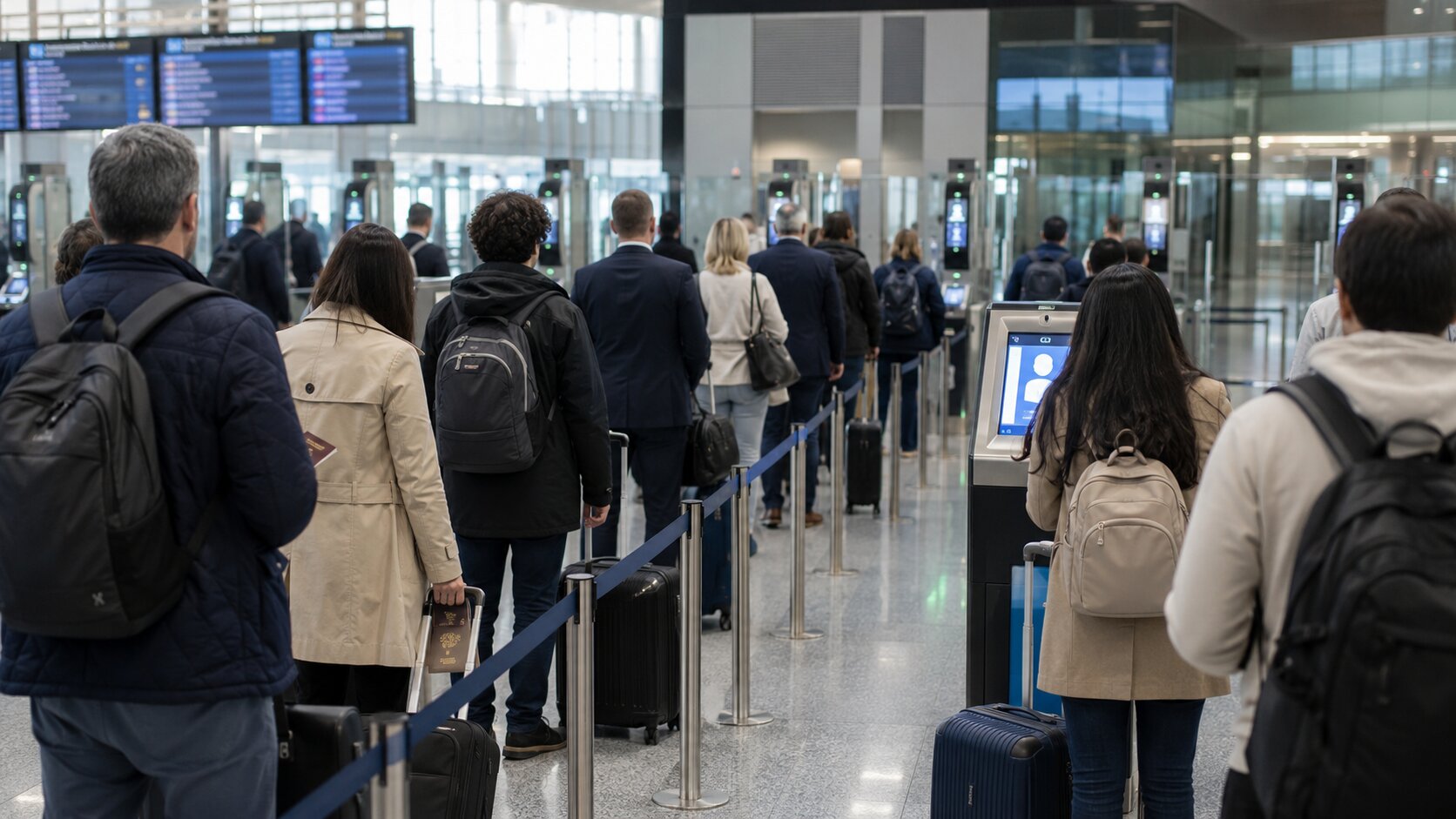
The EU’s Entry/Exit System replaces passport stamping with digital border records and biometric checks for many non-EU travelers entering or leaving the Schengen area. As of July 10, 2026, the biggest practical issue is not whether travelers can visit Europe, but whether border queues could affect flight connections, ferry departures, hotel check-in timing, and airport transfer plans.
Build extra time into your itinerary, check your route carefully, and avoid tight same-day connections where EES checks happen at a busy external border.
Introduction
For many Europe trips this summer, the most important travel question is no longer just “Which flight is cheapest?” It is also “Where will I complete the new border check, and how much time should I allow?”
The EU Entry/Exit System, usually shortened to EES, is now part of the border process for non-EU nationals making short stays in the Schengen area. Instead of receiving a passport stamp, eligible travelers have their entry and exit recorded digitally. On first registration, this can include a facial image and fingerprints, depending on the traveler’s age and status.
That extra processing step matters when you are choosing flights, booking a hotel with a strict check-in window, arranging an airport pickup, or planning a same-day train, ferry, or onward flight. Some border points are operating smoothly; others have seen pressure during peak travel periods. The practical response is not panic. It is better planning.
This guide explains what changed, who is most exposed to delays, how EES can affect flights, hotels, airport transfers, taxis, and cross-border routes, and what to check before confirming a Europe trip.
Key Takeaways
Point
Details
EES is now live
The system became fully operational on April 10, 2026, after a progressive rollout that began on October 12, 2025.
It affects many non-EU travelers
EES applies to non-EU nationals traveling for short stays across the external borders of 29 participating European countries.
Delays are route-specific
Airports, ferry ports, Eurostar, Eurotunnel, and road routes may handle registration differently, so the risk depends on where you cross the border.
Tight connections are riskier
Same-day onward flights, trains, cruises, hotel check-ins, and prepaid transfers leave less room for EES-related queues.
Booking flexibility matters
Refundable hotels, adjustable transfers, and less aggressive connection times can reduce financial risk if queues are longer than expected.
What EES changes at Europe’s external borders
The Entry/Exit System is an automated EU border system for registering non-EU nationals traveling for a short stay each time they cross the external borders of the European countries using it. It records travel-document data, biometric data, and the date and place of entry and exit, and it also records refusals of entry.
For travelers, the visible difference is simple: border control may take longer the first time you register. Instead of only presenting a passport, many travelers will also have a facial image captured and fingerprints taken. Children under 12 are not fingerprinted, but they can still have a digital record created.
EES applies across the Schengen area’s external borders, including EU Schengen states as well as Iceland, Liechtenstein, Norway, and Switzerland. Ireland and Cyprus are not part of EES because they are not in the Schengen area.
The system is not the same as ETIAS. EES records border crossings; ETIAS is the separate travel authorisation expected for some visa-exempt travelers. As of July 10, 2026, travelers should check official government guidance before using any website claiming to sell ETIAS access.
Pro Tip: Do not treat EES as a visa application. For most affected travelers, the issue is not applying before travel, but allowing enough time for registration and verification at the border.
Where delays are most likely to affect travel plans
EES does not create the same delay at every airport, ferry terminal, or land border. The pressure depends on staffing, kiosk layout, technology, passenger volume, and whether many travelers are registering for the first time.
Airline and airport groups warned in February 2026 that EES was already causing significant delays and that, without more flexibility, queues could worsen during peak summer months. They pointed to understaffing, technology issues, and limited use of pre-registration tools as contributing factors.
By early July 2026, EU officials had acknowledged several difficult border points, while saying that a full suspension was not needed or possible. Industry concerns have focused on major holiday markets, including Portugal, Spain, Italy, Greece, and Belgium, where delays and missed connections have been reported.
Cross-Channel routes deserve special attention. The Port of Dover has warned about severe congestion risk during peak holiday traffic, especially when passenger volumes rise around school holidays and summer travel weekends.
That does not mean every Europe trip will be disrupted. It means travelers should identify the exact border point in their itinerary. A direct flight into a well-staffed major hub may be easier than a peak-weekend arrival at a small leisure airport with several non-EU flights landing close together.
Flight booking decisions that need a wider time buffer
The biggest booking mistake is treating EES as only an arrival inconvenience. It can affect your entire itinerary if your first Schengen entry airport is also a connection point.
If you are flying from the UK, United States, Canada, Australia, or another non-EU country into Europe, ask a practical question before booking: “Where do I clear the Schengen external border?” If you fly London to Paris to Nice, the EES check is likely at Paris. If you fly New York to Madrid to Málaga, the key border point may be Madrid. If the first airport is congested, your onward flight could become the weak link.
Avoid ultra-tight self-transfers
Self-transfers are especially risky because separate tickets usually give you less protection if the first delay causes you to miss the second flight. EES queues, baggage reclaim, terminal changes, security rescreening, and low-cost carrier check-in cutoffs can stack together.
A cheaper fare may still be poor value if it leaves only a narrow connection window at a busy external border. Families, first-time Europe visitors, and travelers with checked baggage should be particularly cautious.
Choose arrival times with transport in mind
Late-night arrivals can amplify the problem. If border queues push you past the last train, metro, shuttle, or hotel reception window, you may end up paying more for a taxi or last-minute accommodation. When prices are close, a daytime arrival can be more practical than a late-night budget flight.
Check airline and airport updates before departure
Airlines may advise earlier arrival times, and airports may publish local EES instructions. For routes with known pressure, check your airline, departure airport, arrival airport, and official government travel advice close to travel day.
Hotels, late arrivals, and cancellation terms: the overlooked EES risk
EES delays do not stop at passport control. They can affect hotel check-in, apartment access, resort transfers, and prepaid first-night plans.
Before booking a hotel, check three things: cancellation policy, check-in hours, and late-arrival process. A non-refundable rate may look attractive, but it leaves less room if a border delay causes you to arrive after reception closes or miss a connecting flight.
For city breaks, location matters too. A hotel next to a central station, airport rail link, or night bus route may be more useful than a slightly cheaper property requiring a long taxi ride after midnight. For families, that difference can be more important than a small room-rate saving.
Business travelers should check whether the hotel offers 24-hour reception, invoice-friendly booking, and quick transport to the meeting area. Digital nomads should confirm Wi-Fi, workspace, and flexible check-in if the arrival day may be disrupted.
Mistake to avoid: Booking a prepaid apartment with a strict self-check-in deadline when arriving on a peak summer evening through a busy external Schengen airport.
Airport transfers, taxis, ferries, and trains: planning beyond the border desk
Airport transfers become more valuable when arrival timing is uncertain, but only if the transfer terms are realistic. A fixed pickup time with a short waiting period may not work well if EES processing is slow.
When comparing transfers, look for clear language on flight tracking, waiting time, pickup location, cancellation, and late-arrival fees. If those details are vague, the cheapest option may not be the safest booking.
Taxis can still be a good fallback, but use official taxi ranks or reputable apps where available. Avoid unofficial drivers approaching passengers inside terminals, especially if you are tired, delayed, or arriving late.
Ferry and rail routes need different planning
For UK-to-Europe trips, Eurostar, Eurotunnel, and Dover ferry routes can involve pre-departure border processing before entering the Schengen area. GOV.UK guidance says Eurostar passengers at London St Pancras may be asked to use self-service pre-registration kiosks before ticket gates, Eurotunnel has a dedicated pre-registration area at Folkestone, and Dover has developed a processing area at Western Docks.
That means you should not assume rail or ferry is automatically faster than flying. It may still be the better option, especially for central-city travel, but the comparison should include check-in rules, border processing, luggage, station access, and onward transport.
Who should be most cautious before booking
Some travelers are more exposed to EES disruption than others.
Families should allow more time because children, luggage, bathroom stops, pushchairs, and group processing can make any queue more stressful. Children under 12 do not give fingerprints, but they still need border processing and digital records may still be created.
Digital nomads and frequent travelers should pay close attention to the 90-days-in-180-days short-stay rule. EES is designed to record entries and exits digitally, so relying on passport stamps or rough memory is no longer sensible.
Business travelers should avoid arriving on the same morning as an important meeting if the route involves a first-time EES registration or a pressured border point. The cost of an extra hotel night may be lower than the risk of missing a meeting.
Budget travelers should be careful with separate tickets, non-refundable hotels, late-night buses, and prepaid transfers. These can still save money, but they leave less room for operational delays.
Practical booking checklist before confirming a Europe trip
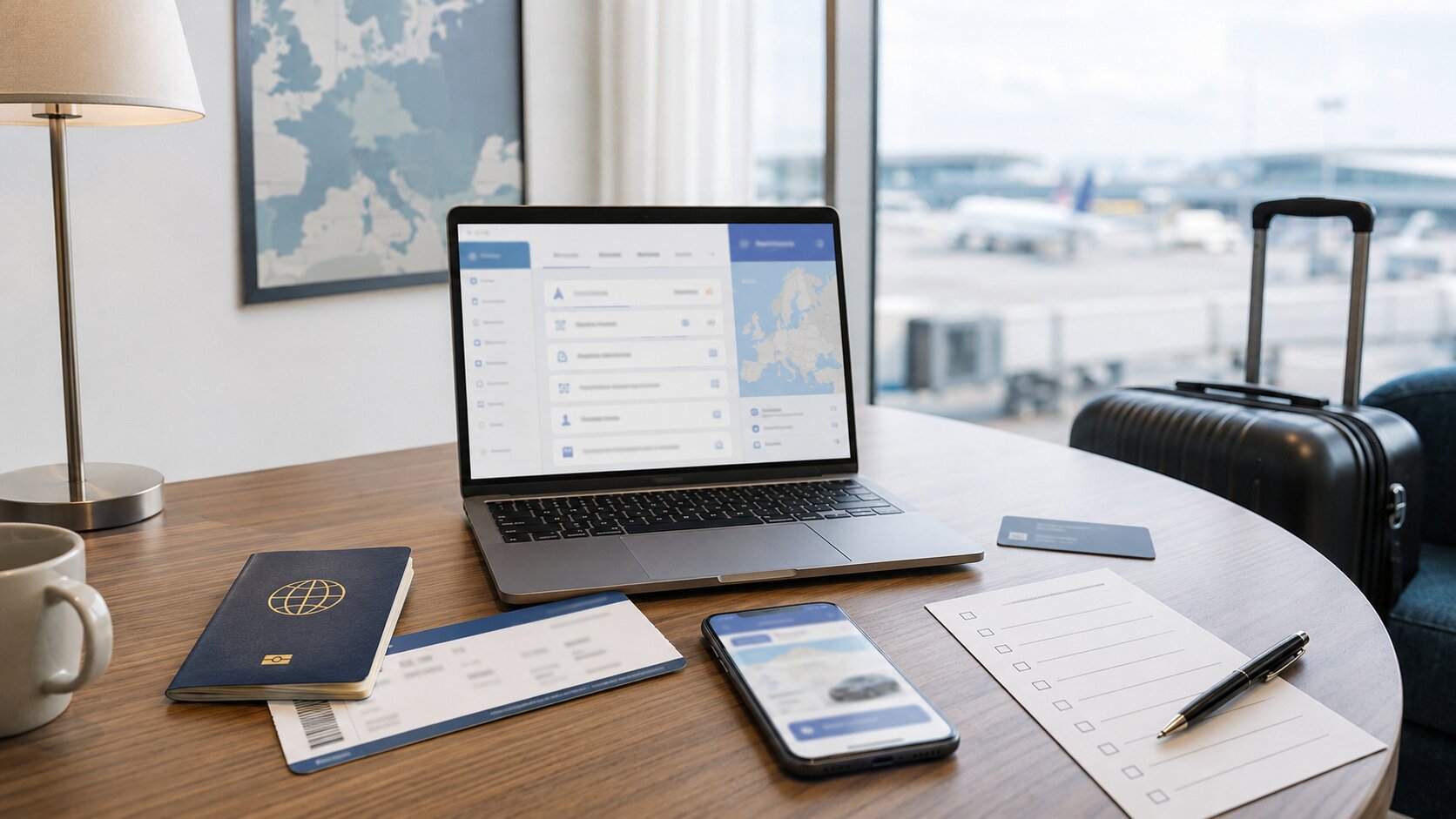
Use this checklist before paying for flights, hotels, transfers, taxis, or ferry and rail tickets.
Confirm whether your destination or first entry point is in the Schengen area and uses EES.
Identify where you will cross the external Schengen border, especially on connecting flights.
Avoid very tight same-day connections after your first Schengen entry point.
Check whether your passport is valid for the trip and whether you are near the 90-days-in-180-days limit.
Review official travel advice for your nationality before booking.
Check airport, airline, ferry, Eurostar, or Eurotunnel guidance for EES processing.
Choose refundable or flexible hotel rates if your itinerary depends on a tight arrival window.
Confirm hotel reception hours and late-check-in instructions.
Compare airport transfer terms, including waiting time, flight tracking, and late fees.
Use official taxi ranks or reputable local transport options if arriving late.
Avoid websites claiming to sell ETIAS before the official application process opens.
Compare the whole trip, not just the fare
EES makes the cheapest fare less meaningful if it creates a fragile itinerary. A low-cost flight into a congested airport, followed by a separate onward ticket and a non-refundable hotel, may be more expensive in practice than a slightly higher fare with a better connection and flexible accommodation.
AroundTravel.net helps travelers compare key trip components in one planning flow, including hotels, flights, airport transfers, taxis, and related travel services. When border queues or arrival timing are uncertain, comparing the full journey can help you choose options with better timing, clearer cancellation terms, and more practical transport after arrival.
Visit AroundTravel.net to compare travel services before confirming your Europe trip.
Frequently Asked Questions
What is the EU Entry/Exit System?
The EU Entry/Exit System is a digital border system that records entries and exits of non-EU nationals traveling for short stays across participating European countries. It replaces manual passport stamping with electronic records and biometric checks.
Does EES mean I need a visa for Europe?
No. EES is not a visa. It records border crossings. Visa requirements still depend on your nationality, destination, length of stay, and purpose of travel.
Which travelers are most likely to face EES delays?
Travelers entering the Schengen area at busy airports, ferry ports, rail terminals, or land borders during peak holiday periods may face longer queues. First-time EES registration can also take longer than later verification.
Should I book Europe flights now or wait?
If your dates are fixed, booking earlier can still make sense, especially for peak summer travel. The key is to avoid fragile itineraries: choose realistic connection times, check border-processing points, and consider flexible hotel and transfer terms.
Are airport taxis and transfers affected by EES?
Indirectly, yes. EES delays can change your arrival time after passport control. If you pre-book a transfer, check waiting time, flight tracking, pickup instructions, and late-arrival fees.
Does EES apply to Ireland or Cyprus?
No. Ireland and Cyprus are not in the Schengen area, so EES does not apply when traveling to either country. It applies to participating Schengen countries.
Is ETIAS already required?
No action is required for ETIAS as of July 10, 2026. Travelers should check official guidance before using any website claiming to sell ETIAS access before the official system opens.
An avid traveler and seasoned writer who has journeyed across more than 40 countries, sharing his unique experiences and insights with a growing audience of adventure seekers and travel enthusiasts. With a passion for discovering hidden gems and immersing himself in diverse cultures, Jonas's travel blog combines practical tips, stunning photography, and captivating storytelling. Whether he's navigating bustling city streets or exploring remote landscapes, Jonas offers readers an authentic glimpse into the world's most fascinating destinations, inspiring them to embark on their own unforgettable journeys.
Providing You With Access To The Top Travel Destinations. Book Now and Enjoy!
TESTIMONIALS
Travelers Reviews
Planning a trip used to be a stressful event, until I found Around
Travel. The website made everything so easy and convenient and really has made
travelling a relaxing experience. I highly recommend using them.
Sam Wistan Marketing Consultant, USA
I travel a lot for business and making reservations used to take up so
much time. Around Travel offers me quick access to all my booking needs.
Jonas DuPont Investment Advisor, London
I am a spur of the moment type of girl and I like to book trips at a
whim. Around Travel always has great deals and options for me to choose from.