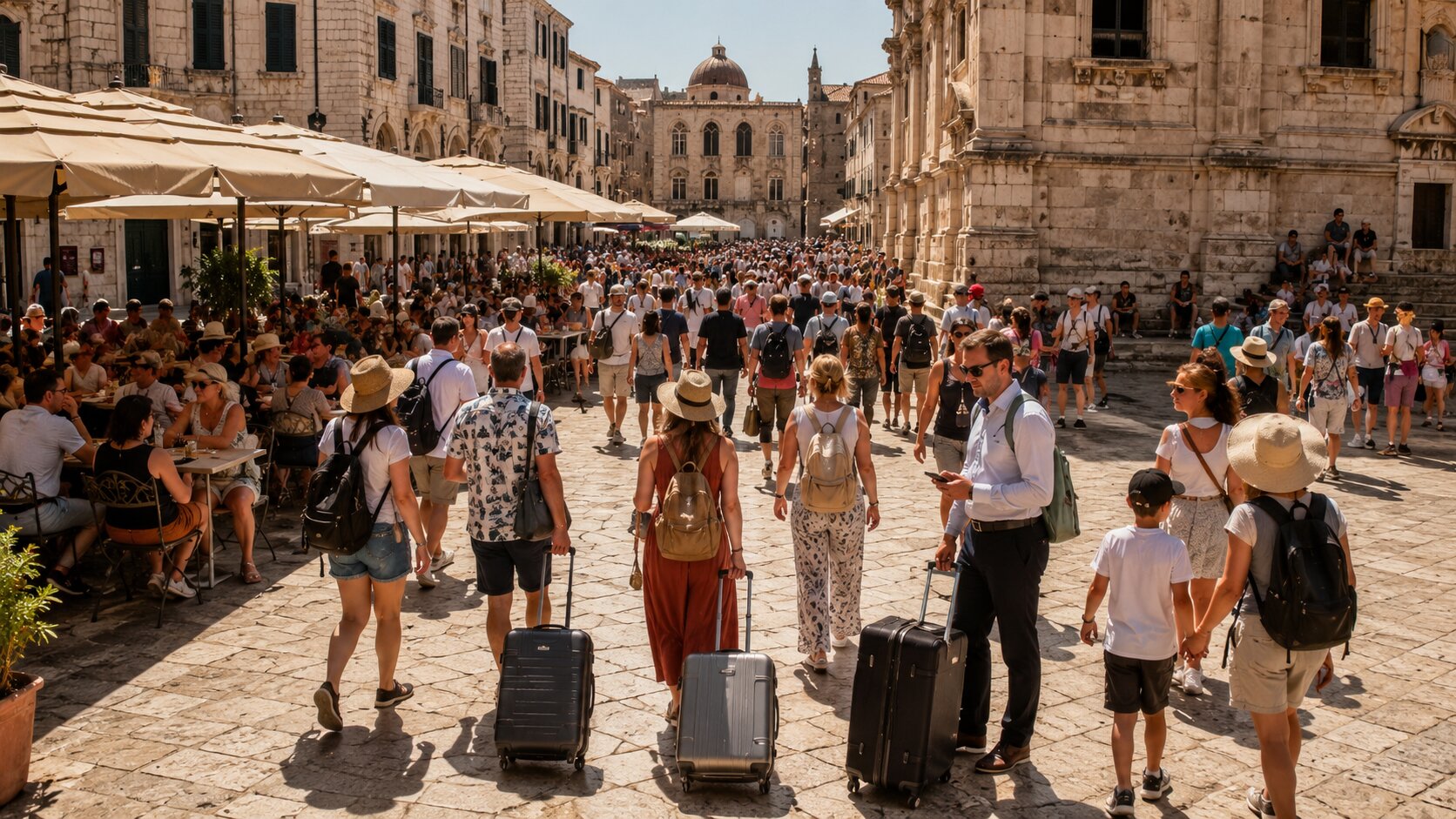
Europe is still bookable this summer, but the smartest trips are not always the obvious ones. After Western Europe’s hottest June on record and growing pressure in destinations such as Venice, Barcelona, and the Greek islands, travelers should compare not only flight and hotel prices but also heat exposure, crowd levels, transfer timing, cancellation terms, and local visitor fees.
The best strategy is to choose cooler regions, better arrival times, flexible hotels, and transport that will still work if heat, crowds, or local rules slow your day down.
Introduction
A summer trip to Europe used to be planned around classic questions: beach or city, budget airline or full-service carrier, central hotel or cheaper outskirts stay. In 2026, travelers need to add two more questions before booking: “How hot will this destination feel in real life?” and “How crowded or restricted will it be when I arrive?”
That shift is not abstract. Copernicus Climate Change Service reported that Western Europe recorded its warmest June on record in 2026, with an intense heatwave affecting much of the continent in the second half of the month. The World Meteorological Organization reported the same Western Europe record and noted that Europe as a whole had its second-highest June temperature on record.
At the same time, several high-demand destinations are using fees, taxes, access rules, and cruise charges to manage visitor pressure. Venice’s 2026 access fee applies on selected peak dates from April through July, Barcelona’s tourism tax rates changed from April 1, 2026, and cruise passengers visiting Greek ports face seasonal fees that are highest for Santorini and Mykonos in summer.
This guide is designed for travelers who still want Europe but want to book smarter: better routes, better hotel locations, more practical transfer plans, fewer hidden costs, and less risk of paying for a trip that feels exhausting before it even begins.
Key Takeaways
Point
Details
Heat is now a booking factor
Western Europe recorded its hottest June on record in 2026, making air-conditioning, arrival time, and local transport more important than usual.
Crowded cities may cost more
Venice, Barcelona, and Greek cruise destinations show how visitor fees and local rules can change the true cost of a trip.
“Famous” is not always practical
Travelers may get better value by comparing cooler regions, secondary cities, coastal alternatives, and shoulder-season dates.
Hotel details matter more
A central location, working air-conditioning, late check-in, and flexible cancellation can be worth more than a small headline discount.
Transfers reduce stress only if terms are clear
Pre-booked airport transfers can help during hot or late arrivals, but waiting time, pickup zones, and cancellation rules should be checked before payment.
The summer decision: heat risk plus crowd pressure
For 2026, the core Europe travel question is not “Should I avoid Europe?” It is “Which version of Europe should I book?”
A July weekend in Venice, Barcelona, Rome, Athens, Santorini, or Paris is a very different travel product from a coastal stay in northern Spain, a rail-based trip through Slovenia, a Baltic city break, or a Scandinavian itinerary. The first may offer iconic sights but also heat, queues, higher hotel rates, stricter visitor rules, and expensive last-minute taxis. The second may require more research, but it can be easier to manage if your priority is comfort, budget control, or working remotely.
Heat also changes how a destination functions. A hotel that looks “walkable” on a map may feel badly located if the route has no shade, steep streets, or limited public transport. A budget flight that lands at 23:45 may become less attractive if you arrive during a heat alert and the last convenient train has already gone. A family apartment without reliable air-conditioning can turn into a poor-value booking even if the nightly rate looks good.
The World Health Organization Regional Office for Europe warned on June 30, 2026, that heatwaves in the European Region are becoming recurring crises rather than one-off events, with the region warming faster than the global average. For travelers, the practical lesson is simple: summer comfort has become part of trip planning, not a minor detail to check after booking.
Pro Tip: Treat heat like you would treat a strike risk or tight connection. It may not ruin the trip, but it should influence your route, hotel, and transport choices.
Where to go if you want Europe with less friction
Booking smarter does not always mean avoiding popular countries. It means matching the trip to your tolerance for heat, crowds, and extra costs.
If you want classic southern Europe, consider adjusting the format. Instead of five nights in the most crowded city center, you might choose a smaller coastal town with rail access, a hotel near a beach or shaded promenade, and day trips early in the morning. Instead of booking the cheapest room in a historic core, compare properties slightly outside the peak zone but close to metro, tram, or airport rail connections.
If you want lower heat exposure, look beyond the Mediterranean. Scandinavia, the Baltics, parts of northern Germany, northern Poland, the Atlantic coast of France, the Basque Country, northern Portugal, Slovenia’s alpine areas, and northern Croatia can offer a more manageable summer experience, although weather can still vary and demand can rise quickly when travelers shift away from hotter regions.
For digital nomads, the smartest summer destination is often the one with reliable cooling, stable internet, and practical local transport rather than the most photographed old town. For families, the best choice may be a place where afternoon rest is easy: a pool, a shaded park, short transfers, and supermarkets nearby. For business travelers, a hotel near the meeting venue may be worth more than a cheaper room that requires several hot transfers in formal clothes.
The mistake is assuming “Europe” is one travel market. In summer 2026, destination choice is also risk management.
Flights: timing, airports, and heat-related disruption
Extreme heat can affect travel long before you reach the hotel. It can put pressure on airports, roads, rail lines, power systems, and public events. Reuters reported in late June that heat across Europe had caused public-health alerts, mass-gathering cancellations, damaged road surfaces in Germany, and rail-track problems in Sweden.
That does not mean your flight will be cancelled because it is hot. It means you should avoid building a fragile itinerary when temperatures and passenger volumes are high.
Book arrivals that still work if you are delayed
A flight landing at 10:30 in the morning gives you more options than one landing close to midnight. If passport control, baggage, heat, or local transport delays slow you down, daytime arrivals usually give you more trains, official taxis, reception support, and customer service options.
Late arrivals can still be worth it if the fare difference is large, but check the full cost. Add airport taxi pricing, hotel late-check-in rules, and the risk of paying for a transfer that has a limited waiting period.
Compare secondary airports carefully
Secondary airports can be cheaper, but they are not always easier in summer. A distant low-cost airport may require a long bus ride, fewer late-night services, or expensive taxi alternatives. In hot weather, a two-hour transfer without good air-conditioning can be a serious downgrade, especially for children, older travelers, or anyone carrying luggage.
Before booking, compare:
Distance from airport to hotel
Last public transport departure
Taxi or transfer availability after delays
Baggage fees and seat-selection costs
Whether your hotel allows late check-in
Whether the route requires a self-transfer
Be cautious with same-day connections
If you are connecting through a major European hub and then continuing to a smaller summer destination, avoid the shortest available connection unless it is protected on one ticket and realistically timed. Heat, high passenger volume, airport queues, and baggage handling can all reduce the margin.
Budget travelers should be especially careful with separate tickets. A cheap self-transfer is only cheap if the first leg arrives on time, baggage appears quickly, and you can make the next check-in deadline.
Hotels: book for sleep, shade, and flexible arrival
In a heatwave summer, the hotel is not just a place to sleep. It is your recovery point.
The first filter should be reliable cooling. Do not assume every European hotel room has strong air-conditioning, especially in older buildings, guesthouses, apartments, and budget accommodation. Look for explicit air-conditioning details in the room description, not just a general amenity symbol. If you are booking an apartment, check recent reviews for summer comments about heat, fans, noise, and window ventilation.
Location matters too. A cheaper hotel outside the center may be sensible if it is next to a metro or tram stop. It may be a bad deal if every sightseeing day requires a long walk in exposed heat or a costly taxi ride.
Refundable rates are not only for cancellations
Flexible hotel rates are useful because heat and crowd pressure can change your plan after booking. You may decide to move from an inland city to the coast, shift a trip by a day, or add a night near the airport to avoid an early-morning transfer in extreme heat.
Non-refundable rates can still make sense for fixed business trips or expensive peak dates, but the discount should be meaningful. If the saving is small, flexibility may be better value.
Check local taxes before comparing hotel prices
Two hotels with the same online rate may not have the same final cost if local taxes, city surcharges, or resort fees are collected separately. Barcelona is a good example: official Catalonia tax information shows that rates from April 1, 2026, vary by accommodation type, and Barcelona city includes a municipal surcharge.
For families or groups, per-person-per-night taxes can add up quickly. Always check whether the displayed hotel price includes local taxes or whether they are payable at the property.
Tourist fees and local rules that can change the real price
Overtourism rules are no longer limited to obscure local notices. They can affect the day you visit, the route you choose, and the budget you need.
Venice’s official access-fee website says the 2026 Access Fee began on April 3 and applies on selected dates through July, from 8:30 a.m. to 4:00 p.m. Day visitors should check the official calendar before visiting the historic center, while overnight visitors should still check whether registration or exemptions apply to their situation.
Barcelona’s increased visitor taxes are another reminder that accommodation cost is not only the nightly rate. Reuters reported in February 2026 that Barcelona doubled tourism taxes, with higher charges depending on hotel category and accommodation type, as part of a wider policy debate around tourism pressure and housing.
Cruise travelers should also check destination-specific charges. MSC Cruises’ published cruise passenger fee table lists seasonal Greek port fees, with the highest summer level from June 1 to September 30: €20 per person for Mykonos and Santorini and €5 per person for other Greek ports.
The practical booking lesson is clear: before choosing the cheapest package, check the local rules for the exact dates and visitor type. A hotel guest, cruise passenger, day-tripper, and short-term rental guest may face different costs.
Airport transfers and taxis when heat makes timing harder
Heat changes the value of airport transfers. In mild weather, many travelers are happy to improvise: metro, bus, walking, then maybe a taxi if needed. During extreme heat or after a long-haul flight, the cheapest option may no longer be the best one.
A pre-booked transfer can be useful for families, late-night arrivals, travelers with mobility needs, and business travelers with fixed schedules. But the terms matter. Check whether the driver tracks your flight, how long they wait after landing, where the pickup point is, and what happens if passport control or baggage takes longer than expected.
Official taxis are often a good fallback, especially at major airports, but travelers should use official ranks or trusted apps where available. In crowded summer destinations, tired arrivals are more vulnerable to overpriced unofficial rides, unclear payment terms, or drivers who approach passengers away from the official pickup zone.
Public transport can still be the best value if it is frequent, air-conditioned, and close to your hotel. The mistake is assuming it will work at all times of day. Check the last train or bus before booking a late flight, not after landing.
Practical booking checklist for a smarter Europe summer trip
Use this checklist before confirming flights, hotels, transfers, taxis, or package travel.
Check recent heat alerts and seasonal climate conditions for your destination.
Compare cooler regions or shoulder-season dates if your schedule is flexible.
Avoid late-night arrivals unless airport-to-hotel transport is clear and reliable.
Confirm whether your hotel room has air-conditioning, not just “ventilation” or “fan.”
Read recent summer reviews for comments about heat, noise, elevators, and cooling.
Check whether local tourist taxes are included or payable at the hotel.
Review destination-specific rules such as Venice access fees or cruise port charges.
Compare nearby airports by transfer time, not only flight price.
Avoid tight self-transfers during peak heat and peak travel weekends.
Choose refundable hotel rates if heat, events, or crowds could change your plan.
Pre-book airport transfers only when waiting time and pickup rules are clear.
Keep water, sun protection, medications, and travel documents accessible on arrival.
Plan major sightseeing early in the morning or later in the evening.
Build rest time into family, senior, or business itineraries.
Save official local transport and taxi information before departure.
Compare the trip as a system, not separate bookings
A smart Europe summer trip is not built by choosing the cheapest flight, then the cheapest hotel, then the cheapest transfer. Those choices interact.
A low-cost late flight may force a more expensive taxi. A cheaper hotel without reliable cooling may make daytime rest impossible. A central apartment with strict check-in rules may become stressful if your arrival is delayed. A famous city may still be worth visiting, but only if the timing, room type, transport, and local fees make sense.
AroundTravel.net helps travelers compare key parts of the journey, including hotels, flights, airport transfers, taxis, and related travel services. For heatwave and overtourism planning, that broader comparison is useful because the best-value trip is often the one with fewer weak points, not simply the lowest starting price.
Visit AroundTravel.net to compare travel services before confirming your summer Europe plans.
Frequently Asked Questions
Is Europe still worth visiting during summer heatwaves?
Yes, but destination choice and timing matter more than usual. Travelers should compare regions, book hotels with reliable cooling, avoid overloaded itineraries, and plan sightseeing around cooler parts of the day.
Which European destinations are better during hot summers?
Cooler or less crowded options may include northern Europe, the Baltics, alpine areas, Atlantic coastal regions, and secondary cities with good public transport. Weather still varies, so check local forecasts before booking.
Should I book a refundable hotel for Europe this summer?
Refundable rates are worth considering if you are traveling during peak heat, visiting a crowded city, or relying on a late arrival. Flexibility can help if you need to adjust dates, add an airport night, or switch to a more practical location.
Will tourist taxes make Europe more expensive in 2026?
In some destinations, yes. Barcelona, Venice, and Greek cruise ports show how local fees can affect the real price. Costs vary by accommodation type, date, visitor status, and destination, so check official rules before comparing bookings.
Are airport transfers better than taxis during a heatwave?
A pre-booked transfer can be better if you arrive late, travel with children, or want a fixed pickup plan. However, it is only useful if the waiting time, flight tracking, and pickup zone are clear. Official taxis or public transport may still be better in some cities.
What is the biggest mistake when booking Europe in peak summer?
The biggest mistake is booking each part separately without checking how they work together. A cheap flight, non-refundable hotel, distant airport, late arrival, and local visitor fee can combine into a stressful and expensive trip.
How can budget travelers reduce risk without overspending?
Choose practical arrival times, compare secondary cities, use public transport where reliable, avoid tight self-transfers, check local taxes before booking, and prioritize hotels with clear cooling and cancellation terms. Budget travel works best when the itinerary has enough margin.
An avid traveler and seasoned writer who has journeyed across more than 40 countries, sharing his unique experiences and insights with a growing audience of adventure seekers and travel enthusiasts. With a passion for discovering hidden gems and immersing himself in diverse cultures, Jonas's travel blog combines practical tips, stunning photography, and captivating storytelling. Whether he's navigating bustling city streets or exploring remote landscapes, Jonas offers readers an authentic glimpse into the world's most fascinating destinations, inspiring them to embark on their own unforgettable journeys.
Providing You With Access To The Top Travel Destinations. Book Now and Enjoy!
TESTIMONIALS
Travelers Reviews
Planning a trip used to be a stressful event, until I found Around
Travel. The website made everything so easy and convenient and really has made
travelling a relaxing experience. I highly recommend using them.
Sam Wistan Marketing Consultant, USA
I travel a lot for business and making reservations used to take up so
much time. Around Travel offers me quick access to all my booking needs.
Jonas DuPont Investment Advisor, London
I am a spur of the moment type of girl and I like to book trips at a
whim. Around Travel always has great deals and options for me to choose from.