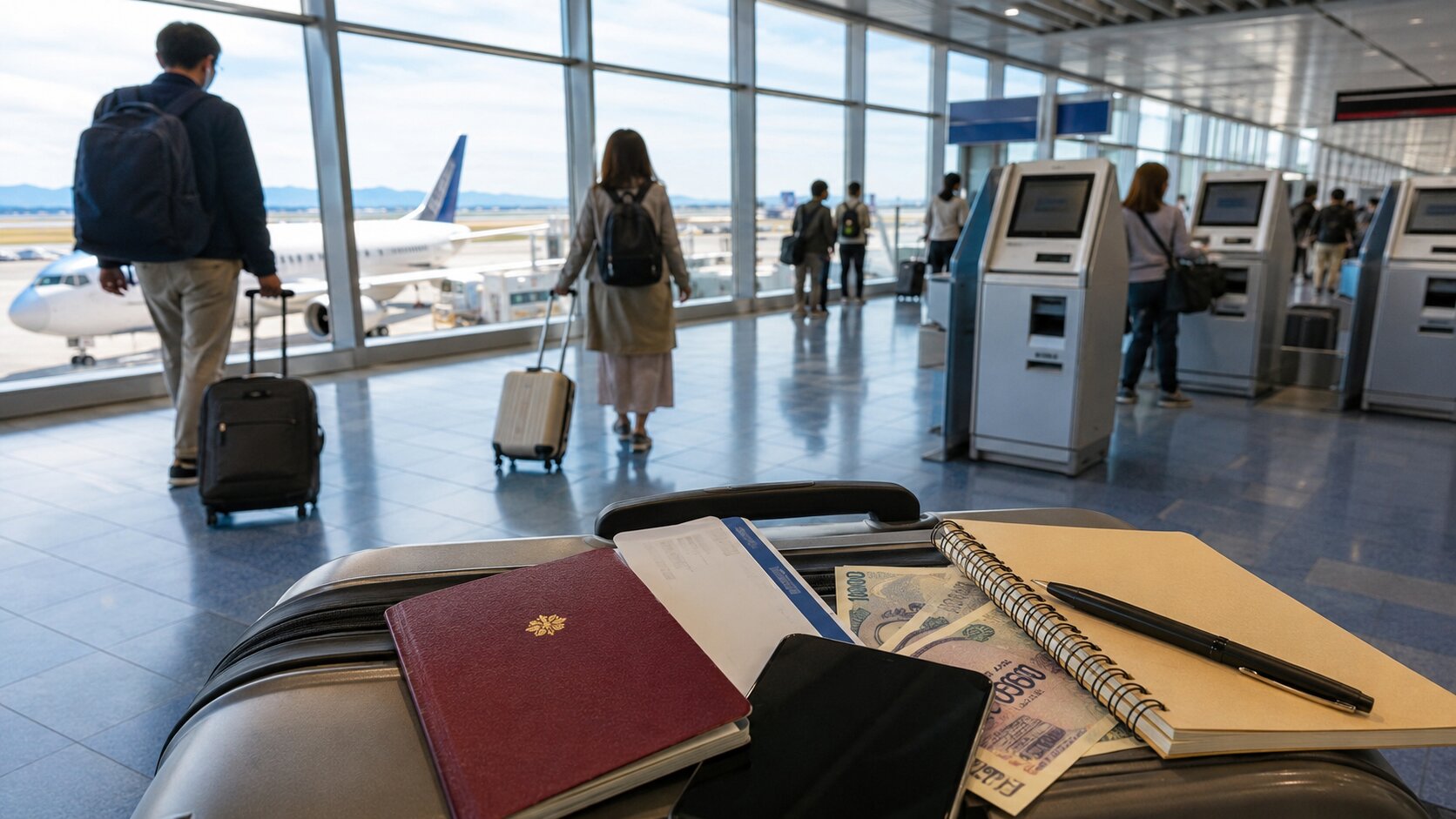
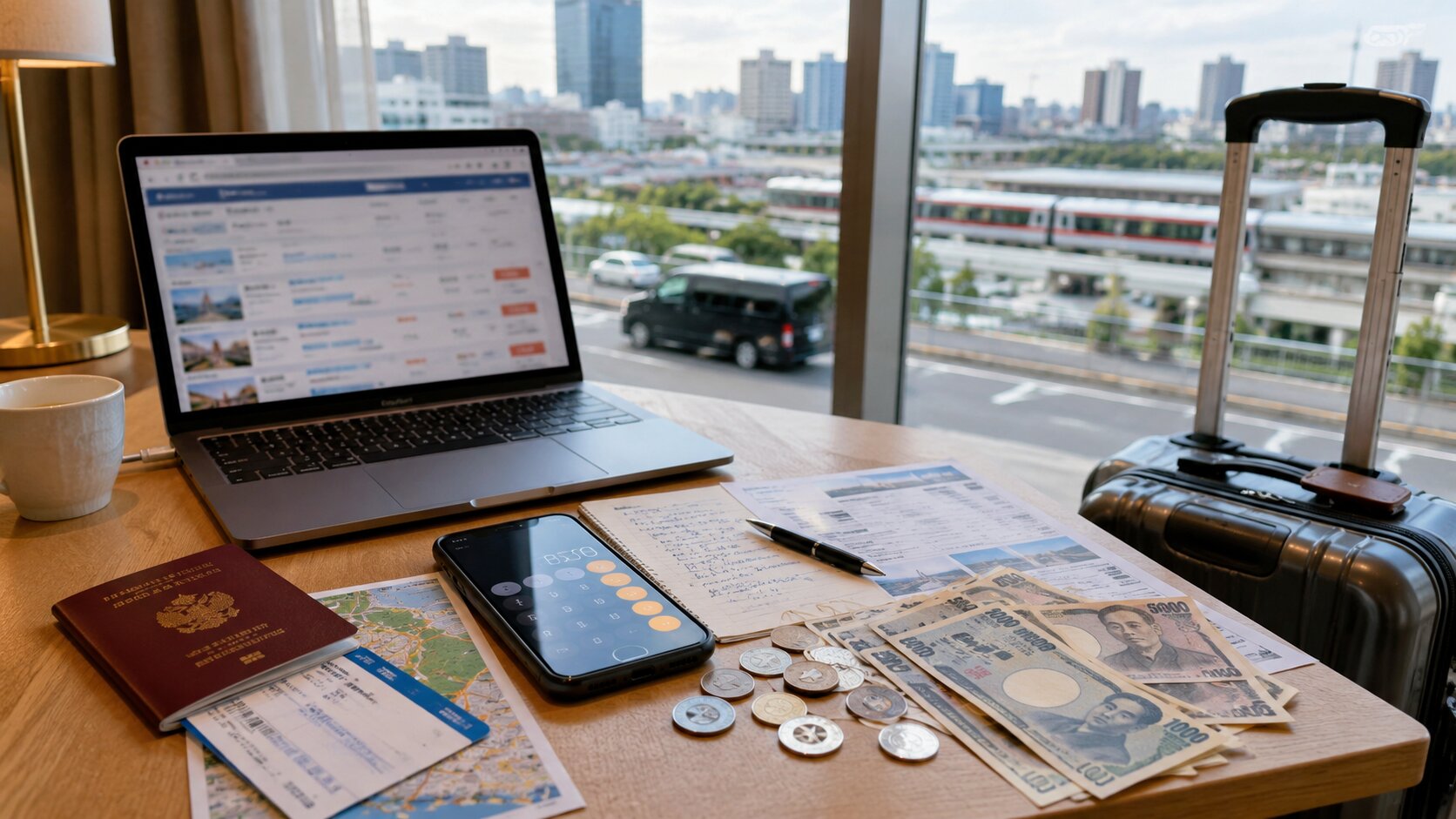
Japan’s departure tax increased to ¥3,000 per person on July 1, 2026, and is normally included in an international airline or ferry ticket. Most travelers should now allow an additional ¥2,000 compared with the previous rate, although some tickets issued before July 1 retain the old charge. Families, cruise passengers and travelers with complex stopovers should check how many taxable departures their itinerary contains.
Japan has become slightly more expensive to leave. The country’s International Tourist Tax, often described informally as a departure tax, has tripled from ¥1,000 to ¥3,000 for most passengers departing by commercial aircraft or ship.
The increase is not large enough to transform the cost of a long-haul holiday on its own. However, it matters when travelers are already combining international flights, domestic rail journeys, hotel taxes, baggage fees, airport transfers and several family tickets. It can also be easy to miss because the charge is generally incorporated into the transport ticket rather than collected at a separate airport desk.
This guide explains which departures attract the new rate, how older bookings are treated, which passengers may be exempt and how to include the charge when comparing flights, hotels, taxis and airport transfers.
Key Takeaways
Point
Details
New standard rate
The tax is ¥3,000 for most departures from Japan on or after July 1, 2026.
Usually included in the ticket
Airlines and sea carriers generally collect it through the passenger’s ticket price.
Older tickets may keep ¥1,000
Some fixed-date transport contracts concluded before July 1 qualify for the previous rate.
Young children are exempt
Children under two are not charged, subject to the official age and ticket rules.
Transit rules are specific
Certain air passengers continuing abroad within 24 hours on a qualifying through ticket are not taxed.
It applies per departure
An itinerary involving more than one departure from Japan can attract the tax more than once.
The ¥3,000 Departure Charge Is Already in Force
Japan’s International Tourist Tax increased from ¥1,000 to ¥3,000 per departure on July 1, 2026. The standard rule now applies to departures from Japan by international commercial aircraft or ship, and it is not limited to overseas holidaymakers. Business travelers, students, workers, Japanese nationals and other passengers can also fall within the system.
Airlines and sea carriers normally collect the tax before boarding, typically by adding it to the ticket price. This means most passengers will not need to find a tax kiosk, carry exactly ¥3,000 in cash or complete an additional airport procedure. The amount may appear as a separate tax or fee in the fare breakdown, although its description can vary between booking platforms and carriers.
The increase was introduced as part of Japan’s wider tourism policy. Official documents state that the additional funding is intended to support overtourism measures, encourage visitors to explore regional destinations, improve entry and exit facilities, provide better visitor information and maintain cultural and natural tourism assets.
The policy follows another period of strong tourism growth. Japan recorded 42.68 million international visitors in 2025, compared with 36.87 million in 2024. Spending by overseas visitors reached approximately ¥9.5 trillion in 2025.
How Much Is ¥3,000 in Pounds and Euros?
Using European Central Bank reference rates published on July 21, 2026, ¥3,000 was approximately €16 or £14. The increase over the former ¥1,000 rate was therefore roughly €11 or £9 per taxable passenger.
Actual card, airline and booking-platform conversions can differ because of exchange-rate movements and provider mark-ups. The safest approach is to budget in yen and treat any sterling or euro figure as an estimate.
Your Booking Date May Still Determine the Tax
The July 1 implementation date does not mean every passenger departing after that day automatically pays ¥3,000.
Under the transitional arrangements, a qualifying transport contract concluded before July 1, 2026 can remain subject to the old ¥1,000 rate, even when the actual departure takes place later. In practical terms, some passengers who bought a fixed-date international ticket on or before June 30 will see the original charge preserved.
However, the new rate can still apply to an older booking in several situations:
The original ticket was open-dated and the departure date was fixed after July 1.
The passenger changed the departure date after July 1.
The carrier’s contract states that the tax will be collected separately from the fare.
The booking date with a travel agency differs from the date on which the carrier’s transport contract was formally established.
These exceptions make the ticket receipt and fare conditions more important than a simple confirmation email date.
Pro Tip: Do not cancel or reissue an older ticket merely to adjust a minor itinerary detail without checking the fare breakdown. A post-July 1 rebooking could expose the departure to the new rate while also creating airline change fees or a higher replacement fare.
Passengers with eligible older tickets should inspect the taxes and charges shown in their original receipt and any revised ticket. When the amount is unclear, the airline or issuing travel agency is better placed to confirm which rate was collected.
The Real Budget Effect for Solo Travelers and Families
For a solo visitor, the increase is relatively modest. For a family, tour group or company sending several employees, it becomes more noticeable.
Travel arrangement
Previous total
New total
Increase
One taxable traveler
¥1,000
¥3,000
¥2,000
Two adults
¥2,000
¥6,000
¥4,000
Family of four, all aged two or over
¥4,000
¥12,000
¥8,000
Two adults, one child aged two or over and one qualifying infant
¥3,000
¥9,000
¥6,000
Group of ten taxable travelers
¥10,000
¥30,000
¥20,000
Children under two are not subject to the departure tax. Japan’s National Tax Agency determines eligibility by reference to the child’s age and the relevant transport contract, so families booking close to a second birthday should check how the carrier has priced the ticket.
The increase should therefore be entered as a per-person cost rather than treated as one fee per booking. A family seeing “taxes included” should not assume that the amount covers the entire reservation only once.
It is also worth separating the departure tax from other expenses. It does not replace airline baggage charges, seat selection, airport access, hotel fees, travel insurance or local transport. When comparing two flights, look at the final payable price after all mandatory taxes rather than subtracting ¥3,000 and comparing headline fares.
Stopovers, Cruises and Repeat Departures Need Closer Checks
The simplest itinerary is an ordinary return trip: the traveler enters Japan, stays in the country and later takes one international flight home. That generally creates one taxable departure.
More complicated routes require closer attention.
Air Passengers Connecting Through Japan
Certain air transit passengers are not charged when they arrive from one foreign country and continue to another within 24 hours. The official conditions require the journey to be shown on a qualifying single air ticket, with the scheduled onward departure taking place within 24 hours of arrival.
The exemption can still apply when an unavoidable delay pushes the actual connection beyond 24 hours, provided the ticket originally showed a qualifying connection.
Separate tickets may not meet the same conditions. Travelers building a self-transfer through Tokyo, Osaka or another Japanese airport should therefore not assume that a short layover automatically creates an exemption.
The practical risks of separate-ticket connections are often more significant than the tax itself. They can include collecting baggage, changing terminals, passing immigration, missing the second flight without through-ticket protection and paying for a hotel or late-night transfer.
Cruise and Ferry Itineraries
The tax applies per departure rather than once per holiday. A cruise passenger who leaves Japan, visits a foreign port, returns to Japan and later departs internationally again can be taxed on both departures.
The 24-hour air-transit exemption does not extend in the same way to passengers traveling through Japan by ship. Before booking an international cruise, examine the complete port sequence. Count how many times the ship exits Japan after a Japanese port call, then check whether the cruise price already incorporates the relevant taxes.
Other Exemptions
Besides qualifying transit passengers and children under two, narrow exemptions or non-taxable categories cover circumstances such as working ship or aircraft crew, certain emergency diversions, official state transport and specified diplomatic or military travel.
These rules are specialized and will not apply to the average tourist.
Plan the Tax with Flights, Hotels and Airport Transport
The departure tax is predictable, but the final day of a Japan trip can still produce unexpected spending. Travelers should build a departure-day budget that combines the tax with the cost of reaching the airport and managing an early or late flight.
Compare the Final Flight Price
When searching for flights, compare the checkout total rather than the first advertised fare. One website may display mandatory taxes immediately, while another may reveal parts of the total later.
Check:
Whether the ¥3,000 charge is already included.
Baggage limits for every operating airline.
Fees for seat selection or airport check-in.
Whether a low-cost flight uses an airport that requires a longer transfer.
The cost of changing an older ticket that may still carry the previous tax rate.
A flight that appears slightly cheaper can become less attractive after luggage and airport transport are added.
Match the Last Hotel Night to the Departure Time
An early-morning departure may require a final hotel near the airport, especially when rail services do not operate early enough. Conversely, a late-night flight can leave travelers paying for luggage storage, a late checkout or several additional taxi journeys.
Compare three combinations rather than looking at the hotel or flight separately:
Central hotel plus public transport to the airport.
Central hotel plus a pre-booked transfer.
Airport hotel plus a shorter morning journey.
The lowest room rate does not always produce the lowest complete departure cost.
Decide Between Trains, Taxis and Airport Transfers
For airports serving Tokyo, Osaka and other major cities, travelers may have several rail, coach, taxi and private-transfer options. The best choice depends on the departure terminal, group size, luggage and flight time.
A pre-booked transfer can be useful for families, business travelers carrying equipment or groups dividing a fixed vehicle price. Public transport may be more economical for solo travelers, but the last practical connection, not simply the final scheduled train, should leave enough time for check-in and security.
Use official taxi ranks or a confirmed pickup provider rather than accepting an unsolicited ride. Also verify the exact terminal, meeting point and waiting-time policy before departure day.
Book Now or Wait: The Smarter Decision
Because the ¥3,000 rate has already taken effect, waiting no longer creates a tax advantage for an ordinary new booking. The decision should now be based on airfare, hotel availability, seasonality and cancellation flexibility.
Travelers with fixed dates should compare total prices and book when the itinerary offers acceptable value. The extra ¥2,000 is unlikely to justify waiting if a suitable flight or refundable hotel rate is available.
Flexible travelers should focus on larger variables:
Flying on a less expensive weekday.
Comparing direct and one-stop itineraries.
Checking more than one Japanese arrival or departure airport.
Avoiding a separate-ticket connection that creates additional risk.
Selecting a hotel with a cancellation window that matches the flight conditions.
Comparing airport hotels with central accommodation for early departures.
For many trips, one checked-baggage fee, one airport taxi or one night of peak-season accommodation will exceed the departure-tax increase. The tax should be included in the calculation, but it should not dominate the booking strategy.
Japan Departure Tax Booking Checklist
Confirm that your international ticket shows all mandatory taxes and fees.
Allow ¥3,000 for every taxable passenger departing Japan.
Check whether children under two have been treated correctly.
Preserve the original receipt for tickets issued before July 1, 2026.
Ask the airline before changing an older ticket that carries the ¥1,000 rate.
Review the conditions for any Japan stopover lasting less than 24 hours.
Avoid assuming that separate tickets qualify for the transit exemption.
Count each departure from Japan on a cruise or multi-country itinerary.
Compare the final flight price after baggage and seat fees.
Check the operating hours of trains and airport coaches.
Confirm the terminal and pickup point for taxis or private transfers.
Compare a central hotel with an airport hotel for early flights.
Keep ticket receipts and transfer confirmations accessible offline.
Maintain a small contingency budget for delays or missed transport connections.
Compare the Full Journey with AroundTravel
The increased departure tax is only one component of a Japan travel budget. A more useful comparison includes the international fare, baggage, hotel location, cancellation conditions and transport between the airport and accommodation.
Use aroundtravel.net to explore travel options and compare relevant flights, hotels, taxis, airport transfers and other services for your itinerary. Check the final provider price and booking terms before confirming, particularly when combining separate reservations.
Frequently Asked Questions
How much is Japan’s departure tax in 2026?
The standard rate is ¥3,000 per taxable departure from Japan. It increased from ¥1,000 on July 1, 2026.
Is the Japan departure tax paid at the airport?
Usually not as a separate airport payment. Airlines and sea carriers generally include it in the ticket price and collect it before the passenger boards.
Does the tax apply to Japanese citizens?
Yes. The system is not restricted to foreign tourists. Most passengers leaving Japan can be liable, including Japanese nationals, business travelers, workers and students.
Are children charged the Japan departure tax?
Children under two are not charged. Children aged two and above are generally taxable unless another specific exemption applies.
Will a ticket purchased before July 1, 2026 keep the old rate?
Some fixed-date tickets based on transport contracts concluded before July 1 retain the ¥1,000 rate. Open tickets, later date changes and contracts collecting the tax separately can instead attract the new ¥3,000 charge.
Do transit passengers pay the tax?
Certain air passengers traveling from one foreign country to another via Japan are not taxed when a qualifying single ticket shows an onward departure within 24 hours. Not every short connection qualifies, especially when separate tickets are involved.
Should I delay booking because of the higher tax?
The increased rate is already in effect, so waiting does not reduce the tax on a normal new ticket. Compare total flight, hotel and airport-transport costs instead of making the decision around the ¥2,000 increase alone.
Sources Used
Japan Tourism Agency
National Tax Agency Japan
Japan National Tourism Organization
European Central Bank
The Japan Times
The Guardian
Jonas DuPont
An avid traveler and seasoned writer who has journeyed across more than 40 countries, sharing his unique experiences and insights with a growing audience of adventure seekers and travel enthusiasts. With a passion for discovering hidden gems and immersing himself in diverse cultures, Jonas's travel blog combines practical tips, stunning photography, and captivating storytelling. Whether he's navigating bustling city streets or exploring remote landscapes, Jonas offers readers an authentic glimpse into the world's most fascinating destinations, inspiring them to embark on their own unforgettable journeys.
Providing You With Access To The Top Travel Destinations. Book Now and Enjoy!
TESTIMONIALS
Travelers Reviews
Planning a trip used to be a stressful event, until I found Around
Travel. The website made everything so easy and convenient and really has made
travelling a relaxing experience. I highly recommend using them.
Sam Wistan Marketing Consultant, USA
I travel a lot for business and making reservations used to take up so
much time. Around Travel offers me quick access to all my booking needs.
Jonas DuPont Investment Advisor, London
I am a spur of the moment type of girl and I like to book trips at a
whim. Around Travel always has great deals and options for me to choose from.