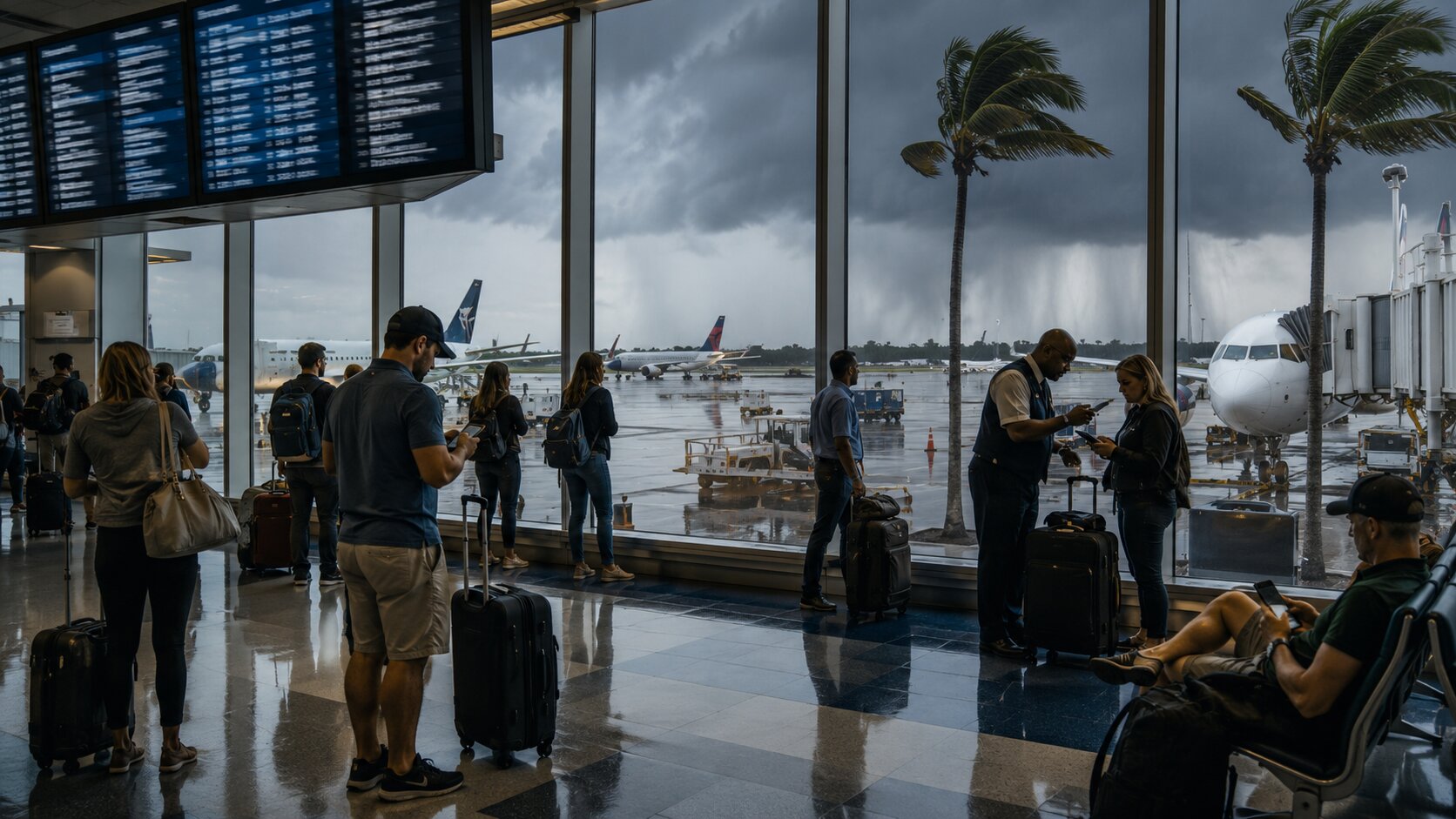
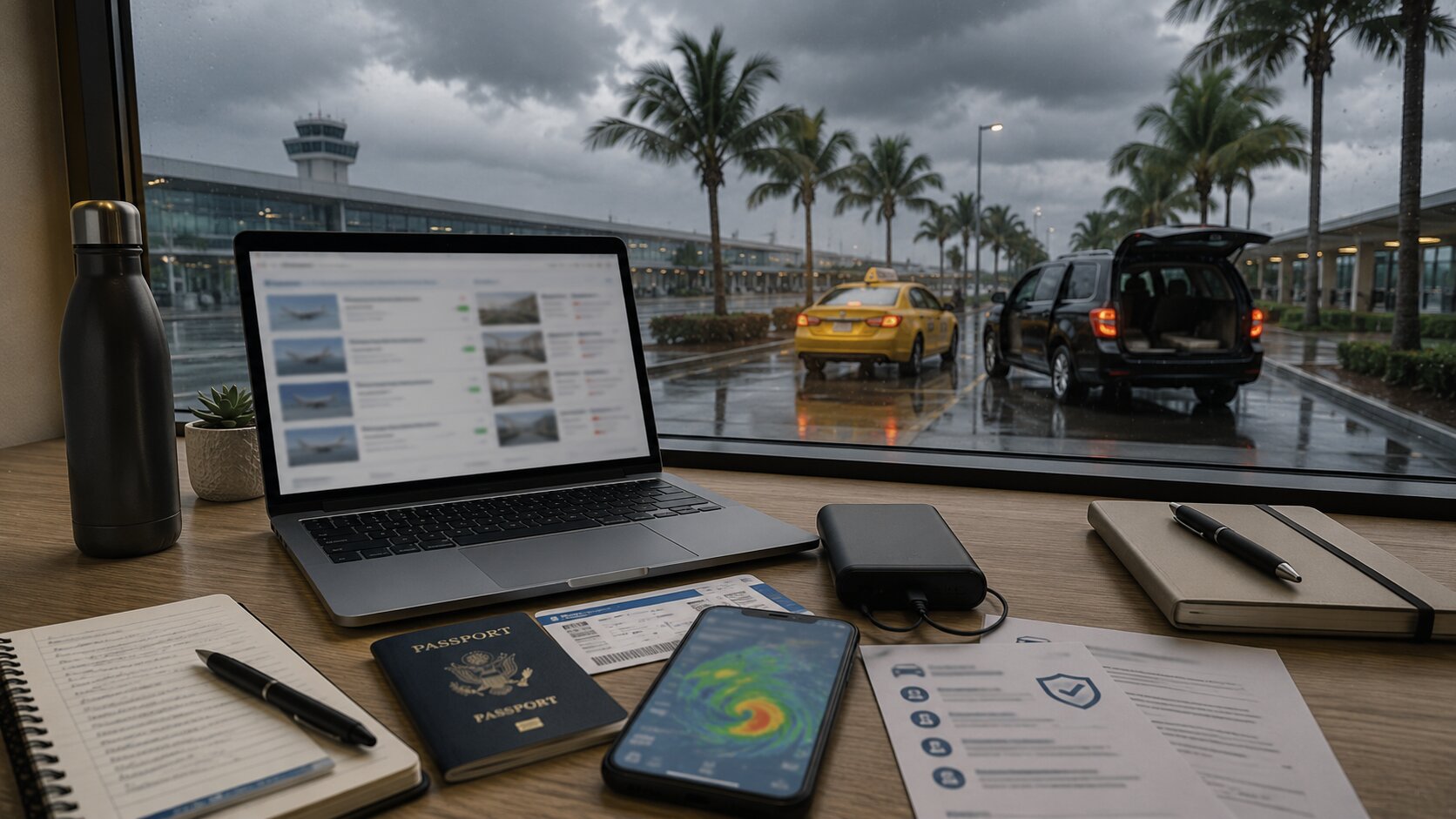
Tropical Storm Bertha is moving westward along the northern Gulf Coast, with the most immediate travel uncertainty affecting the Florida Panhandle, Alabama, Mississippi and Louisiana through July 23. Travelers should prioritise flexible flights and hotels, check whether roads to their accommodation are flood-prone, and avoid assuming that an operating airport means local taxis, transfers or beach activities will run normally.
Trips later in the week may face less direct storm risk, but residual flooding and airline recovery delays remain possible.
Tropical Storm Bertha is not forecast to become a major hurricane, but that does not make it irrelevant to travelers. A slow-moving tropical storm can disrupt a holiday through repeated thunderstorms, flooded streets, dangerous beaches, delayed regional flights and unreliable ground transport, even when airports and hotels remain technically open.
The key decision is therefore not simply whether the destination lies inside the forecast cone. Travelers need to examine the complete itinerary: the connecting airport, arrival time, hotel access road, cancellation terms, airport pickup arrangements and the activities that make the trip worthwhile.
This guide explains the areas and travel dates carrying the greatest uncertainty, how to compare booking options and when delaying or rerouting may be more sensible than accepting a cheap non-refundable fare.
Key Takeaways
Point
Details
Immediate risk window
July 22 and July 23 carry the greatest risk of direct wind, rain, coastal flooding and transport disruption.
Main travel problem
Urban flooding, dangerous surf and interrupted local transport may affect trips even without prolonged airport closures.
Flight strategy
Choose itineraries that can be changed, avoid short connections and check airline weather-waiver rules before paying.
Hotel strategy
Confirm both cancellation terms and whether the hotel remains accessible during street or coastal flooding.
Ground transport
Pre-booking a transfer can help, but travelers should confirm the operator’s storm cancellation and pickup procedures.
Later trips
Direct storm risk should decline as Bertha weakens, although delayed aircraft, crews and local recovery can extend disruption.
Bertha’s Latest Travel Footprint
At 1:00 a.m. CDT on Wednesday, July 22, Bertha was about 145 miles west-southwest of Panama City, Florida, and approximately 75 miles east of the mouth of the Mississippi River. Maximum sustained winds had decreased to 50 mph, and the storm was moving west at around 6 mph. The National Hurricane Center expected gradual weakening as the system continued near or along the northern Gulf Coast.
A tropical storm warning covered the coast from the Bay–Gulf County line in Florida to Morgan City, Louisiana, including metropolitan New Orleans and Lake Pontchartrain. A tropical storm watch extended farther west from Morgan City to Cameron, Louisiana.
For travelers, the relevant corridor includes destinations and airports around:
Panama City Beach and the western Florida Panhandle
Pensacola and coastal Alabama
Mobile and Dauphin Island
Gulfport and Biloxi
New Orleans and southeast Louisiana
Coastal areas farther west toward Morgan City and Cameron
This does not mean every flight or hotel in those locations will close. Tropical weather disruption is often uneven: one airport may continue operating while a specific airline cancels flights, a hotel remains open while its access road floods, or a beach resort functions normally indoors while swimming is prohibited.
The National Hurricane Center forecast 1–4 inches of rain, with isolated totals reaching 6 inches, from western Florida through southern Louisiana through Thursday. It also warned that urban flash flooding was possible.
Forecast storm surge ranged from 2–4 feet between the mouth of the Mississippi River and the Mississippi–Alabama border, with 1–3 feet possible in several surrounding coastal areas and Lake Pontchartrain.
Which Travel Dates Carry the Most Uncertainty?
Arrivals on July 22
Wednesday carries the highest immediate disruption risk for New Orleans, coastal Mississippi, Alabama and parts of the Florida Panhandle. Even where the strongest winds remain offshore, heavy rain can slow runway operations, create air traffic restrictions and affect the roads used by airport buses, taxis and private transfers.
A late-night arrival deserves particular scrutiny. A flight landing after the worst rain has passed may still leave passengers facing limited drivers, closed underpasses or a longer route to the hotel.
Travel on July 23
Thursday remains a risk period for rainfall, isolated flash flooding and operational recovery. Bertha is forecast to weaken, but airline disruption can move through the network after the weather itself changes.
An aircraft or crew delayed in New Orleans, Mobile or Pensacola can affect later departures elsewhere. Travelers continuing west into southern Louisiana should also monitor new watches or warnings as the system progresses.
Trips from July 24 Onward
The official forecast showed Bertha weakening substantially as it moved toward southeastern Texas, with dissipation expected after the system moves inland. That lowers the probability of direct tropical-storm conditions later in the week, but it does not guarantee that roads, attractions or transport schedules will immediately return to normal.
For a weekend trip, check the destination’s local updates rather than relying only on Bertha’s classification. A former tropical storm can still leave flooded roads, damaged beach access points and repositioning delays across airline networks.
Flights: Protect the Whole Itinerary
Travelers should compare flexibility before comparing the final few pounds, euros or dollars of airfare.
A basic fare may look attractive, but it can become poor value when a storm forces a voluntary date change that is not covered by an airline waiver. Before paying, open the fare conditions and identify:
Whether changes are permitted
Whether a fare difference would still apply
Whether the ticket can be cancelled for credit
Whether checked baggage is included
Whether the airline has issued a Gulf Coast weather waiver
Whether the booking platform or airline controls changes
Do not assume that every airline serving an affected airport will publish identical rules. Weather waivers normally specify eligible airports, original travel dates, ticket-purchase deadlines and the period in which rebooked travel must occur.
Avoid Fragile Connections
For international visitors from Europe or the UK, the most vulnerable itinerary may be a long-haul flight followed by a short domestic connection to New Orleans, Pensacola, Mobile or another regional airport.
Allowing a longer connection is more useful than choosing the shortest advertised journey. Separate tickets create additional risk because a delay on the first booking may not oblige the second airline to protect the onward segment.
Morning flights are often preferable during unsettled summer weather because they provide more rebooking possibilities later in the day. However, this is a planning advantage rather than a guarantee of better operations.
Pro Tip: Compare the price of a flexible ticket with the combined cost of a basic ticket, seat selection, baggage and a possible last-minute hotel. The apparently expensive fare may offer better total value during a developing storm.
Know the Refund Distinction
Under U.S. Department of Transportation rules, passengers are entitled to a refund when an airline cancels or significantly changes a flight and the passenger declines the replacement itinerary, travel credit or other alternative. The refund right applies regardless of whether weather caused the disruption.
That does not mean an airline must pay every additional storm-related expense. Hotel rooms, meals and ground transport are more commonly provided for disruptions considered within the airline’s control. Severe weather may fall outside those commitments.
Check the carrier’s customer-service policy and any protection included with the card used for payment.
Hotels: Access May Matter More Than Availability
A hotel displaying available rooms is not necessarily a low-risk booking.
For coastal resorts, ask whether the building, parking area or only access road is vulnerable to surge or flooding. In New Orleans, the greater practical concern may be street flooding rather than direct coastal inundation.
The City of New Orleans warned that heavy rain could cause localised flooding in low-lying and poorly drained areas. It also advised avoiding unnecessary journeys during periods of intense rainfall and never driving through flooded streets.
Before confirming a hotel, check:
Cancellation deadline: A rate advertised as refundable may become non-refundable 24, 48 or 72 hours before arrival.
No-show policy: A delayed flight does not automatically cancel the room without penalty.
Late check-in: Confirm that reception will remain staffed if the flight arrives after midnight.
Property access: Ask whether taxis can reach the entrance during street flooding.
Power and essential services: Travelers working remotely should ask about backup power and internet resilience.
Parking conditions: Underground or low-lying parking may require different precautions than elevated parking.
Families should also consider whether the booking remains worthwhile if pools, beaches, boat trips and outdoor attractions close. A room can remain fully usable while the main purpose of the holiday disappears.
Business travelers may prefer a hotel close to the meeting venue rather than one that requires repeated cross-city journeys. Digital nomads should prioritise properties with flexible extensions in case transport disruption makes departure impractical.
Airport Transfers, Taxis and Flooded Streets
A confirmed flight does not guarantee a straightforward journey between the airport and hotel.
New Orleans’ Regional Transit Authority warned that heavy rain and flooding associated with Bertha could cause delays or service interruptions. The authority advised riders to monitor live updates through its official channels.
Travelers arriving at Gulf Coast airports should compare three ground-transport scenarios before departure:
Option
Advantage
Storm-Related Weakness
Pre-booked private transfer
Driver and pickup plan arranged in advance
Route or pickup may change; confirm refund terms
Official airport taxi rank
No need to commit before landing
Queues and driver supply may be unpredictable
Public transport
Usually the lowest-cost option
Services may be delayed, suspended or rerouted
Rental car
Greater flexibility after arrival
Unsafe if roads flood; parking may be affected
When pre-booking, provide a working mobile number and the flight number. Ask whether the operator tracks delayed flights, how long the driver waits and what happens if the airport changes the pickup zone.
Do not agree to meet an unverified driver away from the designated pickup area simply because the terminal is busy. Use the airport’s official taxi rank, the booked operator’s confirmed instructions or the designated app-based pickup point.
Most importantly, do not pressure a driver to cross a flooded street. Floodwater can conceal open manholes, damaged roads and electrical hazards.
Beach Holidays and Coastal Activities
Bertha may affect the value of a beach trip more than the availability of accommodation.
The National Hurricane Center warned that swells would spread westward along the northern Gulf Coast and could create life-threatening surf and rip currents. These conditions may continue after the centre of the storm moves away.
Travelers should check local beach flags every day and follow closures even when the sky appears brighter. Rip-current risk is not reliably judged from the hotel balcony, and calmer-looking sections of water are not necessarily safer.
Confirm the cancellation policy for:
Boat tours and fishing charters
Dolphin-watching trips
Jet-ski and paddleboard rentals
Waterfront restaurants
Beach equipment reservations
Ferry services
Excursions requiring coastal-road access
Some Gulf Coast beaches may use double-red flags to close Gulf waters to swimmers as dangerous conditions develop. Restrictions vary by municipality, so verify the specific beach rather than assuming one flag system applies across the entire coast.
Should You Book Now, Wait or Reroute?
Book Now Only with Flexibility
Booking can still make sense when:
Travel is several days after the expected storm passage
The flight and hotel can be changed or cancelled
The trip is primarily urban or business-focused
You have more than one practical airport or route
You are comfortable replacing outdoor plans
This approach may secure availability while limiting financial exposure.
Wait When the Trip Is Optional and Imminent
Waiting is more sensible when:
Arrival is scheduled for July 22 or July 23
The trip depends on beach access or marine activities
Only non-refundable rates are available
The hotel requires a long coastal-road transfer
The itinerary uses separate or tightly connected flights
A lower room price is not valuable if the trip’s main activities are unavailable.
Reroute When the Destination Is Flexible
Travelers taking a general Gulf Coast holiday rather than attending a fixed event can compare inland destinations or postpone the coastal portion of the trip.
Another option is to fly into a larger airport and continue only after road and local transport conditions are clearer.
However, changing to Houston simply because Bertha is moving west is not automatically safer. The storm’s remnants were forecast to approach southeastern Texas, so check updated local forecasts before selecting an alternative airport.
Tropical Storm Bertha Booking Checklist
Read the latest National Hurricane Center advisory.
Check warnings for the exact city, parish or county.
Compare at least two airports or flight routes.
Avoid an unnecessarily short domestic connection.
Check whether the airline has published a weather waiver.
Review the fare’s change and refund conditions.
Confirm the hotel’s cancellation deadline and no-show policy.
Ask whether the hotel remains accessible during street flooding.
Check late-arrival and power-outage procedures.
Confirm airport transfer cancellation and waiting-time rules.
Save the driver’s contact details and official pickup point.
Review beach flags, ferry notices and activity cancellations.
Keep booking confirmations available offline.
Carry essential medication and a charged power bank.
Recheck the complete itinerary before leaving for the airport.
Compare Flexible Gulf Coast Travel Options
When tropical weather creates uncertainty, comparing only the headline price can lead to an inflexible and expensive itinerary.
AroundTravel helps travelers research and compare relevant travel services, including flights, hotels, airport transfers and taxis.
For Bertha-affected destinations, prioritise options with transparent cancellation terms, practical arrival times and reliable transport between the airport and accommodation.
The objective is not to eliminate every disruption risk. It is to avoid locking the entire trip into arrangements that cannot adapt when the forecast or transport schedule changes.
Frequently Asked Questions
Is It Safe to Travel to the Gulf Coast During Tropical Storm Bertha?
Conditions differ significantly across the region. Travel may remain possible in some cities, but areas under tropical storm warnings face risks from wind, flooding, storm surge and dangerous surf. Follow local emergency instructions and avoid unnecessary journeys during intense rainfall.
Should I Cancel a New Orleans Trip?
Not automatically. Consider your arrival date, flight flexibility, hotel location and planned activities. Trips arriving July 22 face greater uncertainty than later visits. A refundable urban hotel booking may remain workable, while a tightly scheduled outdoor itinerary may not.
Are Gulf Coast Airports Closed Because of Bertha?
A tropical storm warning does not automatically close an airport. Flights can operate, be delayed or be cancelled airline by airline. Check both the airport and airline rather than relying on a general weather map.
What Happens If the Airline Cancels My Flight?
For flights to, from or within the United States, you are entitled to a refund if the airline cancels or significantly changes the itinerary and you decline the alternative offered. Accepting a rebooked flight or travel credit may affect the refund option.
Will a Refundable Hotel Rate Cover a Storm Cancellation?
Only according to the rate’s written conditions. Check when the free-cancellation period ends and whether the hotel offers additional flexibility during named storms. Do not assume an airline cancellation automatically cancels the hotel without charge.
Should I Pre-Book a Taxi or Airport Transfer?
Pre-booking can provide a clearer pickup plan, especially for late arrivals. Confirm what happens if the flight is delayed, the pickup zone changes or flooded roads prevent the journey. Keep an alternative official taxi or public-transport option where possible.
When Should Gulf Coast Travel Return to Normal?
The direct tropical-storm threat is expected to decline as Bertha weakens, but transport recovery may take longer. Airline schedules, beach restrictions, flooded roads and local services should be checked individually through the weekend.
Sources Used
National Hurricane Center
National Weather Service
NOLA Ready — City of New Orleans
New Orleans Regional Transit Authority
U.S. Department of Transportation
Associated Press
Reuters
Jonas DuPont
An avid traveler and seasoned writer who has journeyed across more than 40 countries, sharing his unique experiences and insights with a growing audience of adventure seekers and travel enthusiasts. With a passion for discovering hidden gems and immersing himself in diverse cultures, Jonas's travel blog combines practical tips, stunning photography, and captivating storytelling. Whether he's navigating bustling city streets or exploring remote landscapes, Jonas offers readers an authentic glimpse into the world's most fascinating destinations, inspiring them to embark on their own unforgettable journeys.
Providing You With Access To The Top Travel Destinations. Book Now and Enjoy!
TESTIMONIALS
Travelers Reviews
Planning a trip used to be a stressful event, until I found Around
Travel. The website made everything so easy and convenient and really has made
travelling a relaxing experience. I highly recommend using them.
Sam Wistan Marketing Consultant, USA
I travel a lot for business and making reservations used to take up so
much time. Around Travel offers me quick access to all my booking needs.
Jonas DuPont Investment Advisor, London
I am a spur of the moment type of girl and I like to book trips at a
whim. Around Travel always has great deals and options for me to choose from.