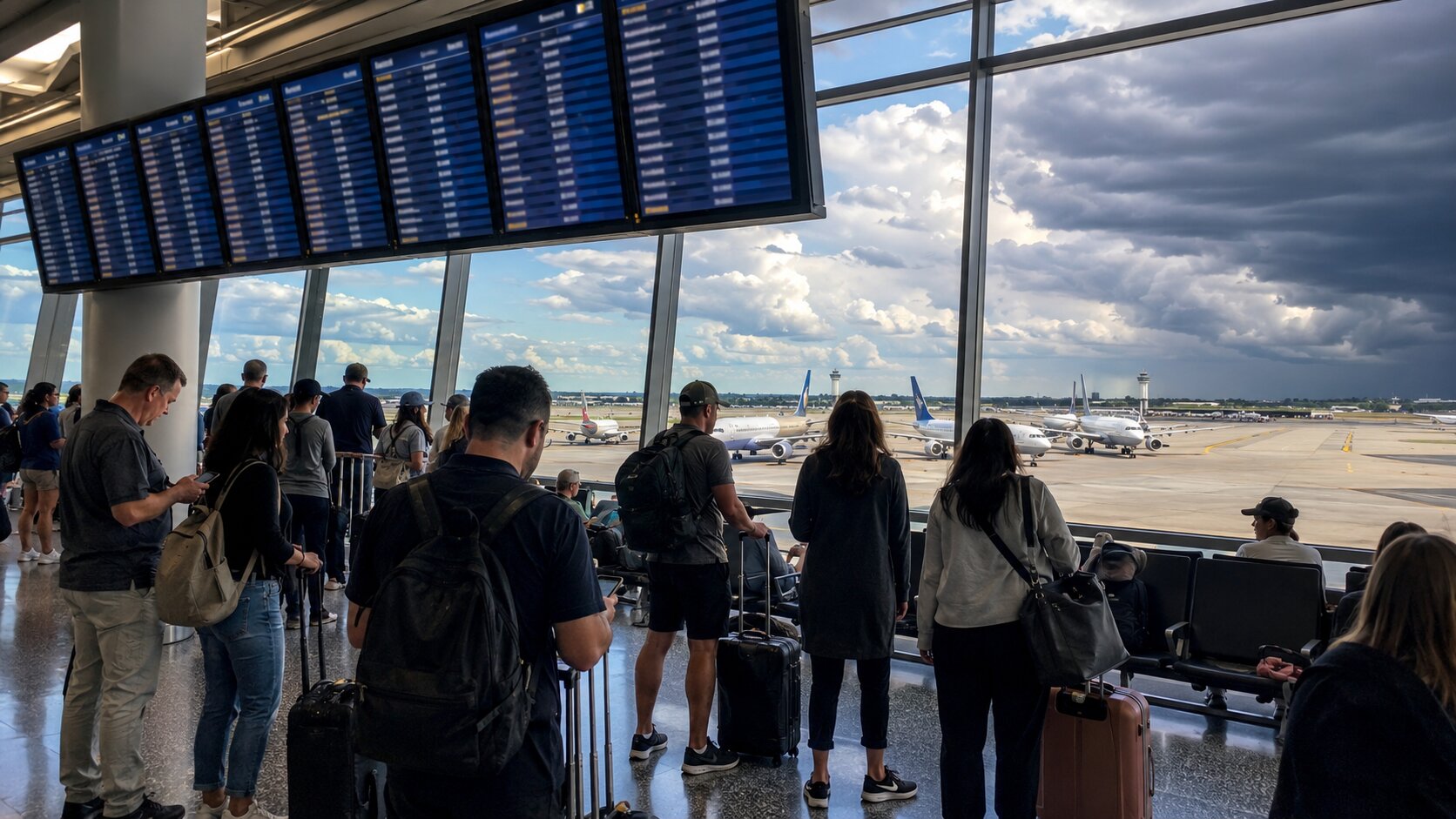
Air traffic control delays during summer 2026 are not limited to one airport or one cause. Thunderstorms, congestion, runway restrictions, staffing and equipment problems can all force the Federal Aviation Administration to slow flights.
Travelers can reduce disruption risk by choosing nonstop morning departures, avoiding tight connections and booking flexible hotels and airport transfers. Newark Liberty International Airport and Chicago O’Hare International Airport deserve particular attention because formal scheduling restrictions remain in place.
Summer flight disruption in the United States can appear suddenly. A route may look reliable when it is booked, only for thunderstorms, congestion or an FAA traffic-management programme to restrict arrivals several weeks later—or several hours before departure.
The phrase “air traffic control delay” can also be misleading. It does not automatically mean there are too few controllers. Airlines may use the term when the FAA has reduced the number of aircraft entering an airport or region because of weather, runway capacity, equipment problems, congestion or another operational constraint.
That distinction matters when comparing flights. Travelers should examine the airport, departure time, connection structure and recovery options rather than simply choosing the lowest fare. Hotels, taxis and transfers must also be included in the plan because a late arrival can turn a modest flight delay into a missed pickup, lost hotel night or expensive last-minute journey.
Key Takeaways
Point
Details
“ATC delay” has several possible causes
Weather, congestion, runway restrictions, staffing and equipment problems can all lead to traffic-management measures.
Newark remains capacity-controlled
The FAA has limited the number of scheduled operations at Newark through the end of the main 2026 summer travel season.
Chicago O’Hare is also restricted
The FAA has introduced scheduling limits to reduce overscheduling and operational disruption at the airport.
Timing matters
Early nonstop flights generally provide more recovery options than late departures or tight hub connections.
Ground transport needs flexibility
Transfers should include flight monitoring, a reasonable waiting period and clear late-arrival terms.
Refunds and compensation are different
A refund may be available when a flight is cancelled or significantly changed, but cash compensation for an ATC disruption is not automatic.
Why Summer 2026 Is Putting More Pressure on U.S. Flights
The FAA is managing one of the busiest periods of the aviation calendar. High traffic volume does not necessarily cause disruption by itself, but it leaves less spare capacity when thunderstorms, runway closures or equipment problems reduce the number of aircraft an airport can handle.
This is why a relatively short period of severe weather can affect flights far beyond the storm area. The FAA may introduce a ground stop, ground delay programme, reroute or another traffic-management initiative to prevent more aircraft from entering constrained airspace than controllers and airports can safely accommodate.
A ground stop may prevent aircraft from departing for a specific destination. A ground delay programme allows flights to operate but assigns controlled departure times so that aircraft do not arrive faster than the destination airport can accept them.
These measures can affect flights even when conditions at the departure airport appear normal. A traveler leaving London, Paris, Madrid or another European city may experience a delay because thunderstorms are reducing arrival capacity at a U.S. airport several hours away.
Read the Reason, Not Only the Delay Time
When an airline application shows an air traffic control restriction, look for the underlying reason.
Weather: Thunderstorms can close routes and reduce arrival rates even when the weather at the departure airport is clear.
Airport capacity: The number of scheduled flights may exceed the number that can realistically be handled during a particular period.
Runway or taxiway restrictions: Construction, maintenance or an unexpected closure can reduce airport capacity.
Staffing: A control facility may need to handle fewer flights when qualified staffing is limited.
Equipment or communications: Technical failures can require larger gaps between aircraft or temporary traffic restrictions.
The practical response depends on the cause. A short weather programme may clear later in the day, while a continuing airport capacity restriction can affect schedules throughout an entire season.
Two Airports Where Scheduling Limits Matter Most
Newark Liberty International Airport
Newark is operating under a formal FAA scheduling restriction during the 2026 summer travel period. The measure is intended to control congestion and prevent airlines from scheduling more arrivals and departures than the airport can handle reliably.
A scheduling limit can improve performance by reducing overscheduling. It does not eliminate the possibility of delays. When thunderstorms, low visibility or equipment problems reduce actual airport capacity below the permitted schedule, there may still be little room to absorb disruption.
Travelers using Newark should pay particular attention to:
Late-afternoon and evening departures during thunderstorm periods
Short domestic connections after an international arrival
The final flight of the day to a smaller destination
Non-refundable transfers timed too closely to the scheduled arrival
Separate flight tickets that do not include a protected connection
Where practical, compare Newark with John F. Kennedy International Airport, LaGuardia Airport or Philadelphia International Airport. However, the alternative should be evaluated as a complete journey.
A flight to another airport may have a lower disruption risk but require a longer taxi journey, a different hotel or a more complicated onward connection. Compare the final arrival time and total transport cost rather than the airfare alone.
Chicago O’Hare International Airport
Chicago O’Hare is one of the most important connecting airports in the United States. Its scale provides access to a large network of domestic destinations, but the airport can also experience significant pressure when airlines schedule too many operations during the busiest periods.
The FAA has introduced scheduling limits at O’Hare to reduce overscheduling and widespread disruption. These restrictions do not mean travelers should automatically avoid the airport. They do mean that connection times and alternative flight options deserve closer attention.
A short connection may look attractive during the booking process, particularly when it reduces the total journey time. However, a longer connection can be more valuable when the first flight crosses thunderstorm-prone airspace or arrives during a busy period of connecting departures.
Pro Tip: When two itineraries cost roughly the same, compare how many later flights the airline operates to your final destination. A route with several same-day alternatives offers a stronger recovery plan than one with only a single evening departure.
How to Build a Flight Plan with More Recovery Room
Start with Nonstop Flights
Every connection introduces another aircraft, airport, crew and airspace region that can be disrupted. A nonstop fare may be worth paying more for when traveling to a wedding, cruise departure, business meeting or another fixed-time event.
For transatlantic travelers, a nonstop flight to the final U.S. city can also avoid immigration, baggage collection and baggage re-checking during a domestic connection.
A nonstop flight is not guaranteed to operate without delay, but it removes the risk of missing an onward service because the first part of the itinerary arrived late.
Prefer the First Half of the Day
Earlier flights are not immune to air traffic control restrictions, but they usually provide more same-day recovery options. Delays can accumulate as aircraft and crews move through their schedules, leaving evening passengers with fewer alternatives after a cancellation.
This is especially important for families, travelers requiring assistance and passengers continuing to a destination served only a few times per day.
A morning departure may also make it easier to reach the destination by another route if the original flight is cancelled. By late evening, the remaining options may require an overnight stay.
Give Hub Connections Meaningful Space
The airline’s legal minimum connection time is not necessarily a comfortable connection time. International arrivals may involve immigration, baggage collection, customs, terminal changes and another security screening.
Allow more time when:
Entering the United States before a domestic connection
Changing terminals at a large airport
Traveling with checked baggage
Flying with children or reduced mobility
Connecting to the final flight of the day
Continuing on separate tickets
A longer connection will not prevent the first flight from being delayed, but it can prevent that delay from becoming a missed onward flight.
Keep the Itinerary on One Reservation
A single booking normally gives the operating airline responsibility for rebooking passengers after a missed protected connection.
With separate tickets, the second airline may treat the missed departure as a no-show, even when the first flight was delayed by an FAA restriction. The traveler may then need to purchase a replacement ticket and claim any eligible expenses separately through insurance.
Separate tickets can still make sense when the price difference is substantial, but the itinerary should include a much longer buffer. For some journeys, an overnight stop is safer than attempting a short self-transfer.
Hotels, Transfers and Taxis Can Become the Hidden Cost
A flight delay rarely affects only the flight. It can alter hotel check-in, car hire collection, airport transfer availability and local transport options.
Protect the First Hotel Night
For an evening arrival, confirm the hotel’s late check-in procedure before booking. Some properties require guests to notify reception when arriving after a particular time, while smaller hotels may not operate a staffed reception overnight.
A refundable or partially flexible rate may be more suitable when:
The trip includes a connection through a constrained airport
Arrival is scheduled late at night
The hotel is far from the airport
A major event is reducing local room availability
Missing the flight would make the entire stay unnecessary
Do not cancel a hotel prematurely during a flight delay. A delayed flight may still operate, and booking the same room again later could cost more or become impossible.
Contact the hotel directly when the arrival time changes significantly. A short message confirming that the guest still intends to arrive can help prevent the reservation from being classified as a no-show.
Check Airport Transfer Waiting Rules
Before paying for a private airport transfer, verify:
Whether the operator monitors the flight number
How waiting time is calculated
Whether immigration and baggage delays are included
What happens after a diversion or cancellation
Whether the pickup time can be changed without making a new booking
Where the official pickup zone is located
For late arrivals, compare the transfer with official airport taxis and public transport. The cheapest scheduled option may stop operating before a delayed flight lands.
Pro Tip: Enter the flight number rather than only the planned landing time when booking a transfer. Flight monitoring gives the operator better information, but it does not replace checking the company’s waiting-time and cancellation terms.
Consider the Real Cost of an Alternative Airport
An alternative airport may offer a cheaper or more reliable flight, but the ground journey can change the calculation.
Before switching airports, compare:
Taxi or private transfer prices
Public transport operating hours
Travel time to the hotel
Late-night surcharges
The number of passengers and amount of luggage
Whether a child seat is required
A family of four may find that a more expensive flight to the closest airport is cheaper overall than paying for a long private transfer from a distant alternative.
What to Monitor Before Leaving for the Airport
Start checking operating conditions before travel day rather than waiting for an airline notification.
Three to Seven Days Before Departure
Review the weather at the departure airport, destination and connection point. Severe weather several states away may still affect the aircraft scheduled to operate your flight.
Confirm the hotel’s cancellation deadline and the transfer provider’s change policy. Save airline, hotel and transport contact details somewhere accessible offline.
Check whether a major event, convention or festival is taking place at the destination. High hotel occupancy can make it difficult to find emergency accommodation after a cancellation.
The Evening Before Departure
Check whether the departure time, aircraft or connection has changed. Review the airline’s official travel alerts and identify alternative flights that could work if rebooking becomes necessary.
Confirm the terminal and airport transport arrangements. At large airports, a terminal change can affect where a taxi or private driver is permitted to collect passengers.
On the Day of Travel
Monitor:
The airline’s official application or website
The FAA airport status and national airspace updates
Official departure and arrival airport alerts
The inbound aircraft, where tracking is available
The weather at connecting airports
Any change to the terminal, gate or pickup zone
A delayed inbound aircraft does not guarantee that the next flight will depart late because the airline may substitute another aircraft. However, it can provide an early warning that disruption is developing.
Continue to travel to the airport unless the airline formally changes or cancels the flight. A displayed delay can be shortened, and passengers who arrive based only on the revised time may miss boarding.
Passenger Rights When ATC Restrictions Disrupt a Trip
Passenger entitlements depend on the itinerary, applicable law, cause of disruption and whether the traveler accepts an alternative flight.
Flights Covered by U.S. Rules
Under U.S. Department of Transportation rules, passengers are entitled to a refund when an airline cancels a flight and they choose not to travel.
A refund can also be due when a significant delay or schedule change occurs and the passenger rejects the changed or replacement itinerary. Accepting and using the delayed or replacement flight normally means the passenger has chosen to continue the journey rather than receive a full ticket refund.
U.S. law does not generally require airlines to provide cash compensation simply because a domestic flight was delayed or cancelled.
Airlines publish separate customer-service commitments covering meals, hotels and rebooking for disruptions within their control. These commitments may not cover weather or FAA air traffic restrictions because those causes are usually outside the airline’s direct control.
Flights Covered by EU or UK Rules
EU and UK passenger-rights rules may apply to some journeys between Europe and the United States. Coverage depends on the departure country, operating airline and specific itinerary.
An air traffic management decision may be classified as an extraordinary circumstance. This can remove eligibility for fixed cash compensation when the airline proves that the disruption was outside its control and could not reasonably have been avoided.
However, extraordinary circumstances do not automatically remove every passenger right. Depending on the itinerary and length of the disruption, the airline may still need to offer assistance, meals, accommodation, reimbursement or rerouting.
Keep receipts for reasonable meals, hotels and transport. Ask the airline to confirm the recorded reason for the disruption in writing before submitting a claim.
Practical Booking Checklist for Summer U.S. Flights
Check the FAA status of the departure, connection and destination airports.
Compare nonstop flights before choosing a cheaper connecting itinerary.
Prefer morning departures when the timing of the trip is important.
Avoid the final flight of the day where practical.
Allow additional time for U.S. immigration and baggage re-checking.
Keep connecting flights on one reservation.
Compare nearby airports using total travel time and ground transport cost.
Review the fare’s refund, credit and change conditions.
Book a flexible first hotel night when arriving late.
Tell the hotel when check-in may occur after reception hours.
Confirm whether an airport transfer monitors flight delays.
Check the transfer’s waiting-time, cancellation and no-show rules.
Save airline and hotel confirmations offline.
Pack medication, chargers and essential documents in hand luggage.
Identify at least one alternative flight before departure.
Keep receipts if disruption creates reasonable additional expenses.
Compare the Complete Journey with AroundTravel
The best summer itinerary is not always the one with the lowest headline airfare. A different departure time, airport, hotel policy or transfer arrangement can substantially improve the trip’s recovery options.
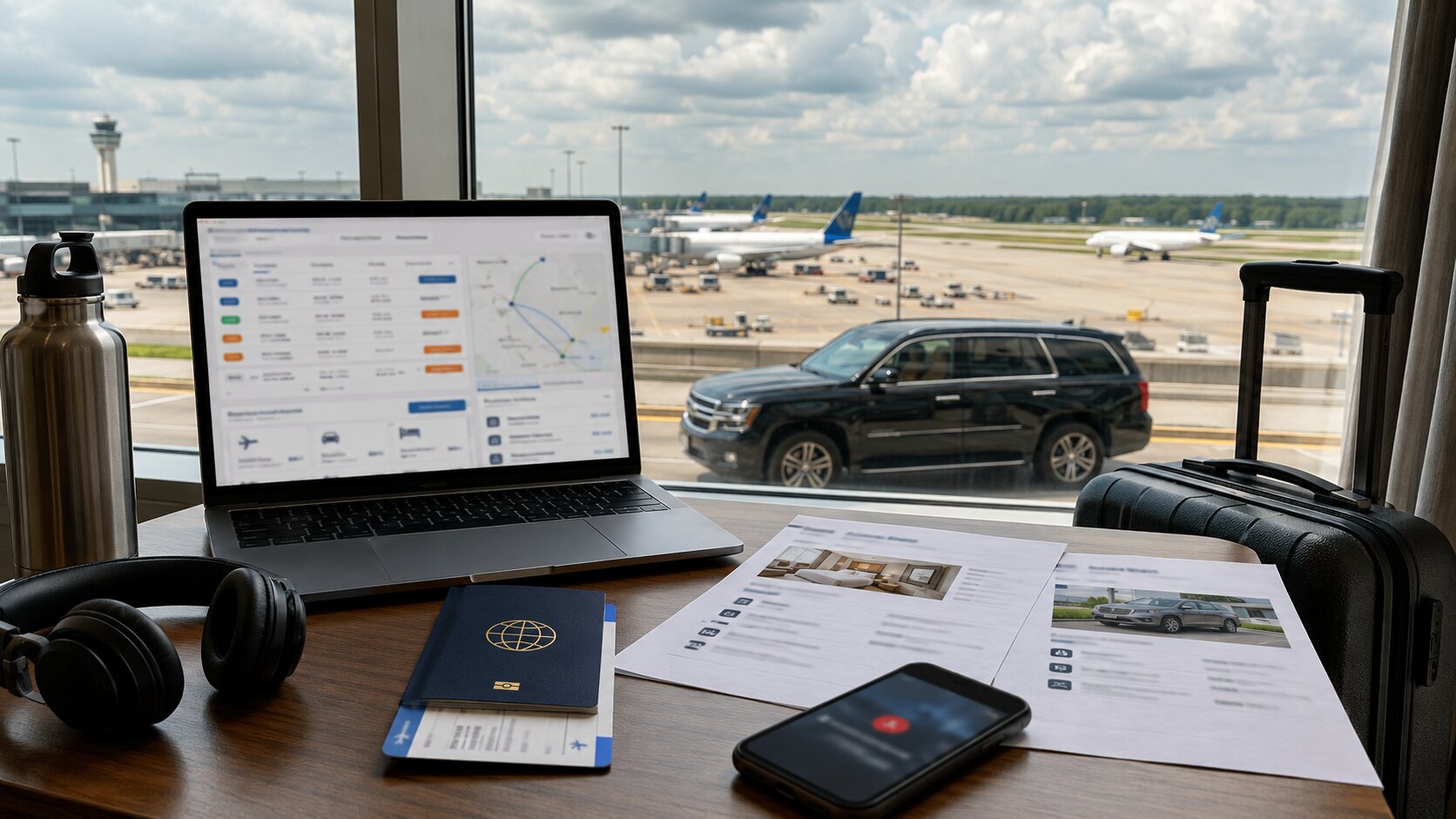
Use AroundTravel to compare the parts of the journey together, including flights, accommodation, airport transfers, taxis and related travel services.
Before confirming a booking, review each provider’s cancellation, waiting-time and late-arrival conditions so that the complete itinerary remains workable if an FAA restriction changes the schedule.
Frequently Asked Questions
Are U.S. air traffic control delays expected throughout summer 2026?
Some disruption is likely during busy travel periods, but the risk varies by airport, route, weather and time of day. Newark and Chicago O’Hare have formal scheduling restrictions, while daily FAA traffic-management plans change according to actual operating conditions.
Does an ATC delay mean there are not enough controllers?
Not necessarily. Airlines may describe a delay as ATC-related when the FAA slows traffic because of thunderstorms, congestion, runway capacity, equipment, staffing or another airspace restriction.
Should travelers avoid Newark during summer 2026?
Not automatically. Newark’s scheduling limit is intended to reduce overscheduling, but the airport can still experience disruption when actual capacity falls below the permitted schedule. Compare flight timing, nonstop options and alternatives from JFK, LaGuardia or Philadelphia.
Is it better to book a morning flight?
Morning flights often offer more same-day rebooking possibilities and may avoid delays that accumulate across an airline’s schedule. They can still be affected by overnight weather, equipment or staffing problems.
Will an airline pay for a hotel after an ATC cancellation?
It depends on the applicable passenger-rights rules and the airline’s policy. U.S. airline hotel commitments are commonly limited to controllable disruptions, and an FAA restriction may fall outside that category. Ask the airline before paying and keep all receipts.
What happens to a prepaid airport transfer if the flight is delayed?
The outcome depends on the operator’s terms. Some providers monitor flights and adjust pickup automatically, while others apply a limited waiting period or charge for a new pickup. Confirm these conditions before booking.
Can a passenger receive a refund instead of accepting a replacement flight?
Under U.S. rules, a refund is generally due if the airline cancels the flight, or significantly delays or changes it, and the passenger chooses not to travel or accept the alternative offered. After accepting and taking the replacement journey, a full ticket refund is generally no longer available under that rule.
Sources Used
Federal Aviation Administration — Summer Travel
Federal Aviation Administration — National Airspace System Status
Federal Aviation Administration — Newark Liberty International Airport Operating Limits
Federal Aviation Administration — Chicago O’Hare Scheduling Limits
U.S. Department of Transportation — Airline Refund Rules
U.S. Department of Transportation — Airline Customer Service Dashboard
Your Europe — Air Passenger Rights
UK Civil Aviation Authority — Flight Delays and Cancellations
Jonas DuPont
An avid traveler and seasoned writer who has journeyed across more than 40 countries, sharing his unique experiences and insights with a growing audience of adventure seekers and travel enthusiasts. With a passion for discovering hidden gems and immersing himself in diverse cultures, Jonas's travel blog combines practical tips, stunning photography, and captivating storytelling. Whether he's navigating bustling city streets or exploring remote landscapes, Jonas offers readers an authentic glimpse into the world's most fascinating destinations, inspiring them to embark on their own unforgettable journeys.
Providing You With Access To The Top Travel Destinations. Book Now and Enjoy!
TESTIMONIALS
Travelers Reviews
Planning a trip used to be a stressful event, until I found Around
Travel. The website made everything so easy and convenient and really has made
travelling a relaxing experience. I highly recommend using them.
Sam Wistan Marketing Consultant, USA
I travel a lot for business and making reservations used to take up so
much time. Around Travel offers me quick access to all my booking needs.
Jonas DuPont Investment Advisor, London
I am a spur of the moment type of girl and I like to book trips at a
whim. Around Travel always has great deals and options for me to choose from.