Planning an unforgettable adventure trip often feels overwhelming. You face endless destination choices, safety concerns, and the challenge of balancing excitement with practical logistics. Many travelers struggle to craft itineraries that deliver genuine thrills while managing risks and budgets effectively. This comprehensive guide walks you through every stage of adventure travel planning, from assessing your personal style and selecting emerging destinations to executing safely and troubleshooting challenges. You’ll discover actionable frameworks, insider tips, and data-driven insights to transform your next journey into a perfectly balanced adventure that prioritizes both exhilaration and security.
Key Takeaways
Point
Details
Budget framework
Allocate 30-40 percent of your budget to transport and 20-30 percent to accommodation, with the remainder for activities, meals, and contingencies to keep trips affordable and focused on what matters.
Activity balance
Structure itineraries with alternating high energy pursuits and lighter days to maintain endurance and prevent burnout on extended trips.
Flexible planning
Include two to three buffer days and book accommodations with flexible cancellation policies to absorb weather delays and unexpected fatigue.
Emerging destinations
Seek emerging destinations that offer unique thrills while supporting sustainability to avoid overtouristed hotspots.
Safety preparedness
Prioritize safety by assessing injury risks, researching appropriate travel insurance for adventure activities, and packing destination specific gear.
Assess your adventure style and plan your itinerary
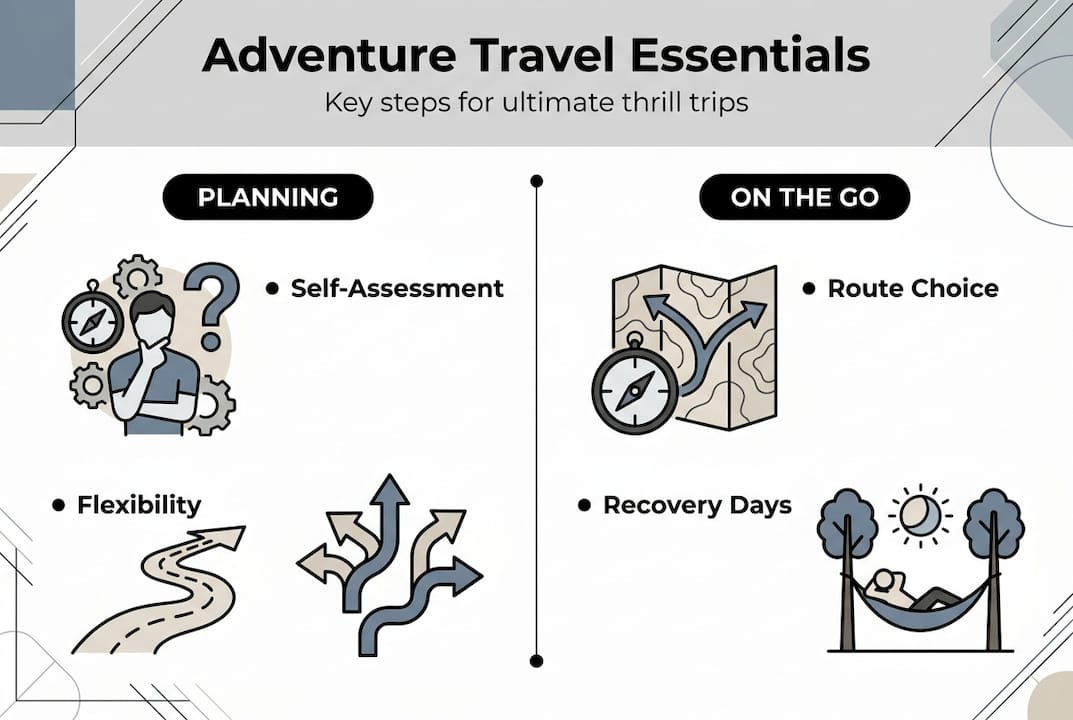
Successful adventure travel starts with honest self-assessment. Are you a thrill-seeker craving adrenaline rushes through extreme sports, a nature explorer seeking remote wilderness immersion, or a cultural adventurer blending outdoor activities with local traditions? Identifying your core motivations shapes every subsequent decision, from destination selection to daily pacing.
Budget allocation requires strategic thinking beyond simple cost cutting. Adventure travel planning experts recommend dedicating 30-40% of your budget to transport and 20-30% to accommodation, with the remainder covering activities, meals, and contingencies. This framework prevents overspending on luxury hotels while ensuring you can afford the experiences that matter most. Consider whether splurging on a guided glacier trek justifies camping instead of staying in lodges.
Crafting effective itineraries demands balance between intensity and recovery. Consecutive days of demanding physical activity lead to exhaustion and diminished enjoyment. Structure your schedule with alternating high-energy pursuits like mountain biking or kayaking and lighter days for cultural exploration or simple rest. This rhythm maintains enthusiasm while preventing burnout during extended trips.
Route planning significantly impacts efficiency and cost. Loop itineraries that return to your starting point work well for road trips and multi-sport adventures, minimizing backtracking. Point-to-point routes suit linear journeys like long-distance hiking trails. Group activities geographically to reduce transit time and expenses. Spending three days exploring a single region beats rushing between distant locations.
Flexibility separates seasoned adventurers from frustrated tourists. Build two to three buffer days into longer trips to accommodate weather delays, unexpected discoveries, or simple fatigue. Rigid schedules create stress when reality inevitably diverges from plans. Reserve accommodations with flexible cancellation policies when possible.
Pro Tip: Download vacation planning apps that work offline and sync across devices. Tools like Maps.me for navigation and Trail Wallet for budget tracking let you adapt plans dynamically without internet access, essential for remote destinations.
Essential planning steps:
Evaluate your physical fitness level honestly
Research visa requirements and vaccination recommendations
Create packing lists specific to your destination’s climate and activities
Share detailed itineraries with trusted contacts at home
Itinerary development process:
Select your primary destination and anchor activities
Calculate realistic daily distances and activity durations
Identify rest days and backup indoor options
Book critical reservations like permits or guided tours
Leave 20-30% of your schedule unplanned for spontaneity
Choose top adventure destinations with unique experiences
The adventure travel landscape constantly evolves as travelers seek authentic experiences beyond overcrowded hotspots. For 2026, emerging destinations offer extraordinary opportunities that combine thrilling activities with sustainable tourism practices. Greenland’s east coast presents untouched fjords perfect for kayaking among icebergs, while solar eclipse cruises provide once-in-a-lifetime astronomical adventures.
The Whitsunday Islands introduced the Ngaro Track, a challenging coastal hiking route blending Aboriginal cultural sites with pristine beaches and snorkeling opportunities. This multi-day trek rewards adventurers with isolation rarely found in popular Australian destinations. Kyrgyzstan continues gaining recognition for horseback riding expeditions through alpine meadows, offering cultural immersion alongside physical challenge.
New Zealand’s expanding trail network includes recently opened backcountry routes combining technical mountain biking with hut-to-hut hiking. These trails provide infrastructure supporting multi-day journeys without sacrificing wilderness character. Timor-Leste’s La Rende! trail showcases Southeast Asia’s newest long-distance trekking opportunity, connecting remote villages through mountainous terrain.
Additional 2026 adventures worth considering include stargazing expeditions in Northumberland’s Dark Sky Park, Slovenia’s Outdoor Week featuring canyoning and climbing festivals, and Italy’s seven-island sailing circuits. Octopus tracking expeditions and bioluminescence quests offer marine-focused alternatives to land-based adventures.
Choosing less-traveled destinations reduces your environmental footprint while supporting local economies that depend on tourism revenue. Overtourism degrades natural environments and diminishes authentic cultural exchanges. Selecting emerging spots distributes economic benefits more equitably across regions.
Destination Feature
Established Hotspots
Emerging Destinations
Crowd levels
High, especially peak season
Low to moderate year-round
Activity variety
Extensive commercial options
Authentic, locally-guided experiences
Infrastructure
Highly developed, predictable
Basic to moderate, requires adaptability
Cultural immersion
Limited due to tourism saturation
Deep, meaningful local interactions
Environmental impact
Stressed ecosystems, visible degradation
Pristine conditions, conservation focus
Cost
Premium pricing, competitive
Value-oriented, negotiable
Bucket list inspiration by activity type:
Hiking: Drakensberg Grand Traverse (South Africa/Lesotho), Laugavegur Trail (Iceland)
Water sports: Kitesurfing in Dakhla (Morocco), sea kayaking in Haida Gwaii (Canada)
Cycling: Pamir Highway (Tajikistan), Great Divide Mountain Bike Route (North America)
Cultural adventure: Trekking to remote monasteries in Bhutan, homestays in rural Peru
Explore our curated list of must-visit adventure destinations for additional inspiration spanning every continent and activity preference.
Prepare for safety and adapt to adventure risks
Adventure travel inherently involves risk, but understanding common dangers and implementing preventive measures dramatically reduces incident likelihood. Hiking injuries account for significant emergency responses in national parks, with falls causing 42% of injuries, dehydration contributing 15%, and ankle injuries representing 28% of cases. The 192 hiking fatalities recorded in US parks during 2022 predominantly affected young males engaging in risky behavior or inadequate preparation.
Water sports present distinct hazard profiles. Kitesurfing sees injury rates of 4.8 per 1000 hours overall, with beginners facing dramatically elevated risk during initial learning phases. Cuts comprise 23% of kitesurfing injuries, rib injuries 12%, and head trauma occurring despite helmet use. Understanding these statistics helps you prioritize appropriate protective equipment and training.
Safety incidents affect approximately 1 in 217 adventure travelers annually, with preventable causes like dehydration, inadequate acclimatization, and ignoring weather warnings accounting for the majority of emergencies. Proper preparation and situational awareness eliminate most risks.
Acclimatization prevents altitude sickness and heat-related illness. Experienced adventurers emphasize listening to your body and adjusting plans when physical symptoms emerge. Ascending too quickly at elevation causes headaches, nausea, and potentially life-threatening conditions. Gradual altitude gain and rest days allow physiological adaptation.
External factors beyond your control require contingency planning. Wildfires increasingly disrupt hiking and camping trips, forcing route changes or cancellations. Extreme weather events occur with less predictability due to climate change. Political instability or sudden visa policy changes affect international adventures. Transport strikes or equipment failures happen despite careful planning.
Essential safety practices:
Carry comprehensive first aid supplies including blister treatment, pain relievers, and wound care
Maintain hydration with electrolyte supplements, not just water
Wear activity-appropriate protective gear including helmets, knee pads, and proper footwear
Monitor weather forecasts obsessively and postpone activities when conditions deteriorate
Recognize early warning signs of exhaustion, dehydration, or altitude sickness
Never adventure alone in remote areas without satellite communication devices
Pro Tip: Register your detailed route and expected return time with local park authorities, your accommodation host, or emergency contacts at home. This simple step enables rapid rescue response if you fail to check in as planned. Carry a personal locator beacon or satellite messenger for areas without cell coverage.
Consult the travel risk index before finalizing international adventure destinations to understand country-specific safety considerations. Female travelers should review our guide to safe havens for solo travelers when planning independent adventures.
Execute your adventure plan and verify success
Effective execution transforms careful planning into memorable experiences. Daily preparation rituals ensure you start each adventure segment properly equipped and mentally focused. Begin every morning with a gear check covering navigation tools, sufficient water and food, weather-appropriate clothing layers, first aid supplies, and emergency communication devices. Confirm your planned route aligns with current conditions and your group’s energy levels.
Pacing determines whether you complete ambitious itineraries or abandon them halfway through. Start conservatively, especially on multi-day trips, allowing your body to adapt to sustained physical demands. Monitor group dynamics if traveling with others, adjusting speed to accommodate the slowest member rather than fragmenting the party. Take regular breaks for hydration, nutrition, and rest before fatigue becomes debilitating.
Communication prevents misunderstandings and safety incidents. Establish clear signals for groups spread across terrain, agree on decision-making protocols before conflicts arise, and maintain regular check-ins via radio or satellite messenger in remote areas. Solo travelers should send daily status updates to designated emergency contacts.
Troubleshooting common challenges requires calm assessment and flexible thinking. Weather deterioration demands immediate response, whether that means seeking shelter, donning additional layers, or abandoning exposed routes for safer alternatives. Minor injuries like blisters or cuts need prompt treatment before they worsen into trip-ending problems. Timing delays from slower-than-expected progress require honest evaluation of whether to modify objectives or push through fatigue.
Equipment failure happens despite quality gear and maintenance. Carry repair supplies including duct tape, zip ties, spare batteries, and basic tools. Know how to improvise solutions like fashioning emergency shelters or splinting injuries with available materials. Pre-trip practice with gear reduces fumbling during actual emergencies.
Planning Dimension
Solo Travel
Group Travel
Guided Tours
Self-Directed
Flexibility
Maximum
Moderate
Limited
High
Safety support
Self-reliant
Mutual assistance
Professional backup
Self-managed
Cost
Variable
Shared expenses
Premium
Budget-friendly
Pace control
Personal preference
Consensus-based
Fixed itinerary
Fully customizable
Learning curve
Steep
Shared knowledge
Expert instruction
Research-dependent
Daily execution checklist:
Wake with sufficient time for unhurried preparation and breakfast
Check weather updates and assess route conditions
Conduct thorough gear and supply inventory
Review navigation and confirm waypoints or landmarks
Communicate plans with your group or emergency contacts
Start activities during optimal conditions, typically morning
Monitor physical and mental state throughout the day
Document experiences through photos, video, or journaling
Conduct evening gear maintenance and prepare for next day
Reflect on successes and challenges to improve future trips
Success metrics extend beyond simply completing planned activities. Personal satisfaction and sense of accomplishment matter most. Did you push your comfort zone appropriately? Did you create meaningful memories and connections? Maintaining a perfect safety record with zero injuries or dangerous situations indicates effective risk management. Completing your itinerary as designed demonstrates accurate planning, though flexibility to modify plans also reflects maturity.
Journaling or logging trip details provides valuable reference for future adventures. Note what gear performed well or failed, which planning assumptions proved accurate, and how you handled unexpected challenges. These records become personalized guides improving each subsequent journey. The adventure tourism market reaches USD 858.56B in 2026 driven by travelers seeking experiential journeys, making high-quality execution and genuine satisfaction increasingly important.
Balance thrill with caution by recognizing that the best adventures bring you home safely with stories to share, not hospital visits or rescue operations. Pushing limits appropriately means knowing when to turn back, when conditions exceed your skill level, or when fatigue compromises judgment. Discover more inspiration through our collection of ultimate adventure experiences showcasing what’s possible with proper preparation.
Enhance your adventure travel experience with Around Travel
Planning comprehensive adventure travel involves countless logistics beyond choosing destinations and activities. Reliable ground transportation becomes critical when you need to reach remote trailheads, transfer between activity locations, or maintain schedule flexibility as conditions change. Around Travel provides car rental services specifically designed for adventure travelers requiring rugged vehicles, flexible pickup locations, and transparent pricing without hidden fees.
Unexpected events inevitably disrupt even the most carefully crafted plans. Weather emergencies, sudden illness, or family situations back home sometimes force itinerary changes or cancellations. Our clear refunds policy protects your investment when legitimate circumstances prevent travel, offering peace of mind during the planning process. When you need point-to-point transfers or local transportation without committing to full rental periods, our taxi booking services connect you with reliable drivers familiar with adventure destinations and outdoor recreation access points. Focus your energy on the experiences that drew you to adventure travel rather than wrestling with transportation logistics and booking complications.
Frequently asked questions
What is the best way to balance thrill and safety in adventure travel?
Prioritize thorough preparation including skills training, proper equipment, and physical conditioning before attempting challenging activities. Know your personal limits honestly and resist peer pressure to exceed your comfort zone. Always carry essential safety gear like first aid supplies, communication devices, and navigation tools. Listen to your body’s warning signs and don’t hesitate to modify plans when conditions or your physical state warrant caution.
How can I choose the right adventure destination for my style?
Start by assessing your core interests, whether that’s water sports, mountain activities, cultural immersion, or wildlife encounters. Evaluate your current fitness level realistically and select destinations matching your capabilities with room for growth. Consider your budget constraints and research destinations offering the best value for your preferred activities. Seek locations providing multiple activity options so weather or other factors don’t eliminate all possibilities. Read recent trip reports from travelers with similar interests to gauge whether a destination truly delivers the experiences you seek.
What are the most common injuries in adventure travel and how to avoid them?
Falls cause 42% of hiking injuries, while dehydration accounts for 15%. Kitesurfing sees cuts at 23% and rib injuries at 12% of incidents. Prevent falls through appropriate footwear, using trekking poles on unstable terrain, and maintaining focus rather than rushing. Combat dehydration by drinking water with electrolytes regularly before thirst develops, especially at altitude or in hot climates. Wear protective gear including helmets, pads, and proper clothing to minimize injury severity when accidents occur. Pace yourself to avoid exhaustion-related mistakes and poor judgment.
How to handle unexpected challenges like weather or delays during adventures?
Build flexibility into your schedule with buffer days and backup indoor activities for weather disruptions. Carry comprehensive gear covering a range of conditions so you can adapt to temperature swings or precipitation. Maintain open communication with your travel companions about modifying plans and establish decision-making processes before conflicts arise. Stay calm when delays occur and prioritize safety over rigidly adhering to original itineraries. Keep emergency funds available for unplanned accommodation, transport, or activity changes. Accept that perfect conditions rarely materialize and view adaptability as part of the adventure rather than a failure of planning.
An avid traveler and seasoned writer who has journeyed across more than 40 countries, sharing his unique experiences and insights with a growing audience of adventure seekers and travel enthusiasts. With a passion for discovering hidden gems and immersing himself in diverse cultures, Jonas's travel blog combines practical tips, stunning photography, and captivating storytelling. Whether he's navigating bustling city streets or exploring remote landscapes, Jonas offers readers an authentic glimpse into the world's most fascinating destinations, inspiring them to embark on their own unforgettable journeys.
Providing You With Access To The Top Travel Destinations. Book Now and Enjoy!
TESTIMONIALS
Travelers Reviews
Planning a trip used to be a stressful event, until I found Around
Travel. The website made everything so easy and convenient and really has made
travelling a relaxing experience. I highly recommend using them.
Sam Wistan Marketing Consultant, USA
I travel a lot for business and making reservations used to take up so
much time. Around Travel offers me quick access to all my booking needs.
Jonas DuPont Investment Advisor, London
I am a spur of the moment type of girl and I like to book trips at a
whim. Around Travel always has great deals and options for me to choose from.