Most travelers return home with camera rolls full of landmarks but hearts empty of genuine connection. You snap the Eiffel Tower, check off Machu Picchu, and move on to the next attraction. But what if travel could engage all your senses, immerse you in local rhythms, and create memories that linger far beyond passport stamps? Experiential travel transforms you from observer to participant, placing authentic cultural moments at the center of your journey. This guide reveals what experiential travel truly means, why it creates deeper satisfaction than traditional tourism, and how you can plan trips that touch your soul as much as they fill your photo gallery.
Understanding experiential travel: concept and core elements
Experiential travel engages multiple senses and puts you in authentic cultural contexts rather than behind tour bus windows. This approach shifts travel from passive observation to active participation, where you become part of the destination’s daily rhythm instead of merely witnessing it.
Key Takeaways
Point
Details
Immersion over sightseeing
Experiential travel puts you in authentic cultural contexts and turns passive observation into active participation with the destination.
Core experiential elements
Immersion, authenticity, interaction, and meaningful connection are the core elements that define truly experiential travel and shape how you engage with a place.
Sensory cultural engagement
Experiential travel engages multiple senses and moves you from behind a tour window to living in the local rhythm.
Benefits beyond sightseeing
Direct interactions build enhanced empathy, cognitive flexibility, stress reduction, and identity exploration beyond traditional sightseeing.
Plan for depth
Choose experiences that slightly push your comfort zone to create memorable learning and lasting personal meaning.
The core elements define what makes travel truly experiential:
Immersion: You dive into local environments, living alongside residents rather than staying isolated in tourist zones
Authenticity: Activities reflect genuine cultural practices, not performances staged for visitors
Interaction: Direct engagement with local people through shared activities, conversations, and collaborative experiences
Meaningful connection: Emotional and intellectual bonds form through understanding cultural context and personal stories
Traditional tourism focuses on efficient itineraries that maximize landmark visits per day. You see the Colosseum, snap photos, and rush to the next site. Experiential travel slows down. You might spend an afternoon learning pasta-making techniques from a Roman grandmother in her kitchen, hearing stories about her neighborhood’s transformation over decades. The difference lies not in the destination but in how deeply you engage with it.
Common experiential activities include joining pottery workshops in rural villages, participating in traditional harvest festivals, learning indigenous cooking methods using local ingredients, or volunteering with community conservation projects. Exploring Bhutan’s exclusive tourism model demonstrates how entire destinations can prioritize meaningful cultural exchange over mass tourism.
Pro Tip: Choose experiences that challenge your comfort zone slightly. Learning to prepare unfamiliar dishes or participating in traditional ceremonies outside your cultural background creates the cognitive engagement that transforms experiences into lasting memories.
Experiential travel fosters meaningful emotional connections and enriches understanding of local communities in ways conventional tourism cannot match. These deeper engagements reshape how you perceive both the destination and your place in the broader world.
The emotional and cognitive benefits extend far beyond your trip:
Enhanced empathy: Direct interaction with people from different backgrounds builds genuine understanding of diverse perspectives and challenges
Cognitive flexibility: Navigating unfamiliar cultural contexts strengthens problem-solving skills and adaptability
Stress reduction: Mindful engagement with sensory-rich experiences promotes present-moment awareness and relaxation
Identity exploration: Stepping outside familiar patterns helps you discover new aspects of your personality and values
Cultural empathy develops naturally when you share meals, work alongside locals, or participate in meaningful traditions. You stop viewing differences as exotic curiosities and start recognizing universal human experiences beneath surface variations. A cooking class becomes a conversation about family traditions. A craft workshop reveals economic challenges facing artisan communities. These insights create lasting attitude shifts that superficial sightseeing rarely achieves.
Sensory appreciation deepens through experiential travel. You notice the specific aroma of spices in a Moroccan souk, the texture of hand-woven textiles, the rhythm of traditional music during village celebrations. This multi-sensory engagement activates memory formation pathways more effectively than visual observation alone, explaining why experiential memories remain vivid years later while landmark visits blur together.
“The most profound travel moments happen when you stop being a tourist and start being a temporary local, sharing authentic experiences that reveal the heart of a place.”
Memory retention studies show experiences involving active participation and emotional engagement create stronger neural connections than passive observation. You might forget which museum held which painting, but you will remember the elderly weaver who taught you traditional patterns while sharing stories about her grandmother. Salzburger land unique inns exemplify how accommodations can facilitate these meaningful connections through thoughtful cultural programming.
Experiential travel styles and examples: how to immerse authentically
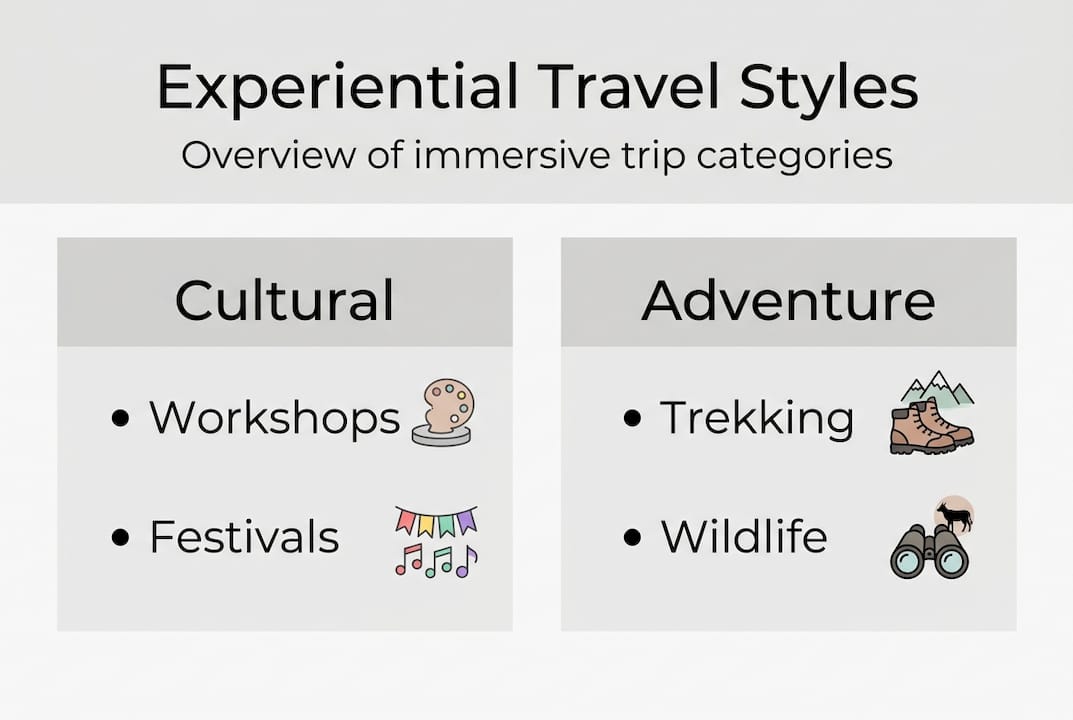
Different types of experiential travel include culinary, adventure, cultural, and community-based styles that offer unique engagement opportunities suited to various interests and comfort levels. Understanding these categories helps you identify which approaches align with your travel goals.
Culinary experiential travel goes far beyond restaurant dining. You visit morning markets with chefs, select ingredients while learning their cultural significance, then prepare traditional dishes using centuries-old techniques. In Thailand, you might forage for herbs in rural gardens before cooking curry paste from scratch. These experiences connect food to landscape, history, and family traditions.
Adventure experiential travel combines physical activity with cultural learning. Trekking through Himalayan villages with local guides reveals how communities adapt to extreme environments. You learn traditional navigation methods, understand sacred mountain beliefs, and share tea in family homes along the route. The physical challenge becomes secondary to human connection.
Cultural immersion focuses on artistic and intellectual traditions. You might study traditional dance forms, learn indigenous craft techniques, or participate in religious festivals as an invited guest rather than spectator. Irresistible island getaways often provide ideal settings for cultural immersion due to distinct traditions preserved in island communities.
Preparing for immersive travel requires intentional steps:
Research cultural context before arrival, understanding basic customs, appropriate behavior, and current social dynamics
Connect with local organizations offering authentic programming rather than tourist-focused performances
Learn basic language phrases showing respect and facilitating genuine interaction beyond English-speaking guides
Pack appropriately for active participation, including modest clothing for religious sites and practical gear for hands-on activities
Set realistic expectations about comfort levels, recognizing authentic experiences may involve basic accommodations or unfamiliar situations
Pro Tip: Engage local guides who are community members rather than outside tour operators. They provide insider perspectives, facilitate genuine interactions, and ensure your tourism dollars directly benefit local economies.
Planning your experiential travel: tips and best practices
Planning and thoughtful participation enhance experiential travel impacts and traveler satisfaction while ensuring respectful cultural exchange. Strategic preparation maximizes meaningful moments without over-scheduling or losing spontaneity.
Early research proves essential for identifying authentic opportunities. Search for community-run programs, cooperatives, and social enterprises rather than commercial tour packages. Read traveler reviews carefully, distinguishing between genuine cultural experiences and staged performances marketed as authentic. Contact operators directly, asking specific questions about local involvement, benefit distribution, and activity authenticity.
Respectful cultural interaction requires preparation:
Study cultural norms around personal space, physical contact, photography permissions, and appropriate conversation topics
Dress appropriately for local standards, particularly in conservative communities or religious contexts
Ask permission before photographing people, homes, or ceremonies, and respect refusals graciously
Listen more than you speak during interactions, showing genuine interest in local perspectives rather than dominating conversations
Avoid assumptions about poverty, happiness, or lifestyle choices based on material differences from your home culture
Technology facilitates experiential travel when used thoughtfully. Translation apps enable basic communication in local languages. Vacation planning services and apps help you research authentic operators, read community reviews, and book directly with local providers. Mapping tools reveal neighborhoods beyond tourist zones where daily life unfolds authentically.
Balancing planned activities with spontaneous experiences creates the richest trips. Schedule core experiential activities requiring advance booking or coordination, such as cooking classes, craft workshops, or guided village visits. Leave substantial unscheduled time for wandering local markets, accepting unexpected invitations, or following interesting conversations wherever they lead. The most memorable moments often arise from unplanned interactions.
Pro Tip: Learn ten basic phrases in the local language before arrival, including greetings, thank you, please, and how to ask permission. This small effort demonstrates respect and opens doors to interactions that English alone cannot access.
Set realistic expectations about comfort and convenience. Authentic experiences may involve basic facilities, unfamiliar foods, or situations outside your normal comfort zone. This discomfort often signals genuine cultural immersion rather than sanitized tourist experiences. Approach challenges with curiosity rather than complaint, recognizing that growth happens at the edge of familiarity.
Consider timing carefully. Visiting during local festivals or harvest seasons provides natural opportunities for participation and observation. However, peak tourist seasons may dilute authenticity as communities adapt to visitor influx. Shoulder seasons often offer better access to local life at a more natural pace.
Budget appropriately for experiential travel. While some experiences cost less than conventional tours, quality programs that fairly compensate local participants and reinvest in communities require adequate funding. Prioritize spending that directly benefits local people over international chains or outside operators extracting profits from cultural tourism.
Discover immersive travel experiences with Around Travel
Ready to transform your next trip from ordinary sightseeing into extraordinary cultural immersion? Around Travel makes experiential adventures accessible through comprehensive planning resources and reliable transportation options that connect you with authentic local experiences.
Navigating unfamiliar destinations becomes effortless with Around Travel car services designed for travelers seeking flexibility and independence. Whether you need transportation to remote villages, artisan workshops, or cultural sites beyond typical tourist circuits, reliable vehicles and local knowledge ensure you reach authentic experiences safely and efficiently. Around Travel taxi services provide convenient point-to-point connections when you want professional drivers familiar with regional routes and hidden gems.
Our platform prioritizes your peace of mind with transparent booking processes and customer-focused policies. The Around Travel refunds policy protects your investment if plans change, letting you book experiential activities confidently. We understand immersive travel requires flexibility, and our services adapt to your evolving itinerary as you discover unexpected opportunities.
Frequently asked questions
What exactly is experiential travel?
Experiential travel emphasizes active participation in authentic cultural activities that engage multiple senses and create emotional connections with destinations. Instead of observing landmarks from a distance, you learn local skills, share meals with residents, participate in traditional practices, and immerse yourself in daily community life. This approach transforms you from tourist to temporary participant in the destination’s cultural fabric.
How does experiential travel differ from regular tourism?
Regular tourism focuses on efficient sightseeing, checking famous landmarks off lists, and staying within comfortable tourist infrastructure. Experiential travel prioritizes depth over breadth, spending more time in fewer places to build genuine understanding and relationships. You engage directly with local people through shared activities rather than observing through tour bus windows or following guided scripts designed for mass audiences.
Where can I find authentic experiential travel activities?
Search for community-run cooperatives, social enterprises, and local organizations rather than international tour operators. Contact destination tourism boards asking specifically about community-based tourism programs. Read detailed traveler reviews on platforms emphasizing cultural exchange over entertainment. Connect with local guides who are community members, and ask accommodations about authentic cultural programming they facilitate or recommend in surrounding areas.
What tips help maximize immersive travel experiences?
Learn basic local language phrases before arrival to facilitate genuine interaction. Research cultural norms around behavior, dress, and social interaction to show respect. Choose activities slightly outside your comfort zone for deeper engagement. Leave substantial unscheduled time for spontaneous interactions and unexpected invitations. Approach differences with curiosity rather than judgment, recognizing that discomfort often signals authentic cultural immersion rather than sanitized tourist experiences.
Is experiential travel suitable for all traveler types?
Experiential travel adapts to various interests, physical abilities, and comfort levels. Culinary experiences suit food enthusiasts. Cultural workshops appeal to creative learners. Adventure options engage active travelers. Community-based programs attract socially conscious visitors. While experiential travel requires openness to unfamiliar situations and willingness to step beyond typical tourist comforts, you can choose intensity levels matching your preferences. Families, solo travelers, and groups all find appropriate experiential options with thoughtful planning.
An avid traveler and seasoned writer who has journeyed across more than 40 countries, sharing his unique experiences and insights with a growing audience of adventure seekers and travel enthusiasts. With a passion for discovering hidden gems and immersing himself in diverse cultures, Jonas's travel blog combines practical tips, stunning photography, and captivating storytelling. Whether he's navigating bustling city streets or exploring remote landscapes, Jonas offers readers an authentic glimpse into the world's most fascinating destinations, inspiring them to embark on their own unforgettable journeys.
Providing You With Access To The Top Travel Destinations. Book Now and Enjoy!
TESTIMONIALS
Travelers Reviews
Planning a trip used to be a stressful event, until I found Around
Travel. The website made everything so easy and convenient and really has made
travelling a relaxing experience. I highly recommend using them.
Sam Wistan Marketing Consultant, USA
I travel a lot for business and making reservations used to take up so
much time. Around Travel offers me quick access to all my booking needs.
Jonas DuPont Investment Advisor, London
I am a spur of the moment type of girl and I like to book trips at a
whim. Around Travel always has great deals and options for me to choose from.