Most travelers flock to the same crowded landmarks, snapping identical photos and following well-worn paths. Yet the most transformative journeys happen far from tourist hordes, in places where silence replaces selfie sticks and authentic connection replaces commercialized experiences. Remote destinations offer untouched landscapes, genuine cultural immersion, and profound psychological benefits that popular spots simply cannot match. This guide reveals how venturing beyond the beaten path creates richer memories, supports sustainable tourism, and fundamentally changes how you experience the world.
Key Takeaways
Point
Details
Untouched landscapes
Remote destinations offer pristine landscapes and genuine cultural immersion that create memories you cannot get at crowded sites.
Mental benefits
Solitude and novelty in remote settings promote introspection, reset your mind, and offer fresh perspectives on challenges.
Sustainable tourism
Traveling to remote areas supports responsible tourism by preserving cultures, ecosystems, and authentic experiences.
Planning and safety
Successful remote travel requires careful logistics, safety preparation, and willingness to solve navigation challenges.
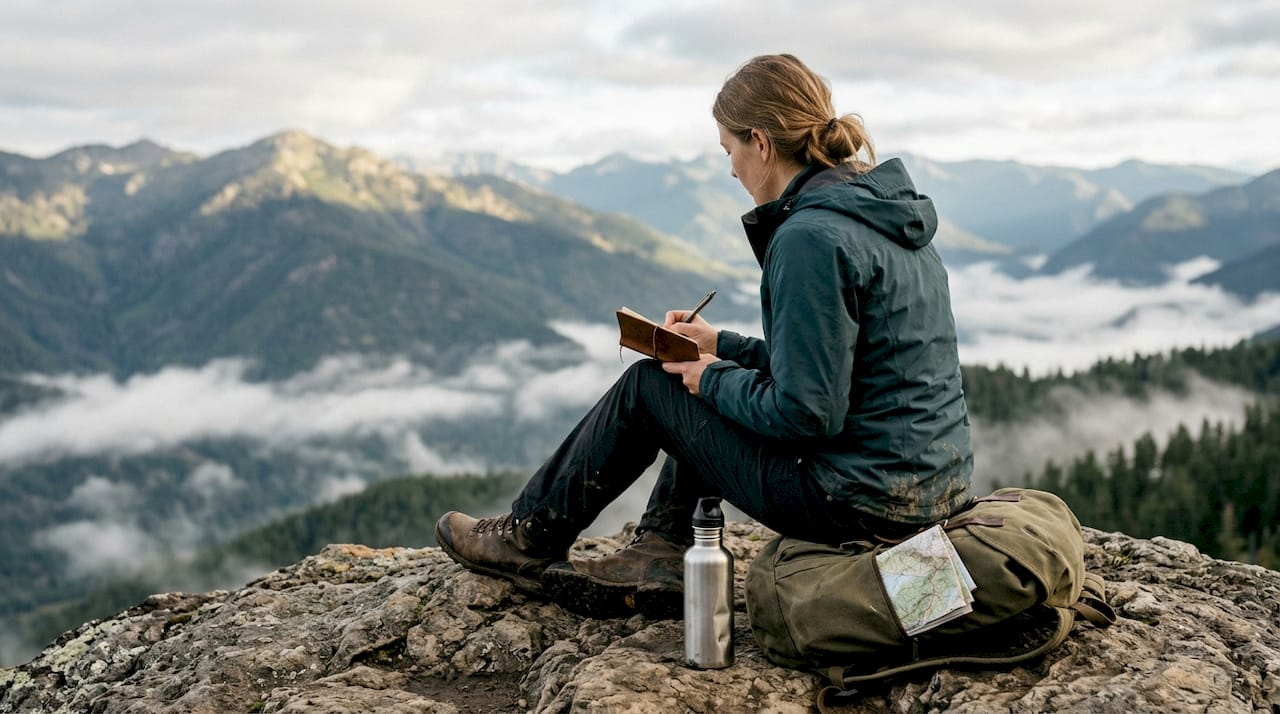
Journaling over photography
Documenting travels through detailed journaling helps process sensory details and strengthens long term memories.
What makes remote destinations uniquely memorable
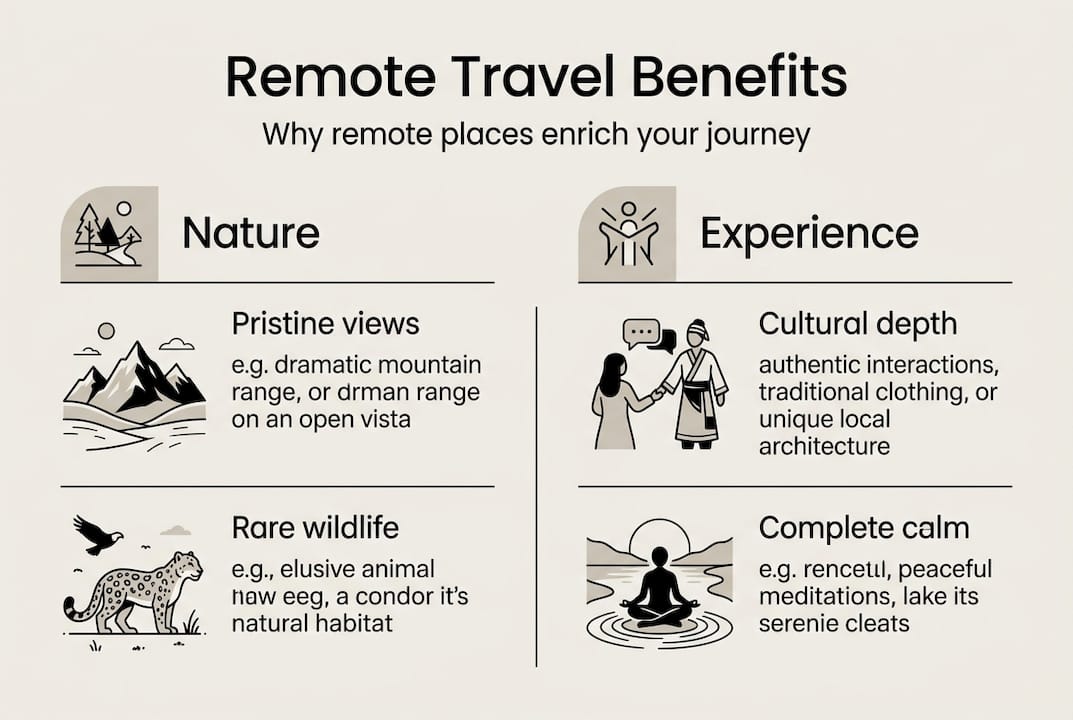
When you step into truly isolated places, your senses awaken to details impossible to notice in crowded spaces. Remote destinations offer unique experiences through their untouched landscapes, rare wildlife, and profound silence that creates memories unlike anything popular tourist spots provide. The visual impact of pristine environments registers differently in your brain because you’re not competing with hundreds of others for the same view.
Consider the difference between photographing Machu Picchu at dawn with 500 other tourists versus watching sunrise over an isolated Alaskan glacier with only your guide. The solitude transforms observation into experience. Wildlife behaves naturally when human presence remains minimal, offering genuine encounters rather than habituated performances. You might witness a snow leopard hunting in the Himalayas or observe undisturbed penguin colonies in remote Antarctic islands, moments that feel like personal discoveries rather than checkbox attractions.
The sensory depth of silence cannot be overstated. Most people never experience true quiet, where the absence of human-made sound allows you to hear your own heartbeat or the rustle of a single leaf. This acoustic emptiness creates space for thoughts and emotions that urban noise constantly suppresses. Your mind processes experiences differently when freed from constant stimulation, encoding memories with unusual clarity and emotional resonance.
Remote locations also lack the generic infrastructure that homogenizes popular destinations. You won’t find the same chain hotels, standardized restaurants, or predictable souvenir shops. Instead, accommodations reflect local building traditions, meals feature regional ingredients prepared traditionally, and any mementos you acquire carry genuine cultural significance. This authenticity extends to every interaction, from navigation challenges that require problem-solving to conversations with locals who rarely encounter outsiders.
Pro Tip: Document your remote travels through detailed journaling rather than excessive photography. Writing forces you to process sensory details and emotional responses that cameras miss, creating richer long-term memories.
The contrast with mainstream tourism becomes stark when you realize that exploring Alaska’s remote wilderness offers experiences fundamentally different from visiting Disneyland or Times Square. Popular spots deliver predictable entertainment, while remote destinations provide unpredictable discovery. One satisfies expectations, the other exceeds imagination.
Psychological and cultural benefits of visiting remote places
Your mental state shifts dramatically when removed from digital connectivity and urban stimulation. Psychological benefits include introspection and mental reset because solitude and novelty in remote areas create conditions for profound self-reflection impossible in daily life. The brain processes isolation as an opportunity for cognitive reorganization, similar to how sleep consolidates memories. Without constant external demands, your mind naturally turns inward, examining priorities and generating fresh perspectives on persistent challenges.
Experiencing awe in vast natural settings triggers measurable psychological changes. Research shows that awe reduces self-focus, increases prosocial behavior, and enhances life satisfaction. Standing before an endless Patagonian ice field or beneath the aurora borealis in northern Norway makes personal problems feel appropriately small while simultaneously affirming your connection to something larger. This emotional recalibration often persists long after returning home, influencing decision-making and relationship priorities.
Creativity flourishes in novel environments because your brain must generate new neural pathways to process unfamiliar stimuli. Artists, writers, and entrepreneurs often report breakthrough insights during remote travel, when freed from routine thought patterns. The combination of physical challenge, sensory novelty, and reflective solitude creates ideal conditions for innovative thinking. You return not just with photos but with fundamentally new ways of approaching old problems.
Confidence grows through successfully navigating uncertain situations. Remote travel demands constant adaptation as plans change due to weather, logistics, or unexpected opportunities. Each solved problem reinforces your capability to handle complexity, building self-efficacy that transfers to other life domains. The person who figures out how to reach a remote village in Bhutan feels more equipped to tackle career challenges or personal obstacles.
Pro Tip: Schedule at least one full day of complete solitude during remote trips. Initial discomfort gives way to profound clarity as your mind adjusts to unstructured time.
Cultural immersion is deeper in remote areas with authentic local interactions, small groups, and Indigenous experiences that avoid tourist bubbles entirely. In popular destinations, locals often view visitors as economic transactions. In remote communities, you become a curiosity, a guest, sometimes even a temporary friend. Conversations happen because people genuinely want to share their lives, not because they’re selling something.
Small group sizes in remote areas facilitate meaningful exchanges impossible in tour bus crowds. When only six people visit a village instead of sixty, residents can engage individually, sharing stories and traditions without performance pressure. You might help prepare a traditional meal, participate in a local ceremony, or simply spend an evening listening to elders describe how their world has changed. These interactions create mutual understanding that transcends language barriers.
Indigenous communities in remote regions often maintain cultural practices eroded elsewhere by modernization. Visiting these places with respect and proper guidance provides rare opportunities to witness traditional crafts, spiritual practices, and social structures. Bhutan’s exclusive tourism model demonstrates how limiting visitor numbers preserves cultural authenticity while providing economic benefits.
Practical advantages and sustainability of remote travel
The absence of crowds transforms every aspect of your journey. Practical benefits include fewer crowds and tranquility that allow you to experience destinations at your own pace without competing for space or views. You can spend an hour photographing a landscape from every angle, meditate beside a waterfall without interruption, or explore ancient ruins without navigating human traffic. This freedom to linger changes how deeply you connect with places.
Cost effectiveness surprises many travelers. While reaching remote destinations sometimes requires significant transportation investment, daily expenses often run lower than popular tourist areas. Accommodations lack luxury markups, meals cost what locals pay, and activities don’t carry inflated foreigner pricing. A week in remote Patagonia might cost less overall than three days in Paris, despite the longer flights required.
Aspect
Remote Destinations
Popular Hotspots
Crowd density
Minimal to none
Hundreds to thousands daily
Accommodation cost
$30-80/night average
$150-400/night average
Meal pricing
Local rates
Tourist markups 200-400%
Experience authenticity
High, unfiltered
Low, commercialized
Environmental impact per visitor
Lower with responsible practices
Higher due to infrastructure strain
Cultural exchange quality
Deep, personal
Superficial, transactional
Sustainable tourism becomes tangible when your spending directly benefits small communities. Unlike mega-resorts where profits flow to distant corporations, remote destinations channel tourist dollars into local economies. Your guide fee supports a family, your lodging payment maintains community infrastructure, and your meal purchase sustains traditional agriculture. This economic distribution model preserves both culture and environment by giving communities financial incentives to maintain rather than exploit their resources.
Access to hidden natural wonders represents another practical advantage. Remote areas protect geological formations, ecosystems, and wildlife populations that would deteriorate under heavy visitation. You might explore ice caves in Greenland, witness bioluminescent bays in isolated Pacific islands, or trek through cloud forests sheltering species found nowhere else. These experiences feel like personal discoveries because so few people ever witness them.
Pro Tip: Choose guided small group tours focused on environmental and social responsibility. Operators committed to sustainability limit group sizes, employ local guides, follow leave-no-trace principles, and contribute portions of fees to conservation projects. Research certifications like Travelife or Green Tourism before booking.
The tranquility of remote places provides psychological restoration impossible in stimulating environments. Your nervous system downregulates when freed from constant alerts, crowds, and decision fatigue. Sleep quality improves, stress hormones decrease, and mental clarity returns. Many travelers report that one week in a remote location provides more genuine rest than two weeks at a busy beach resort.
Unique inns in Salzburger Land demonstrate how even relatively accessible remote areas offer advantages over mainstream destinations through authentic local character and peaceful settings.
How to plan and stay safe when visiting remote destinations
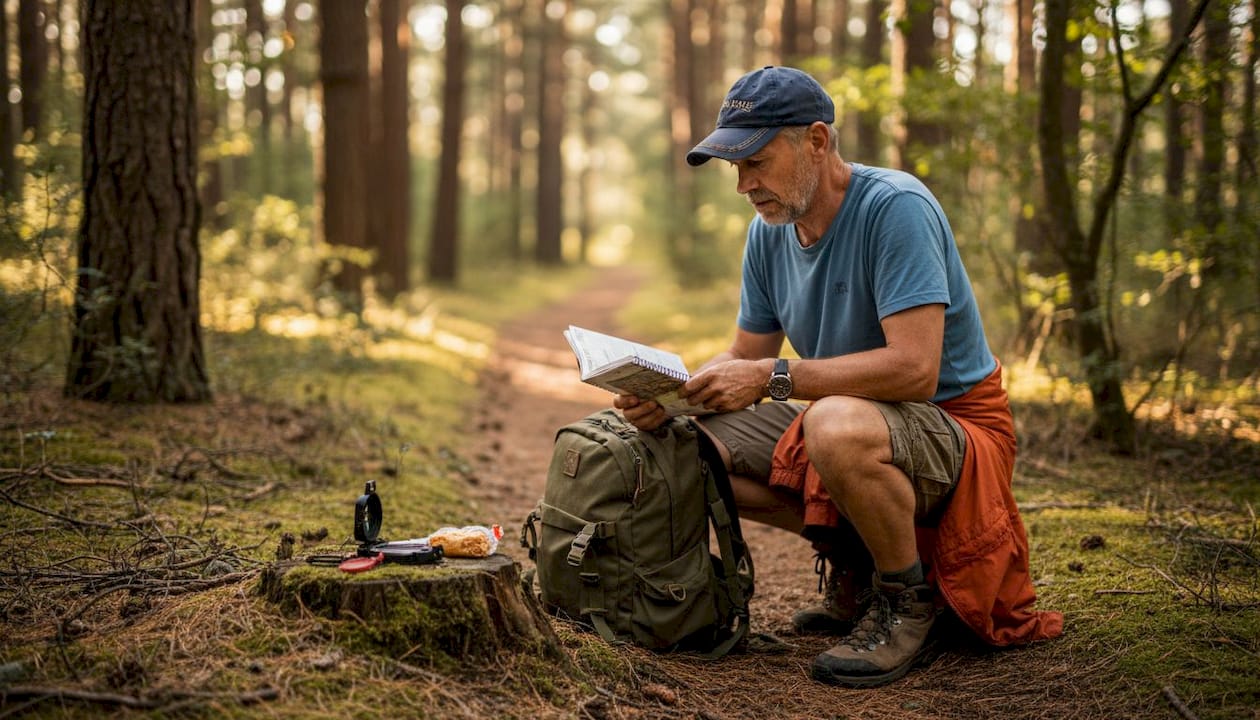
Successful remote travel requires methodical preparation that addresses logistics, safety, and contingencies. Planning methodologies include detailed research using topographic maps and weather patterns, team assembly, logistics coordination through local agents and permits, proper gear based on Ten Essentials principles, training, and risk assessment using systematic approaches. This preparation transforms potentially dangerous adventures into calculated challenges.
Research your destination exhaustively. Study topographic maps to understand terrain, elevation changes, and water sources. Analyze historical weather patterns for your travel dates, recognizing that remote areas often experience rapid changes. Identify nearest medical facilities, communication points, and emergency services. Read recent trip reports from other travelers to learn about current conditions and unexpected challenges.
Assemble your team carefully if traveling with others. Ensure everyone shares fitness levels, risk tolerance, and commitment to safety protocols. Designate roles for navigation, first aid, and decision-making. Solo travelers should connect with reputable local guides who know the area intimately and can respond to emergencies.
Coordinate logistics through local agents who understand permits, access restrictions, and cultural protocols. Many remote areas require advance permissions from government agencies or Indigenous communities. Local operators navigate these bureaucratic requirements efficiently while ensuring your visit respects regional customs.
Acquire appropriate gear and test everything before departure. Never rely on untested equipment in remote settings where failure could prove catastrophic.
Complete relevant training before departure. Take wilderness first aid courses, practice navigation skills, and condition physically for anticipated challenges. Mental preparation matters equally, visualizing potential scenarios and your responses.
Assess risks continuously using the S.T.O.P. method. Stop when conditions change or uncertainty arises. Think about what’s happening and potential consequences. Observe your surroundings, weather, and group condition objectively. Plan your next move deliberately rather than reacting impulsively. This systematic approach prevents the cascade of small mistakes that create emergencies.
Pro Tip: Always share detailed itineraries and emergency contacts with trusted parties who will notice if you miss check-in times. Include daily waypoints, expected communication windows, and instructions for when to alert authorities. Update contacts as plans change.
Vacation planning apps can help organize research, track gear lists, and coordinate group logistics, though remember that most apps won’t function without connectivity in remote areas. Download offline maps and essential information before departure.
Risk management in remote settings differs fundamentally from urban travel. Medical help might be days away, weather can change within hours, and communication often fails. Conservative decision-making becomes essential. Turn back if conditions deteriorate, even when you’re close to your goal. The mountain or destination will remain for future attempts, but injuries or worse cannot be undone.
Explore remote destinations with expert support
Planning remote adventures demands expertise you might not possess, from securing obscure permits to identifying trustworthy local guides. Around Travel simplifies this complexity by connecting you with specialists who arrange logistics while you focus on anticipation rather than anxiety. The platform’s comprehensive resources cover everything from initial research to final bookings, ensuring nothing falls through cracks that could derail your journey.
Flexible refund policies provide peace of mind when booking trips to unpredictable destinations where weather or local conditions might force itinerary changes. Remote travel inherently carries more variables than resort vacations, making cancellation protection especially valuable. Transportation represents another critical piece, with car rental services facilitating access to trailheads and isolated communities beyond public transit networks. Visit Around Travel to explore curated remote destination guides, connect with experienced adventure travel specialists, and access booking tools designed for travelers who venture beyond the ordinary.
FAQ
Why should I choose remote destinations over popular spots?
Remote destinations provide unmatched solitude, authentic cultural experiences, and pristine natural beauty that crowded tourist spots cannot offer. They foster personal growth through challenge and introspection while creating distinctive memories that mass tourism destinations rarely deliver.
What are the most important safety tips for remote travel?
Plan extensively using detailed maps and weather research, carry essential gear tested before departure, hire experienced local guides, and inform trusted contacts of your complete itinerary with check-in schedules. Continuously assess risks using the S.T.O.P. method and never hesitate to turn back when conditions deteriorate.
How can I support sustainability when visiting remote destinations?
Travel in small groups with certified eco-friendly operators, respect local cultures by learning customs beforehand, follow leave-no-trace principles rigorously, and prioritize community-based services that channel economic benefits directly to residents. Avoid disturbing wildlife, remove all waste, and contribute to local conservation efforts when possible.
How much does remote travel typically cost?
Initial transportation to remote areas often costs more due to specialized flights or extended drives, but daily expenses usually run 40-60% lower than popular tourist destinations. Accommodations average $30-80 nightly, meals cost local rates without tourist markups, and many activities like hiking or wildlife observation are free.
Do I need special skills to visit remote destinations?
Basic physical fitness, adaptability, and willingness to accept discomfort matter more than technical skills for most remote destinations. Wilderness first aid training, navigation abilities, and relevant outdoor skills increase safety margins, but hiring experienced local guides allows less experienced travelers to access remote areas responsibly.
An avid traveler and seasoned writer who has journeyed across more than 40 countries, sharing his unique experiences and insights with a growing audience of adventure seekers and travel enthusiasts. With a passion for discovering hidden gems and immersing himself in diverse cultures, Jonas's travel blog combines practical tips, stunning photography, and captivating storytelling. Whether he's navigating bustling city streets or exploring remote landscapes, Jonas offers readers an authentic glimpse into the world's most fascinating destinations, inspiring them to embark on their own unforgettable journeys.
Providing You With Access To The Top Travel Destinations. Book Now and Enjoy!
TESTIMONIALS
Travelers Reviews
Planning a trip used to be a stressful event, until I found Around
Travel. The website made everything so easy and convenient and really has made
travelling a relaxing experience. I highly recommend using them.
Sam Wistan Marketing Consultant, USA
I travel a lot for business and making reservations used to take up so
much time. Around Travel offers me quick access to all my booking needs.
Jonas DuPont Investment Advisor, London
I am a spur of the moment type of girl and I like to book trips at a
whim. Around Travel always has great deals and options for me to choose from.