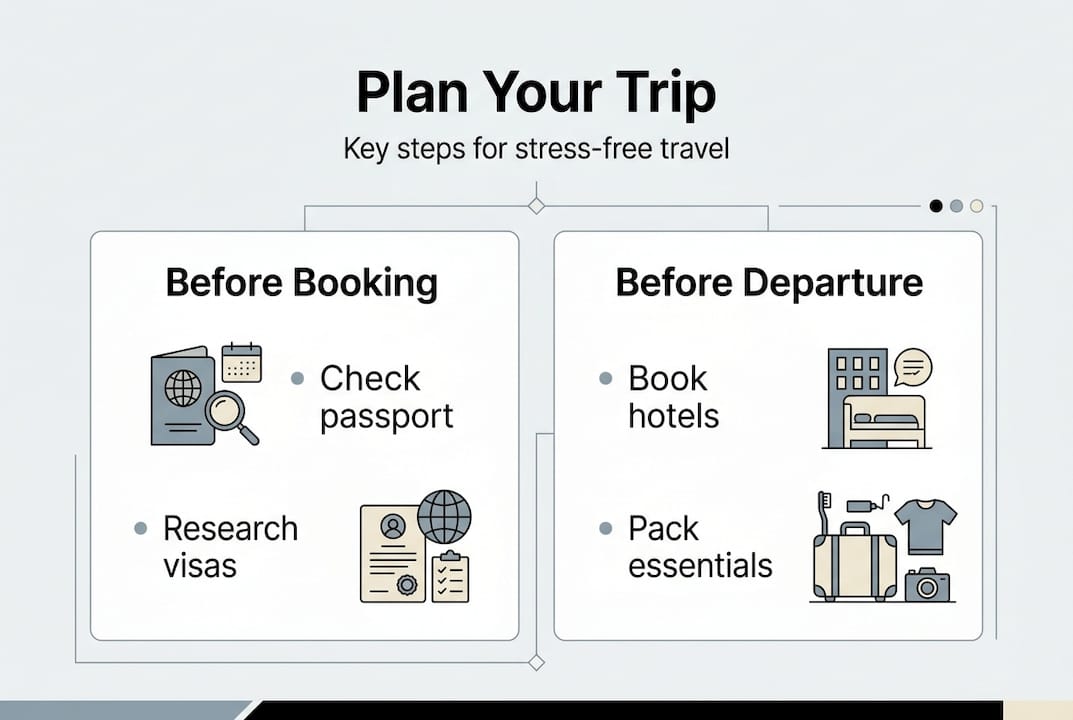
Proper preparation of documents, visas, and travel insurance prevents last-minute issues.
Booking flights early and accommodations within optimal timeframes secures better prices and availability.
Final checks and flexible planning ensure smoother travel with minimal surprises.
Missing a visa requirement two days before departure. Realizing your passport expires in four months. Discovering your hotel is fully booked because you waited too long. These are the kinds of surprises that turn exciting trips into stressful ordeals. The good news is that almost every travel headache is preventable with the right process. This guide walks you through each stage of trip planning, from gathering documents and booking at the right time to building a smart itinerary and running a final check before you leave. Follow these steps and you’ll spend more time enjoying your trip and less time putting out fires.
Key Takeaways
Point
Details
Document readiness
Always check passport validity and keep backups of all travel documents before your trip.
Smart booking timing
Book hotels and flights well in advance to secure the best rates and availability.
Flexible itinerary
Build a balanced plan with both scheduled and open activities to maximize enjoyment.
Final verification
Double-check all bookings, documents, and advisories before heading to the airport.
Expert preparation
Staying informed and anticipating common issues leads to smoother, stress-free travel.
Gathering essential documents and safety checks
Once you’re aware of potential pitfalls, it all begins with preparation. This is the stage most travelers rush through, and it’s where the biggest mistakes happen. Getting your paperwork sorted early gives you time to fix problems before they become emergencies.
Start with your passport. Many countries require at least six months validity beyond your travel dates, not just a valid passport on the day you fly. Check every traveler in your group, including children. If anyone’s passport is expiring soon, renew it immediately since processing times can stretch to several weeks.
Next, research visa requirements for your destination. Some countries offer visa-on-arrival, others require applications weeks in advance, and a few require embassy appointments. Our visa and travel documents resource breaks this down by region so you’re not guessing.
Enroll in the Smart Traveler Enrollment Program, known as STEP. It’s a free service from the U.S. Department of State that registers your trip with the nearest embassy or consulate. If there’s a natural disaster, civil unrest, or a family emergency, the government can reach you and assist with evacuation or support.
Always review current travel advisories before booking and again closer to departure. Conditions change. A destination that was perfectly safe six months ago may have updated warnings today. Check travel news updates regularly for destination-specific alerts.
Key documents to prepare before any international trip:
Passport with six-plus months of remaining validity
Visas or entry permits for every country on your itinerary
Travel insurance policy documents
Vaccination records if required by destination
Emergency contact list and copies of all bookings
Digital backups stored in cloud storage or email
Travel insurance is non-negotiable for international leisure trips. It covers trip cancellations, medical emergencies abroad, lost luggage, and flight delays. Skipping it to save a few dollars is one of the most expensive mistakes a traveler can make.
Document
What to check
Lead time needed
Passport
Six months validity past return date
6-10 weeks to renew
Visa
Country-specific requirements
2-8 weeks depending on type
Travel insurance
Coverage for medical, cancellation, baggage
Purchase at booking
Vaccination records
Destination entry requirements
Varies by vaccine
Pro Tip: Make two physical copies of your passport, visa, and insurance documents. Leave one set at home with a trusted contact and carry the other separately from your originals. Pair this with a family travel checklist to make sure nothing gets missed.
Booking transportation and accommodation at the right time
With your documents ready, knowing when to book can save money and secure the best options. Timing is everything in travel booking, and most people either book too early without flexibility or too late and pay premium prices.
For hotels, the sweet spot depends on your destination. Book hotels 15-30 days ahead for domestic trips and two to four months ahead for peak international travel. Popular destinations during school holidays or major events fill up fast, so earlier is always better for those.
For flights, the calculus is different. Domestic flights tend to hit their lowest prices around one to three months before departure. International flights often reward booking three to six months out, especially for peak summer or holiday travel. Use price tracking tools to monitor fares before committing.
Activities and tours deserve attention too. Popular experiences, guided tours, and unique local activities often sell out well before the trip date. Book activities one to three months ahead, or immediately if they’re well-known and in high demand.
Smart booking sequence:
Book flights first to lock in your travel dates
Secure accommodation immediately after confirming flights
Reserve must-do tours and activities within the first week
Arrange airport transfers and car rentals once accommodation is confirmed
Compare platforms for each booking type to find the best combination of price and flexibility
Booking type
Domestic timing
International timing
Flights
1-3 months ahead
3-6 months ahead
Hotels
15-30 days ahead
2-4 months for peak travel
Tours and activities
1-2 months ahead
1-3 months or immediately
Car rentals
2-4 weeks ahead
1-2 months ahead
Comparing platforms matters. No single booking site is always cheapest. Check the hotel’s direct website alongside third-party platforms, since hotels sometimes offer perks like free breakfast or flexible cancellation for direct bookings. Use travel booking apps to compare prices across multiple sources quickly.
Pro Tip: When you book flights directly through an airline, you often get better customer service during disruptions and easier access to seat selection. Third-party platforms are great for price comparison but can complicate things when changes arise.
Planning your itinerary and daily activities
After securing your bookings, it’s time to create a trip plan that makes every day count. A good itinerary is not a minute-by-minute schedule. It’s a framework that keeps you organized while leaving room for the unexpected.
Start by listing your non-negotiables. These are the attractions, restaurants, or experiences you absolutely cannot miss. Book those first. Everything else can be filled in around them. This approach prevents the common mistake of over-scheduling and then feeling rushed the entire trip.
“The best trips have a spine, not a straitjacket. Know your anchors, then let the days breathe around them.”
Balance is the key word. For every full-day excursion, plan a slower morning or afternoon. Families with children especially benefit from this approach since kids need downtime and unscheduled play to stay happy on the road. Our vacation planning workflow has practical templates for building this kind of balanced schedule.
Tips for building a realistic daily itinerary:
Group nearby attractions together to minimize travel time within the destination
Check local public holidays before finalizing plans since museums and sites may close
Research opening hours and whether timed entry tickets are required
Build in at least one completely free afternoon per three days of travel
Save restaurant reservations for dinner only and keep lunches flexible
Digital tools make itinerary management much easier. Apps like Google Trips or TripIt consolidate all your confirmations in one place. You can share the itinerary with travel companions so everyone is on the same page without endless group chats.
For those who want to go deeper into local culture, experiential travel tips can help you find meaningful activities beyond the standard tourist circuit. Cooking classes, local market tours, and community-led experiences often become the most memorable parts of any trip.
Pro Tip: Popular tours book up one to three months in advance. If there’s a specific experience you’ve been dreaming about, treat it like a flight and book it the moment your travel dates are confirmed.
Verifying details and preparing for departure
With your itinerary in hand, a final verification will remove last-minute worries. This stage is where careful travelers separate themselves from the ones who end up scrambling at the airport.
Run through this final checklist in the week before you leave:
Reconfirm all bookings: flights, hotels, tours, and transfers
Check that your passport and visas are still valid and accessible
Download offline maps and translation apps for your destination
Notify your bank of travel dates to prevent card blocks abroad
Confirm travel insurance is active and save the emergency contact number
Review the latest travel safety checks for your destination
Pack destination-appropriate clothing, medications, and adapters
Handling last-minute changes calmly is a skill. If an airline reschedules your flight, contact them directly first since they often have more options than what appears online. If a hotel cancels, your booking platform’s customer service can usually find alternatives quickly.
Stay connected to travel advisories right up to your departure date. Situations can shift in the final days, and being informed means you can adjust without panic.
Statistic callout: Travelers who enroll in STEP and review government advisories before departure are significantly better positioned to receive emergency assistance and real-time alerts while abroad.
Packing is often left too late. Create a packing list two weeks before departure and add to it as you think of things. Check the weather forecast for your destination five days out and adjust accordingly. Medications, chargers, and travel-size toiletries are the most commonly forgotten items.
Pro Tip: Use your departure checklist as a living document. Start it early, update it often, and do a final run-through the night before you leave so the morning of departure is calm.
Our take: What most travelers overlook and how to avoid it
Here’s something we’ve noticed after helping thousands of travelers plan their trips: the biggest problems rarely come from missing flights or lost luggage. They come from assuming everything will work out without checking.
Most travelers spend hours comparing hotel prices but never spend ten minutes reviewing their booking’s cancellation policy. They book the perfect tour but forget to confirm it 48 hours before. They pack meticulously but don’t check whether their destination has a public holiday that closes half the attractions they planned to visit.
Preparation is not just about documents. It’s a mindset. The travelers who have the smoothest trips are the ones who anticipate small problems and build in buffers, both in their schedule and their budget. They keep a backup plan for their top-priority experiences and stay flexible when things shift.
Using family trip checklists and staying current with local news and travel alerts keeps you ahead of disruptions instead of reacting to them. The goal is not a perfect trip. It’s a resilient one.
Take your next trip further with Around Travel
If you’re ready for the next step, here’s how we can help. Planning a trip involves dozens of moving parts, and Around Travel brings them all into one place so you’re not bouncing between ten different websites.
From booking car rentals for seamless ground transportation to managing accommodation and flights, Around Travel gives you trusted options with flexible policies. If plans change, our refund policy is designed to give you peace of mind rather than headaches. Explore the full range of travel resources on our platform, including destination guides, curated packages, and the latest travel tips to make your next trip the best one yet.
Frequently asked questions
What documents are essential for international trips?
You need a passport with at least six months validity, relevant visas, and both digital and physical backups of all travel documents. Carry travel insurance policy details separately from your other documents.
When should I book hotels and flights for best rates?
Book hotels 15-30 days ahead for domestic trips and two to four months ahead for peak international travel. For popular activities, book as soon as your dates are confirmed.
How can I stay informed about travel advisories and safety?
Enroll in STEP and check government advisories regularly, especially in the week before departure. Follow travel news for destination-specific alerts that may affect your plans.
What should I do if there are last-minute changes or cancellations?
Contact your airline or hotel directly first, then check your booking platform for alternatives. Travel insurance covers many disruptions, including cancellations, medical emergencies, and unexpected delays.
An avid traveler and seasoned writer who has journeyed across more than 40 countries, sharing his unique experiences and insights with a growing audience of adventure seekers and travel enthusiasts. With a passion for discovering hidden gems and immersing himself in diverse cultures, Jonas's travel blog combines practical tips, stunning photography, and captivating storytelling. Whether he's navigating bustling city streets or exploring remote landscapes, Jonas offers readers an authentic glimpse into the world's most fascinating destinations, inspiring them to embark on their own unforgettable journeys.
Providing You With Access To The Top Travel Destinations. Book Now and Enjoy!
TESTIMONIALS
Travelers Reviews
Planning a trip used to be a stressful event, until I found Around
Travel. The website made everything so easy and convenient and really has made
travelling a relaxing experience. I highly recommend using them.
Sam Wistan Marketing Consultant, USA
I travel a lot for business and making reservations used to take up so
much time. Around Travel offers me quick access to all my booking needs.
Jonas DuPont Investment Advisor, London
I am a spur of the moment type of girl and I like to book trips at a
whim. Around Travel always has great deals and options for me to choose from.