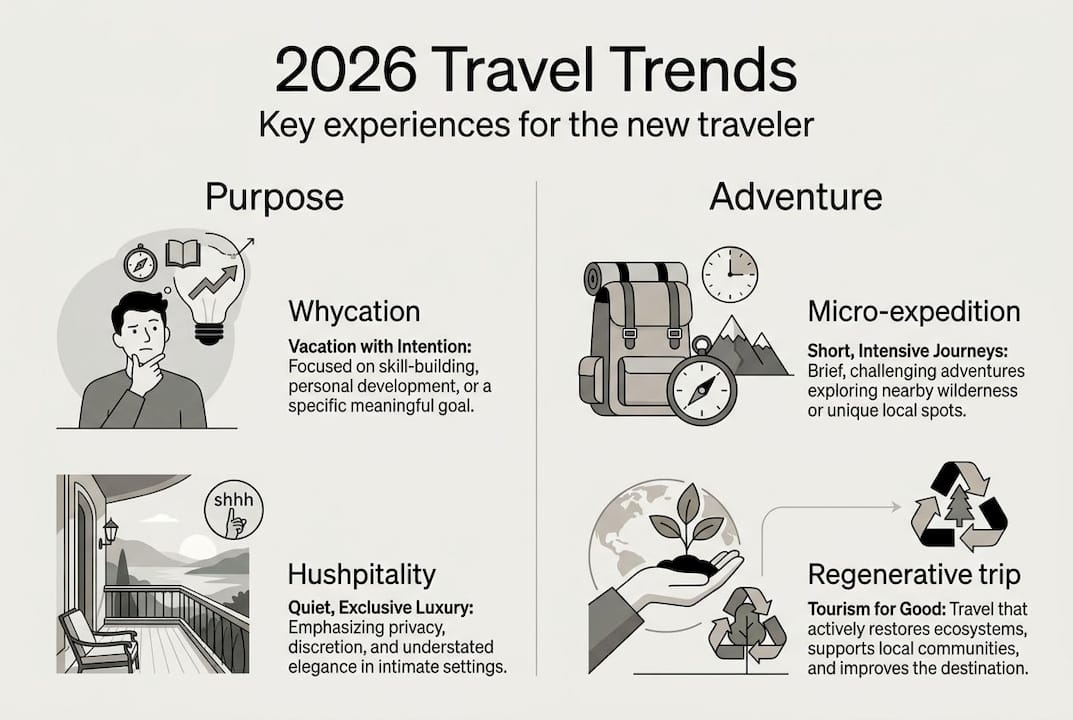
Travel trends used to mean a hot new destination or a viral Instagram spot. In 2026, that thinking is outdated. The travelers reshaping the industry are asking a different question: not where should I go, but why am I going and how can this trip actually mean something? Purpose, sustainability, and genuine restoration are now the forces driving booking decisions. This guide breaks down the concepts you need to know, from whycations and hushpitality to micro-expeditions and regenerative travel, so you can plan a trip that delivers far more than a stamp in your passport.
Key Takeaways
Point
Details
Purpose-driven travel
Trips now focus on why you travel, not just where, giving deeper meaning to each journey.
Quiet escapes trending
Demand for hushpitality and silent retreats is rising as travelers seek real calm.
Adventure evolves
Micro-expeditions and participatory conservation offer big rewards even on short schedules.
Regenerative stays matter
Look for travel that restores environments, going beyond basic sustainability.
Transparency is key
Research options carefully—almost half of travelers find it hard to spot truly green choices.
What is driving travel innovation in 2026?
Travel innovation used to be about technology: faster booking, smarter apps, better maps. Today, the real disruption is happening at the values level. Travelers are demanding that their journeys align with who they are and what they care about. That shift is producing a wave of new industry terms for 2026 travel that reflect a deeper relationship between people and the places they visit.
Three forces are leading the charge:
Purposeful travel: People want trips that serve a personal goal, whether that’s rest, learning, or reconnection.
Sustainability: Eco-consciousness has moved from a nice-to-have to a booking filter for a growing segment of travelers.
Wellness and stress relief: The world is exhausted. Travel is increasingly seen as a tool for genuine recovery, not just escape.
Concepts like whycations, regenerative travel, and hushpitality are not buzzwords. They are proof points that the industry is responding to real human needs. Our experiential travel guide explores how immersive experiences fit into this bigger picture.
“The most meaningful trips in 2026 are not defined by the destination on the map. They are defined by the intention behind the journey.”
This is the new standard. Travelers who understand these concepts will plan smarter, spend better, and come home genuinely changed.
Whycations: Travel with intention and meaning
The whycation is one of the most talked-about concepts of 2026, and for good reason. Rather than building a trip around a bucket list location, a whycation starts with a personal question: what do I actually need from this trip? Whycations prioritize rest, reconnection, and pursuing passions over checking off sights.
Here is how a whycation differs from a traditional vacation:
Traditional vacation
Whycation
Destination-first planning
Purpose-first planning
Packed itinerary
Intentional, slower pace
Sightseeing focus
Skill-building or wellness focus
Social media-driven
Personally meaningful
Quantity of experiences
Quality of experiences
In practice, whycations look like a solo cooking retreat in Tuscany, a slow-travel month in Southeast Asia, or a wellness week at a mountain lodge. The key is that every activity serves the traveler’s stated intention. Purpose-driven travel concepts like this are gaining traction because they deliver measurable personal value, not just memories.
Some of the best destinations for whycations include:
Pro Tip: Before booking your next trip, write down one sentence that answers this: “I am taking this trip because I want to _____.” If you can’t finish that sentence clearly, your itinerary probably needs a rethink.
Hushpitality: The rise of restorative quiet escapes
If whycations are about intention, hushpitality is about silence. This emerging trend responds directly to the noise and overstimulation of modern life. Hushpitality prioritizes silence, calm, and solo time as the core hospitality offering, not a side feature.
Here is what hushpitality looks like in real destinations:
Feature
Traditional hotel
Hushpitality property
Common areas
Busy lobbies, background music
Quiet zones, no ambient noise
Room design
Standard soundproofing
Enhanced acoustic insulation
Programming
Group activities
Solo wellness, guided silence
Digital policy
Wi-Fi everywhere
Optional digital detox
Nature access
Nearby parks
Immersive nature integration
The numbers behind this trend make sense. Stress-related burnout is at record levels globally, and travelers are actively seeking environments that do the opposite of what their daily lives do to them. Properties offering soundproof design, forest bathing programs, and phone-free dining rooms are reporting strong demand.
Overnight forest stays with no scheduled programming
Spa resorts with mandatory quiet hours in shared spaces
Remote cabin rentals with no cell service
Guided meditation retreats in mountain or coastal settings
If you are planning a January reset, our guide to tranquil destinations is a great starting point for finding the right quiet escape.
“Silence is not empty. In hushpitality, it is the entire product.”
The new adventure: Micro-expeditions, e-biking, and participatory conservation
Adventure travel is not slowing down in 2026. It is getting smarter. The old model of a two-week expedition to a remote wilderness is being replaced by shorter, more accessible, and more meaningful formats. Adventure trends include micro-expeditions, e-biking, and participatory wildlife conservation as the defining experiences of the year.
Here is what makes each format compelling:
Micro-expeditions: These are intensive two to four day trips designed to deliver a full adventure experience without requiring weeks of vacation time. Think a weekend glacier hike in Iceland or a rapid river descent in Patagonia. They are built for travelers with limited PTO who refuse to compromise on depth.
E-biking: Electric bikes have opened adventure cycling to a much wider audience. You get the physical engagement and the landscape immersion without needing elite fitness. Routes through wine country, coastal cliffs, or mountain passes are now accessible to far more people.
Participatory conservation: This is where adventure meets purpose. Instead of watching wildlife from a jeep, you are tagging sea turtles, planting coral, or tracking endangered species alongside researchers. The experience is active, educational, and genuinely impactful.
Pro Tip: When booking a micro-expedition, prioritize operators who cap group sizes at eight people or fewer. Smaller groups move faster, access restricted areas more easily, and deliver a far more personal experience.
Green travel in 2026: Regeneration over sustainability
Sustainability used to be the gold standard for eco-conscious travel. In 2026, the bar has moved higher. Regenerative travel goes beyond doing less harm. It actively restores the environments and communities it touches. Regenerative models in Slovenia and Costa Rica are leading examples, where tourism revenue funds ecosystem restoration and local economic development.
The distinction matters because standard “green” tourism often amounts to greenwashing. A hotel can call itself eco-friendly for recycling towels while flying guests in on private jets. Regenerative travel demands a higher standard of transparency and measurable positive impact.
“Regenerative travel does not ask: did we leave this place the same? It asks: did we leave it better?”
Key behaviors and choices that define regenerative travelers:
Choosing rail journeys over short-haul flights wherever possible
Staying at eco-lodges that reinvest revenue into local conservation
Booking conservation-focused tours where your participation funds research
Asking operators for specific, verifiable sustainability credentials
Supporting local food systems and artisan economies rather than resort chains
The challenge is real: 49% of travelers report difficulty finding genuinely eco-friendly options. That is why doing your research before booking matters more than ever. Our guide to immersive travel covers how to find experiences that are both meaningful and environmentally responsible.
The good news is that demand is creating supply. More operators, lodges, and tour companies are building genuine regenerative models because travelers are asking for them and willing to pay for them.
Plan your inspired journey with Around Travel
You now have a clear picture of what travel in 2026 actually looks like at its best: purposeful, restorative, adventurous, and genuinely good for the planet. The next step is turning that knowledge into a real trip.
At Around Travel, we make it easy to move from inspiration to action. Whether you are planning a whycation in a slow-travel destination, searching for a hushpitality retreat, or booking logistics for a micro-expedition, our platform connects you to hotels, tours, and experiences that match your values. Need to get around once you arrive? Browse car rentals for your trip or check out taxi options for seamless local transfers. Every journey starts with a plan, and we are here to help you build one that actually excites you.
Frequently asked questions
What is a whycation and how do I plan one?
A whycation is a trip built around a clear personal intention, such as rest, learning, or reconnection, rather than a destination. Start by identifying your goal, then choose locations and activities that serve it. Whycations prioritize rest, reconnection, and meaningful experiences above sightseeing.
How is hushpitality different from wellness retreats?
Hushpitality focuses specifically on silence and minimal stimulation as the core offering, while wellness retreats typically include a broader range of programming like fitness classes and spa treatments. Hushpitality emphasizes silence, calm, and solo time as the primary value.
What are micro-expeditions in adventure travel?
Micro-expeditions are short, intensive trips of two to four days that pack a full adventure experience into a tight schedule. They are ideal for travelers who want depth without needing extended time off. Micro-expeditions deliver big experiences with limited PTO.
How can I make sure my travels are genuinely eco-friendly?
Look for operators with verifiable regenerative credentials, choose low-carbon transport like trains, and ask specific questions about how tourism revenue is reinvested locally. 49% of travelers report struggling to find genuine eco-friendly options, so checking credentials is essential.
Are soft adventures suitable for all ages and fitness levels?
Yes. Soft adventures like e-biking and light hiking are designed to be accessible across a wide range of abilities and fitness levels. E-biking trends specifically for its mix of accessibility and genuine adventure appeal.
An avid traveler and seasoned writer who has journeyed across more than 40 countries, sharing his unique experiences and insights with a growing audience of adventure seekers and travel enthusiasts. With a passion for discovering hidden gems and immersing himself in diverse cultures, Jonas's travel blog combines practical tips, stunning photography, and captivating storytelling. Whether he's navigating bustling city streets or exploring remote landscapes, Jonas offers readers an authentic glimpse into the world's most fascinating destinations, inspiring them to embark on their own unforgettable journeys.
Providing You With Access To The Top Travel Destinations. Book Now and Enjoy!
TESTIMONIALS
Travelers Reviews
Planning a trip used to be a stressful event, until I found Around
Travel. The website made everything so easy and convenient and really has made
travelling a relaxing experience. I highly recommend using them.
Sam Wistan Marketing Consultant, USA
I travel a lot for business and making reservations used to take up so
much time. Around Travel offers me quick access to all my booking needs.
Jonas DuPont Investment Advisor, London
I am a spur of the moment type of girl and I like to book trips at a
whim. Around Travel always has great deals and options for me to choose from.