Family travel planning involves coordinating all aspects of a trip to meet the needs of everyone involved. Families spend 16 to 20 hours researching and planning, with affordability being the top challenge. Balancing structure with spontaneity and using helpful tools can lead to a memorable and stress-free family vacation.
Planning a family trip is far more involved than picking a destination and buying plane tickets. The average US family spends over $8,000 and 16 to 20 hours researching, comparing, and coordinating before a single bag is packed. That investment of time and money means the stakes are real. A poorly planned trip creates stress, wasted money, and disappointed kids. A well-planned one becomes a memory your family talks about for years. This guide walks you through what family travel planning actually is, how to do it step by step, the biggest challenges you will face, and the tools that make the whole process easier.
Key Takeaways
Point
Details
Family travel is complex
Successful family trips require balancing schedules, preferences, and budgets, not just logistics.
Planning saves dollars and stress
Strategic planning reduces stress and can save thousands on average family vacations.
Involve all family members
Including kids and adapting for evolving needs creates better experiences and happier travelers.
Use smart tools
Digital checklists and planning apps simplify the process and improve organization.
Balance structure with flexibility
Successful travel means setting a framework but allowing for surprises and downtime.
What is family travel planning?
Family travel planning is the coordinated process of arranging every aspect of a trip to meet the needs of your entire family. That sounds simple, but it is anything but. You are not just booking flights. You are balancing schedules, managing different ages and preferences, setting a realistic budget, and making sure the experience works for everyone from toddlers to grandparents.
At its core, good planning reduces stress and improves the quality of your trip. Families who plan well spend less money because they catch better deals early, avoid last-minute markups, and skip costly mistakes like booking a hotel that is not kid-friendly. Planning also gives every family member something to look forward to, which builds excitement long before departure day.
Planning takes 16 to 20 hours per trip, and 73% of families cite affordability as their top challenge. That is a significant investment of time and energy, which is exactly why having a clear process matters.
Understanding the family vacation planning workflow before you start saves you from backtracking and making expensive decisions out of order. Think of it as building a house. You do not pick the paint color before you pour the foundation.
Here are the key components that make up a complete family travel plan:
Destination selection: Choosing a place that suits all ages and interests
Transportation: Flights, road trips, car rentals, or a mix
Lodging: Hotels, vacation rentals, or resorts with family amenities
Activities: Age-appropriate experiences that keep everyone engaged
Meals: Accounting for dietary needs, picky eaters, and budget
Packing: Creating lists tailored to each family member’s needs
Many families also overlook how much tours enhance family vacations by providing built-in structure, local expertise, and kid-friendly pacing. With the basics established, it is crucial to understand exactly what stages make up the family travel planning process.
Essential stages of family travel planning
Breaking the process into stages makes it manageable. Here is a practical sequence that works for most families, whether you are a household of three or a multi-generational group of twelve.
Brainstorm goals: Ask everyone what they want from the trip. Beach relaxation? Adventure? Culture? This sets the direction.
Research and set a budget: Look at realistic costs for your destination and lock in a spending limit before you fall in love with an expensive option.
Involve all family members: 48% of kids have direct input on trip activities. This “kidfluence” is real and powerful. Use it.
Compare lodging and transport: Look at multiple options side by side. Price, location, and family-specific amenities all matter.
Plan activities: Book must-do experiences early. Leave room for spontaneous moments.
Build your itinerary: Day-by-day structure with buffer time built in.
Emergency and contingency planning: Travel insurance, backup plans, and knowing your options if things go sideways.
For multi-generational trips, which 57% of families are now planning, the process needs extra layers. Accessibility, mobility needs, and breakout group activities for different age ranges all require separate consideration.
Planning stage
Nuclear family
Multi-generational family
Goal setting
1 conversation
Multiple rounds, separate age groups
Lodging
Hotel or rental
Large rental or resort with multiple rooms
Activities
Unified itinerary
Parallel tracks for different ages
Budget
Single household
Shared cost split or individual budgets
Transport
One vehicle or flight
Coordinated group bookings
Pro Tip: Build at least 20% buffer time into each day. Families with young children almost always need more time than expected for transitions, meals, and unexpected detours. A packed schedule is the fastest route to meltdowns and frustration.
Using a solid family travel checklist keeps you from skipping steps. Pair it with a detailed trip planning checklist and you have a repeatable system you can use for every trip. Experts consistently note that balancing structure with flexibility produces the best outcomes for families. Once you know the stages, consider how real-life families adapt and face today’s unique challenges.
Common challenges and smart solutions
Even the most organized families hit walls during the planning process. Knowing what to expect makes those walls easier to get over.
The biggest challenges families face:
Affordability: 73% of families name cost as their number one barrier to travel. A 7-day domestic mid-range trip for a family of four runs between $3,300 and $5,800.
Inclusivity and accessibility:Special needs families rate the travel industry a C- for inclusivity. Finding truly accessible accommodations and activities takes extra research.
Keeping kids and teens engaged: Different ages want completely different experiences. A 6-year-old and a 15-year-old rarely agree on anything.
Balancing downtime: Overscheduling is one of the most common mistakes. Families need unstructured time to actually enjoy being together.
Smart solutions for each challenge:
Affordability: Book 3 to 6 months in advance, use family travel packages, and consider slow travel (staying longer in fewer places) to reduce per-day costs. Explore vacation types for every budget to find options that stretch your dollars further.
Accessibility: Use inclusive travel resources to vet destinations and accommodations before booking. Call hotels directly to ask specific questions.
Keeping everyone happy: Let each family member pick one non-negotiable activity. Everyone gets a win.
Downtime: Schedule at least one completely unplanned afternoon per trip. Some of the best family memories happen when nothing is on the agenda.
Pro Tip: Add a 15% buffer to both your time estimates and your budget. Unexpected costs and delays are not exceptions. They are the rule. Planning for them removes the panic when they happen.
For families on a tight budget, budget-friendly US beach vacations offer real value without sacrificing quality. Multi-generational groups benefit most from splitting into breakout groups for parts of each day, so different generations can do what they actually enjoy. To tackle these challenges, adopt modern planning tools and resources favored by both families and experts.
Tools and resources for effortless family travel planning
The right tools cut planning time significantly and help you avoid costly oversights. Here are the ones worth knowing.
Must-use tools for family travel planning:
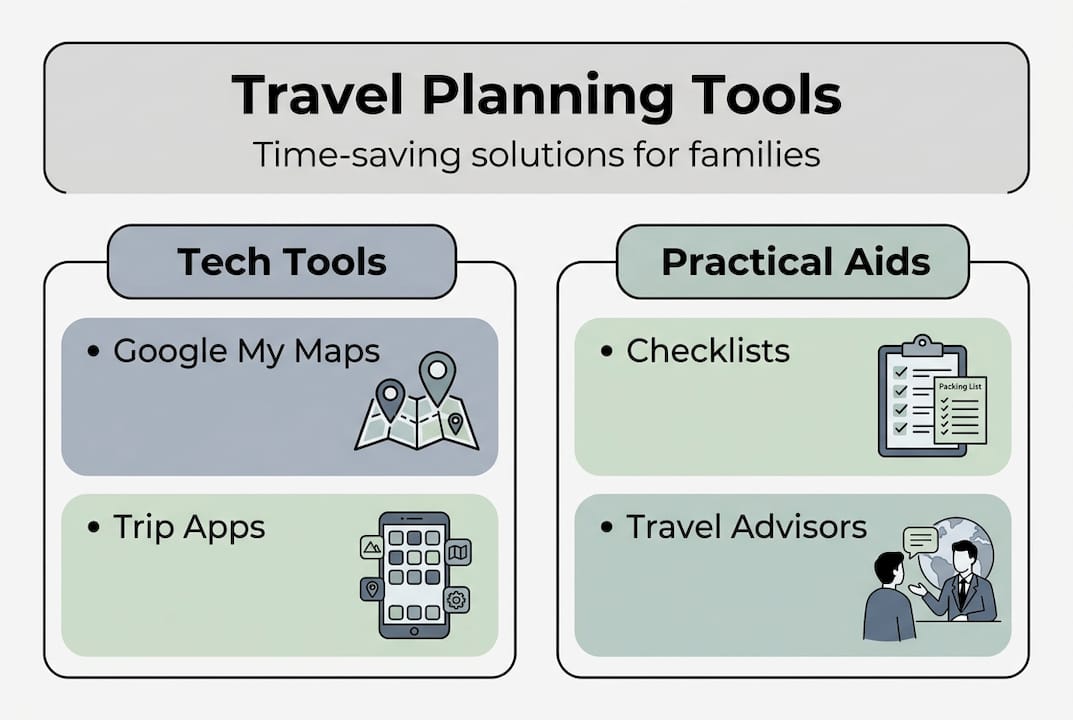
Google My Maps: Create custom maps of your destination with saved locations for hotels, restaurants, and activities. Shareable with the whole family.
Yopki AI planner: An AI-powered itinerary tool that generates day-by-day schedules based on your preferences and group size.
CityPASS: Bundled attraction tickets for major cities that save families up to 50% compared to buying individually.
Digital checklists: Downloadable and customizable lists that cover packing, booking steps, and day-of logistics.
Despite all these options, only 19% of families use travel advisors, even though 61% say they are open to it. An advisor can save hours of research and often access deals not available to the general public. That gap between openness and action is worth closing.
Tool
Best for
Cost
Time saved
Google My Maps
Route and location planning
Free
2 to 4 hours
Yopki AI planner
Full itinerary generation
Free/paid tiers
4 to 6 hours
CityPASS
Attraction bundling
Paid (saves money)
1 to 2 hours
Digital checklists
Packing and logistics
Free
1 to 3 hours
For a broader look at technology that simplifies logistics, the best planning apps guide covers options across every stage of the trip. If you want to build a structured day-by-day plan, the itinerary planning guide walks you through it. Families who want a fully personalized approach can also explore custom travel itineraries built around their specific needs. Armed with the right tools and a clear sense of the planning stages, you are equipped to design your own process.
Our take: The overlooked art of balancing structure and spontaneity
Most family travel advice falls into one of two camps. Either it tells you to plan every minute in advance, or it romanticizes winging it. Neither approach actually works for most families, and we have seen both extremes cause real problems.
Over-planning creates a trip that feels like a job. Every hour is accounted for, every meal is pre-booked, and any deviation triggers stress. Under-planning leads to expensive last-minute decisions, arguments about what to do next, and kids who feel like their input never mattered.
The families who have the best experiences are the ones who lock in the non-negotiables, including key bookings and one or two must-do experiences per person, and then leave the rest of the schedule open. That breathing room is where the magic happens. A spontaneous detour to a local market, an extra hour at the beach because nobody wanted to leave, or a quiet morning with no agenda at all.
Trust the planning workflow to handle the structure, and trust your family to fill in the rest. Resist the urge to schedule every waking moment. The best family trips are not the ones where everything went according to plan. They are the ones where you had enough of a plan to feel safe, and enough freedom to feel alive.
Plan your next family adventure with Around Travel
You now have a clear picture of what family travel planning involves, how to approach each stage, and which tools make the process smoother. The next step is putting that knowledge into action.
Around Travel brings together everything you need in one place, from curated destination guides and family travel tips to trusted booking options for hotels, flights, and tours. Whether you are coordinating a simple beach trip or a multi-generational adventure across multiple countries, the platform is built to simplify every step. Need wheels for the whole crew? Browse family rental cars to find the right size vehicle at the right price. Start planning smarter, not harder.
Frequently asked questions
How long does it take to plan a typical family trip?
Most families spend 16 to 20 hours planning each trip, spread across research, booking, and logistics coordination.
What’s the average cost for a family vacation?
A 7-day mid-range domestic trip for a family of four typically costs between $3,300 and $5,800, depending on destination and travel style.
How do you include children in travel planning?
48% of children already influence trip activity choices. Let kids pick at least one activity each and build some flexibility into the schedule so their input actually shapes the experience.
What are the best tools for family travel planning?
Google My Maps, Yopki AI planner, CityPASS, and downloadable checklists are among the top recommended tools for organizing and streamlining family trips.
How can we save money on family trips?
Slow travel, family-friendly packages, and booking at least three to six months in advance are the most reliable ways to reduce costs without sacrificing quality.
An avid traveler and seasoned writer who has journeyed across more than 40 countries, sharing his unique experiences and insights with a growing audience of adventure seekers and travel enthusiasts. With a passion for discovering hidden gems and immersing himself in diverse cultures, Jonas's travel blog combines practical tips, stunning photography, and captivating storytelling. Whether he's navigating bustling city streets or exploring remote landscapes, Jonas offers readers an authentic glimpse into the world's most fascinating destinations, inspiring them to embark on their own unforgettable journeys.
Providing You With Access To The Top Travel Destinations. Book Now and Enjoy!
TESTIMONIALS
Travelers Reviews
Planning a trip used to be a stressful event, until I found Around
Travel. The website made everything so easy and convenient and really has made
travelling a relaxing experience. I highly recommend using them.
Sam Wistan Marketing Consultant, USA
I travel a lot for business and making reservations used to take up so
much time. Around Travel offers me quick access to all my booking needs.
Jonas DuPont Investment Advisor, London
I am a spur of the moment type of girl and I like to book trips at a
whim. Around Travel always has great deals and options for me to choose from.