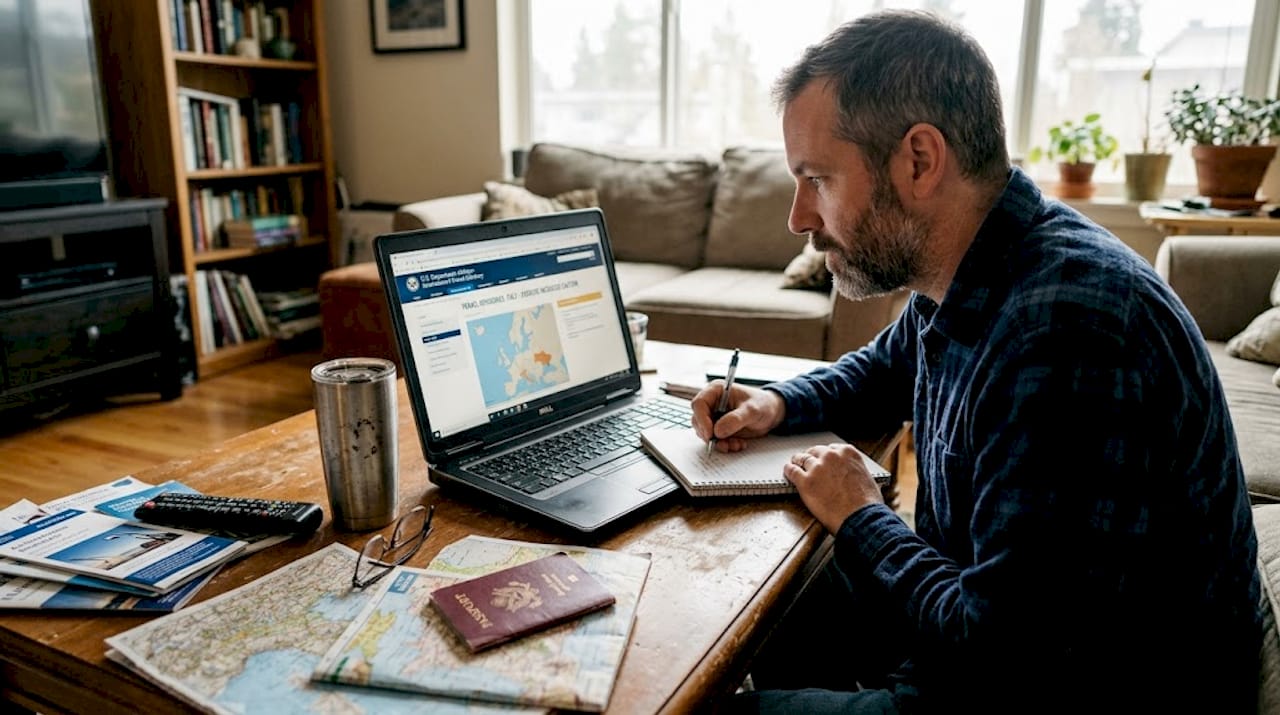
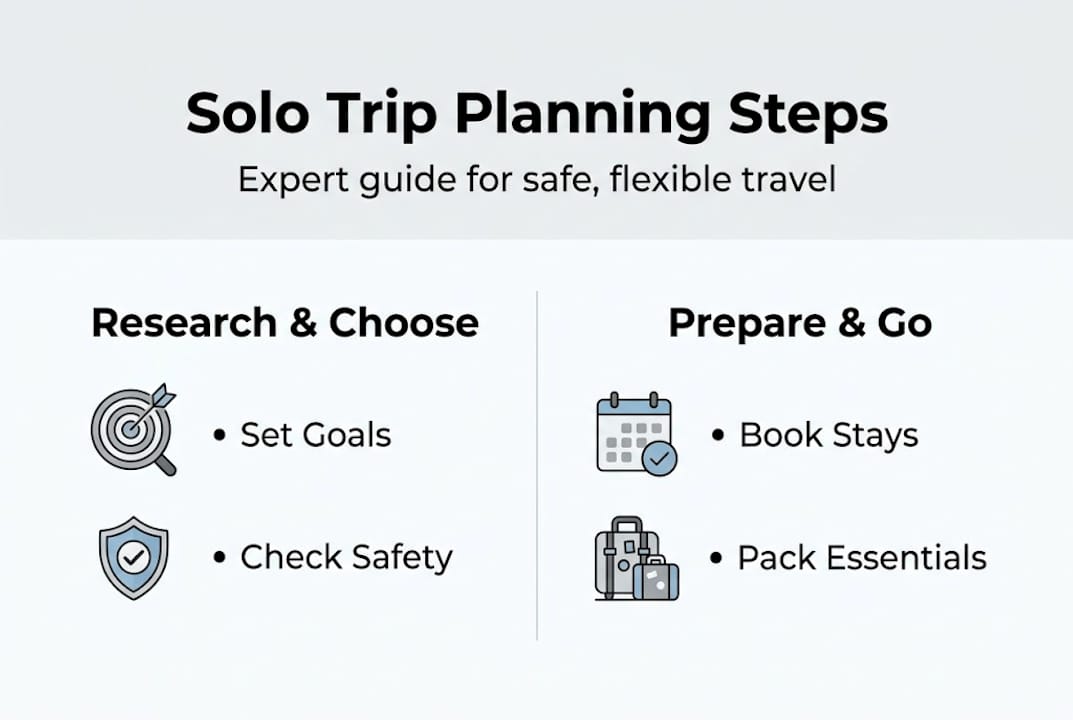
Preparing with clear goals increases satisfaction and helps tailor trip decisions.
Research safety and planning essentials ensure a smooth, stress-free solo experience.
Building micro-connections enriches the trip and enhances safety and authenticity.
Planning your first solo trip can feel like staring at a blank map with no starting point. Where do you go? What do you pack? How do you stay safe when no one’s watching your back? The good news is that millions of solo travelers have figured it out, and the difference between a stressful experience and an unforgettable one almost always comes down to preparation. This guide breaks down every step you need, from setting your goals to packing smart, so you can stop overthinking and start actually going.
Key Takeaways
Point
Details
Clarify your priorities
Setting clear goals upfront leads to a more satisfying solo adventure.
Prioritize safety research
Choose destinations known for solo traveler safety and always prepare backups.
Plan with flexibility
Build an itinerary that balances must-sees and spontaneous opportunities.
Light, smart packing
Organize essentials and use budget tools to stay comfortable on the go.
Set your solo travel goals and priorities
Before you open a single booking tab, spend time asking yourself what you actually want from this trip. Are you chasing adventure, rest, cultural immersion, or personal growth? Your answer shapes every decision that follows, from your destination to your daily budget. Skipping this step is like driving without a destination and wondering why you feel lost.
Solo travel has a unique superpower: complete flexibility. You eat when you want, linger in museums as long as you like, and pivot plans without negotiating with anyone. But that freedom can also become paralysis if you haven’t defined what matters most to you. Custom travel itinerary data shows travelers who set clear goals report 40% more satisfaction from their trips compared to those who don’t. That’s not a small margin.
Start by sorting your priorities into two categories: must-haves and nice-to-haves. Must-haves are non-negotiable, like visiting a specific landmark or staying under a set daily budget. Nice-to-haves are bonuses that would make the trip better but won’t ruin it if they don’t happen. This framework keeps you focused without making the trip rigid.
Here are the key questions to ask yourself before booking anything:
What’s my total budget, and how much daily flexibility do I have?
Do I prefer cities, nature, beaches, or a mix?
Am I open to hostels and shared spaces, or do I need private accommodations?
How many days can I realistically take off?
What one experience would make this trip feel worth it?
For first-time solo travelers, Lonely Planet’s solo travel tips recommend starting close to home or in a familiar language zone to build confidence before tackling more complex destinations. That’s solid advice. Each successful solo trip makes the next one easier to plan and more enjoyable to experience.
Pro Tip: Set just one or two primary goals for your first solo trip. A simple objective like “try local street food every day” or “visit three art museums” gives your journey a clear purpose without overwhelming you.
Once you know what you want, you can plan trips efficiently by layering your priorities directly into your schedule, so nothing important gets accidentally skipped.
Research, safety, and choosing your destination
With your goals defined, the next job is finding the right destination and making sure you go in prepared. Choosing a place that matches your comfort level, budget, and interests isn’t luck. It’s research.
Start with government sources. The U.S. Department of State publishes updated travel advisories for every country, including safety ratings, health alerts, and entry requirements. Check these before you fall in love with a destination on social media. Beyond official sources, Reddit travel forums and apps like iOverlander give you ground-level, real-time reports from travelers who were just there.
Here’s a quick comparison to help you match your solo travel goals with the right type of destination:
Destination type
Best for
Safety considerations
Solo-friendly score
Major city
Culture, food, nightlife
Stick to well-lit areas at night
⭐⭐⭐⭐
Rural/countryside
Nature, quiet, authenticity
Limited emergency services
⭐⭐⭐
Adventure destination
Hiking, water sports, adrenaline
Weather and terrain risks
⭐⭐⭐
Beach/resort town
Relaxation, water activities
Petty theft in tourist zones
⭐⭐⭐⭐
Safe destinations for solo travelers tend to score high on public transportation quality, low petty crime rates, and welcoming attitudes toward independent tourists. Research shows certain destinations receive consistently higher safety ratings specifically for solo visitors.
Solo travel isn’t about being fearless. It’s about being prepared.
Here are essential safety habits every solo traveler should build:
Keep digital and physical copies of your passport, visa, and insurance
Share your itinerary with at least one trusted person at home
Download offline maps before you land
Register with your country’s embassy if staying longer than two weeks
Know the local emergency number for every country you visit
Pro Tip: Book your first and last night at a small guesthouse or social hostel. These spaces naturally connect you with other travelers and staff who know the area, making your arrival and departure much smoother.
Pair this with a solid stress-free travel checklist so nothing important slips through the cracks during your pre-departure rush.
Designing your itinerary: flexibility meets structure
A great solo itinerary isn’t a packed schedule. It’s a framework that keeps you moving forward while leaving room for the unexpected. Structured trip planning consistently increases enjoyment and lowers travel stress, especially when you’re navigating alone.
Follow these steps to build a balanced solo travel plan:
Book your arrival transfer in advance. Arriving in a new city tired and without a plan is when mistakes happen.
Identify your two or three non-negotiable experiences and schedule those first.
Fill in transit days between destinations so you’re not rushing or exhausted.
Add one completely unscheduled day for every five days of travel. This is where spontaneity lives.
Research group tours or cooking classes at your destination and book at least one in advance.
Here’s a simple sample itinerary outline for a five-day solo city trip:
Day
Morning
Afternoon
Evening
Notes
1
Arrive, check in, rest
Neighborhood walk
Local dinner near hotel
Low pressure, orient yourself
2
Museum or landmark
Guided walking tour
Group social event
Pre-booked group tour
3
Free explore
Market or food tour
Cooking class
Mix of solo and social
4
Day trip option
Scenic area
Rest or local bar
Optional, keep flexible
5
Pack, check out
Final landmark
Airport transfer
Pre-book transfer
Use best travel planning apps to keep everything organized in one place, from reservations to offline maps to daily notes. Apps like TripIt or Google Trips let you store all your confirmations automatically.
Pro Tip: Don’t be afraid to over-plan the first two days and under-plan the last two. Once you’re comfortable in a destination, you’ll naturally find things to do. The structure at the start prevents the arrival anxiety that kills early momentum.
For deeper custom itinerary step-by-step guidance, you can follow a proven framework that walks you through every planning layer from transportation to daily activities. Nomadic Matt’s solo tips also offer battle-tested advice on managing itinerary changes on the fly.
Packing, budgeting, and staying connected
Your itinerary is set. Now make sure you’re physically and financially ready for whatever comes. Packing for solo travel is less about volume and more about strategy.
Here’s what every solo traveler should have in their bag:
Portable phone charger and universal adapter
Offline maps downloaded before departure
Physical copies of key documents stored separately from originals
Basic first aid kit with any personal medications
Safety whistle and door alarm for added security
Unlocked phone for local SIM cards abroad
Small padlock for hostel lockers or luggage zippers
Simple packing and budget tracking directly ease travel stress, which means the time you spend preparing your bag pays off in peace of mind on the road. Use the travel packing checklist to make sure nothing essential is forgotten.
For budgeting, solo travelers face the “single supplement” problem: hotel rooms, tours, and car rentals often cost the same whether one or two people use them. Track your spending daily using apps like Trail Wallet or a simple spreadsheet with columns for accommodation, food, transport, activities, and emergencies. Build a 15% buffer into your total budget for unexpected costs.
Staying connected while traveling alone isn’t just about convenience. It’s a safety layer. Share your daily plans with a trusted contact back home, even just a quick message each morning. Check in at each new accommodation. Apps like bSafe or Google Family Sharing let loved ones see your location in real time if you choose.
Pro Tip: Wear a slim money belt under your clothing for cash and your backup card. Keep only what you need for the day in your wallet. And store scanned copies of your passport and travel insurance in a cloud folder you can access from any device.
With these strategies in place, you’re ready to adapt when things change. And they will change. A missed bus, a closed attraction, or an unexpected rainstorm are not disasters. They’re part of stress-free trip planning that builds real resilience. Follow packing tips from Rick Steves for a masterclass in traveling light without sacrificing comfort.
What most solo travel advice misses: The power of micro-connection
Every solo travel guide covers logistics. Few talk about what actually separates a good trip from a truly memorable one: the brief, genuine connections you make along the way.
We’re not talking about finding a travel buddy or making lifelong friends, though that can happen. We’re talking about micro-connections: ordering coffee in the local language, asking hotel staff for their personal restaurant recommendation, joining a stranger’s table at a cooking class. These small moments do something remarkable. They make you feel less like a tourist and more like a person who belongs somewhere.
Micro-connections also have practical value. A friendly conversation with a local can surface experiences you’d never find on any travel site. A shop owner who knows you by name becomes someone who looks out for you. These interactions build a quiet safety net around your trip.
Solo travel can feel isolating at times, and that’s normal. The antidote isn’t always more planning. It’s being open in the small moments that most travelers rush past. Try exploring local experiences while traveling solo to see how deeply a single authentic interaction can change your entire trip perspective. That’s the ingredient most guides skip.
Ready to start your solo adventure?
You’ve got the strategy. Now it’s time to put it into motion with tools that make the logistics effortless.
Around Travel brings everything you need for solo trip planning under one roof. Search and compare hotels, book flights, and find tours that match your travel style and budget. Need to get around independently once you land? You can book a rental car directly through the platform, with transparent pricing built for solo travelers. Before you book anything, review the refunds policy so you understand your options if plans change. Because with solo travel, flexibility isn’t just a mindset. It’s something worth protecting from the very first booking.
Frequently asked questions
What is the first step in planning a solo trip?
Start by setting clear goals and priorities before touching any logistics. Solo travelers report significantly higher satisfaction when they define what they want from a trip before choosing a destination or booking anything.
How can I make sure I stay safe while traveling alone?
Research your destination’s safety profile using official sources, keep emergency contacts accessible at all times, and choose well-reviewed accommodations in central areas. Certain destinations consistently rank safer for solo travelers and are worth prioritizing for your first few trips.
Are there recommended tools or apps for solo trip planning?
Absolutely. Dedicated travel planning apps like TripIt, Google Trips, and Trail Wallet help you stay organized, manage budgets, and store key documents in one accessible place.
Is solo travel more expensive than traveling with others?
It can be, since you carry the full cost of accommodations and tours without splitting fees. Smart budgeting, flexible travel dates, and booking platforms that offer solo-friendly pricing help keep costs manageable.
An avid traveler and seasoned writer who has journeyed across more than 40 countries, sharing his unique experiences and insights with a growing audience of adventure seekers and travel enthusiasts. With a passion for discovering hidden gems and immersing himself in diverse cultures, Jonas's travel blog combines practical tips, stunning photography, and captivating storytelling. Whether he's navigating bustling city streets or exploring remote landscapes, Jonas offers readers an authentic glimpse into the world's most fascinating destinations, inspiring them to embark on their own unforgettable journeys.
Providing You With Access To The Top Travel Destinations. Book Now and Enjoy!
TESTIMONIALS
Travelers Reviews
Planning a trip used to be a stressful event, until I found Around
Travel. The website made everything so easy and convenient and really has made
travelling a relaxing experience. I highly recommend using them.
Sam Wistan Marketing Consultant, USA
I travel a lot for business and making reservations used to take up so
much time. Around Travel offers me quick access to all my booking needs.
Jonas DuPont Investment Advisor, London
I am a spur of the moment type of girl and I like to book trips at a
whim. Around Travel always has great deals and options for me to choose from.