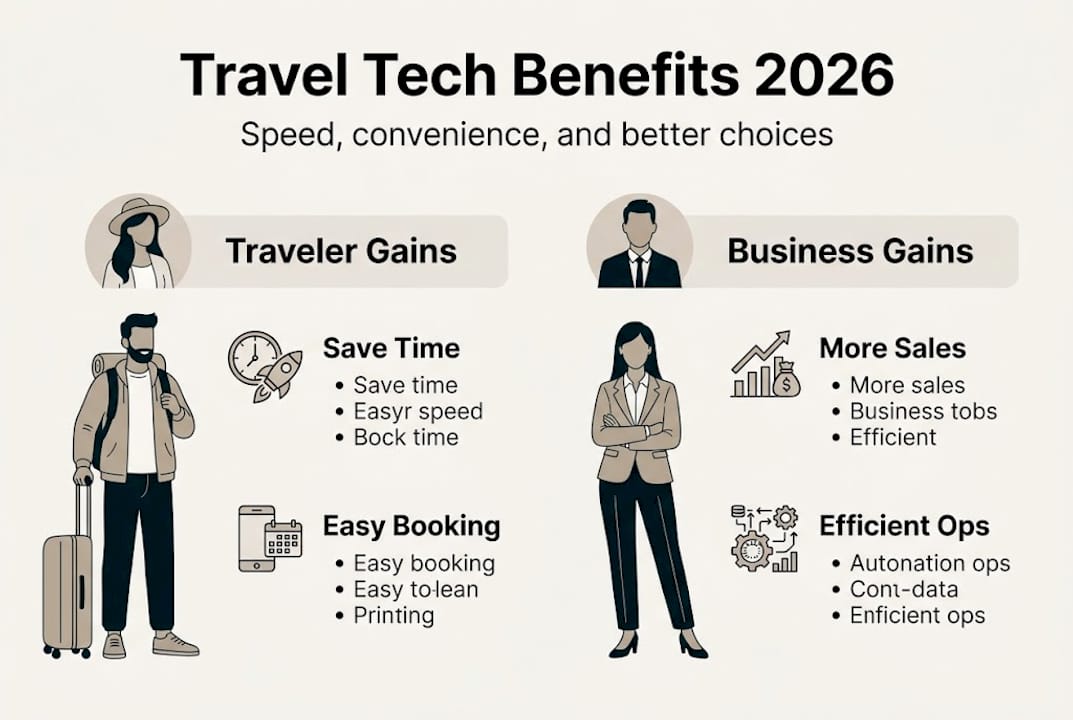
Travel tech now shapes trip planning, booking, and experiences through AI, mobile solutions, and real-time data.
Industry growth is driven by AI adoption, mobile bookings, dynamic pricing, and cloud automation.
Challenges include data privacy, AI accountability, overtourism, and balancing automation with human connection.
The destination still matters, but the tools you use to get there now shape every step of your journey. The travel tech market was valued at approximately USD 11 to 14 billion in 2024 and 2025, with projections reaching USD 21 to 25 billion by 2030 to 2035. That growth is powered by AI adoption and a surge in mobile bookings. For travelers today, technology is no longer a convenience. It is the backbone of how trips get planned, booked, and experienced. This guide breaks down what travel tech actually is, the key innovations driving it forward, the real benefits it delivers, and the challenges worth knowing before you rely on it completely.
Key Takeaways
Point
Details
Travel tech defined
Travel tech includes all the digital tools and systems that streamline travel planning, booking, and experiences.
AI’s role in travel
Artificial intelligence powers chatbots, personalizes trips, and is used by 72% of travel companies.
Mobile’s dominance
Mobile bookings make up over 80% of travel purchases, making convenience a primary feature.
Balancing benefits and risks
Data privacy and maintaining authentic human experiences remain ongoing challenges for travel tech.
Future trends focused on purpose
The smartest travel tech will enhance rather than distract from in-person connections and experiences.
Defining travel tech: What it is and why it matters
Travel tech is the collection of digital tools, platforms, and services that make trip planning, booking, and the travel experience itself faster, smarter, and more personalized. It covers everything from the app you use to search for flights to the algorithm deciding which hotel deal appears at the top of your results. It is not just about convenience. It is about how the entire travel industry now operates behind the scenes.
At its core, travel tech runs on API integrations with Global Distribution Systems, real-time inventory management, dynamic pricing algorithms, and cloud-native platforms. These mechanics allow airlines, hotels, car rental companies, and booking platforms to communicate instantly, update availability in real time, and adjust prices based on demand. When you see a flight price change within minutes of checking it, that is dynamic pricing at work.
Here is a quick look at the main components that make up the travel tech ecosystem:
Booking platforms: Websites and apps that aggregate flights, hotels, and activities
Dynamic pricing engines: Algorithms that shift prices based on demand, season, and user behavior
Global Distribution Systems (GDS): Networks connecting travel agents and platforms to supplier inventory
Mobile travel apps: Tools for itinerary management, boarding passes, and real-time alerts
AI personalization layers: Systems that learn your preferences and surface relevant recommendations
Travel tech component
Primary function
Traveler benefit
Booking platform
Search and compare options
Saves time and money
Dynamic pricing engine
Adjusts prices in real time
Find deals at the right moment
GDS network
Connects suppliers to agents
Broader inventory access
Mobile app
Manage trips on the go
Convenience and flexibility
AI personalization
Tailored recommendations
More relevant travel options
Pro Tip: Know the difference between travel tech and travel content. Travel tech is the infrastructure that powers how you travel. Travel content, like destination guides and inspiration blogs, is what motivates you to go. Both matter, but they serve very different purposes. Exploring trending travel concepts can spark ideas, while travel tech turns those ideas into booked trips.
Key innovations powering travel tech in 2026
With the fundamentals clear, the next step is understanding which specific technologies are reshaping the industry right now. The landscape has shifted dramatically, and a few core innovations are doing most of the heavy lifting.
Artificial intelligence sits at the center of nearly every major travel tech development. Chatbots handle customer service around the clock, predictive analytics help travelers find the best time to book, and personalization engines surface deals and destinations matched to individual preferences. 72% of travel companies now use AI-powered chatbots, a figure that reflects just how central AI has become to the industry’s daily operations. You can even explore what a fully capable AI travel assistant looks like in practice.
Mobile-first solutions have redefined what it means to manage a trip. Virtual boarding passes, e-tickets, real-time gate change alerts, and in-app itinerary management mean most travelers never need to print a single document. 81% of travelers now book via mobile, a number that confirms the smartphone as the primary travel planning device.
Cloud-native automation ties everything together. Real-time synchronization across booking systems means fewer errors, faster confirmations, and smoother cancellations or changes. The contrast with pre-digital travel management is stark:
Feature
Pre-digital travel
Digital travel tech
Booking method
Phone or in-person agent
Instant online or in-app
Price updates
Static, printed catalogs
Real-time dynamic pricing
Itinerary changes
Manual rebooking
Automated alerts and options
Customer support
Business hours only
24/7 AI chatbot assistance
Personalization
Generic packages
Data-driven recommendations
Here are the top innovations shaping travel tech right now:
Biometric check-in and digital identity verification
The best vacation planning apps already combine several of these innovations in one place, making it easier than ever to manage a complex trip from your phone.
“72% of travel companies now use AI chatbots, and 81% of travelers book via mobile, signaling that digital-first travel is no longer the future. It is the present.” — Technavio report
Benefits of travel tech for travelers and the industry
To see why these advances matter, let’s look at how travel tech impacts real-world experiences for travelers and companies alike.
For travelers, the most immediate benefit is time. What once required hours of phone calls and agent visits now takes minutes. Search engines compare thousands of options instantly. AI tools surface personalized recommendations based on past behavior, budget, and travel style. Mobile apps keep everything in one place, from boarding passes to hotel confirmations.
The financial benefits are real too. Dynamic pricing, when you understand how it works, can work in your favor. Booking at off-peak times, setting price alerts, and using comparison tools can generate meaningful savings. Learning about travel management savings shows just how significant those numbers can get over time.
Here is what travel tech delivers for travelers specifically:
Convenience: Book flights, hotels, and activities from one platform in minutes
Cost savings: Price alerts and comparison tools surface the best deals
Personalization: AI recommendations match options to your preferences and history
Safety: Real-time alerts for flight changes, weather disruptions, and travel advisories
Flexibility: Instant access to cancellation, rebooking, and itinerary changes
For businesses, the gains are equally significant. Higher conversion rates, more efficient operations, and dynamic pricing that maximizes revenue all flow from well-implemented travel tech. The market’s projected growth to USD 21 to 25 billion by 2030 to 2035 reflects how seriously the industry is investing in these tools.
For travelers who want to put all these benefits together into a practical plan, efficient trip planning is a great starting point.
Challenges and the future of travel tech
Yet, while the rewards of travel tech are clear, it is just as important to examine its challenges and what lies ahead.
The most pressing concern is data privacy. Every personalized recommendation, every saved preference, and every booking history creates a data trail. Compliance with regulations like GDPR is mandatory for companies operating in Europe, but enforcement varies and travelers often do not know how their data is being used. Legacy system integration challenges, data privacy compliance, liability in multi-agent AI failures, model drift in dynamic pricing, and network outage disruptions are all real risks in today’s travel tech environment.
AI itself introduces new complications. When pricing algorithms drift from their original parameters, they can produce unfair or unpredictable results. When multiple AI agents handle different parts of a booking and something goes wrong, accountability becomes murky. These are not hypothetical problems. They are active challenges the industry is working to address.
Perhaps the most human concern is the loss of personal connection. Experts advocate for what they call “purposeful tech,” using technology to enhance travel rather than replace the human moments that make it meaningful. Overtourism, driven partly by algorithmic recommendations funneling crowds to the same destinations, is a direct consequence of poorly designed travel tech.
Here are the top challenges and trends shaping travel tech through 2030:
Data privacy and GDPR compliance as personalization deepens
Legacy system integration across airlines, hotels, and third-party platforms
AI accountability in multi-agent booking failures
Overtourism management through smarter, more distributed recommendations
Balancing automation with human touchpoints in customer service
Pro Tip: When evaluating any travel tech tool, check its privacy policy before connecting your accounts. Look for platforms that are transparent about how they store and use your data. Seeking out authentic travel experiences also helps you sidestep the overtourism traps that algorithmic recommendations can create.
Why purposeful travel tech matters more than ever
Here is an uncomfortable truth the industry rarely admits: more technology does not automatically mean better travel. The platforms that flood you with notifications, push you toward the most-reviewed destinations, and optimize every moment of your trip for efficiency can actually drain the joy out of traveling.
The National Geographic perspective on purposeful tech resonates with us deeply. Technology should open doors, not script the entire journey. The best travel tech fades into the background. It handles the logistics so you can be fully present for the moments that matter.
What we believe the next evolution of travel tech must prioritize is restraint. Tools that help you discover less-visited places, connect with local culture, and travel more responsibly will create more value than another app that just optimizes your checkout speed. Keeping up with 2026 travel trends shows a clear shift toward meaningful, experience-first travel. The technology that supports that shift, rather than fighting it, is the technology worth investing in.
Ready to explore travel tech for your next journey?
If you are ready to put travel tech to work on your next adventure, here is how Around Travel can help.
Around Travel brings together the best of modern travel technology in one place, making it simple to search, compare, and book with confidence. Whether you need flights, hotels, tours, or car rentals with flexible policies and real-time availability, the platform is built to handle the logistics while you focus on the experience. Personalized recommendations, curated destination guides, and up-to-date travel information mean you always have what you need, when you need it. Travel tech works best when it is invisible. Around Travel is designed exactly that way.
Frequently asked questions
What is travel tech in simple terms?
Travel tech refers to digital tools and platforms that make trip planning, booking, and travel experiences easier, safer, and more personalized. It includes everything from API-driven booking systems to AI-powered recommendations and mobile itinerary management.
How big is the travel tech industry in 2026?
The travel tech market is worth approximately USD 11 to 14 billion and is projected to nearly double, reaching USD 21 to 25 billion by 2030 to 2035, driven by AI and mobile adoption.
How does AI impact travel technology?
AI powers chatbots, personalizes recommendations, and automates bookings, with 72% of travel companies already using AI chatbots to handle customer interactions around the clock.
What are common concerns with travel tech?
Data privacy, legacy system integration, and reduced human interaction are the top challenges. GDPR compliance and AI liability in multi-agent booking failures are particularly active concerns for the industry right now.
How can travelers benefit most from new travel tech trends?
Use mobile apps and AI-based tools for planning and booking. With 81% of travelers booking via mobile and 72% of businesses using AI chatbots, these tools are proven to save time and surface better, more personalized travel options.
An avid traveler and seasoned writer who has journeyed across more than 40 countries, sharing his unique experiences and insights with a growing audience of adventure seekers and travel enthusiasts. With a passion for discovering hidden gems and immersing himself in diverse cultures, Jonas's travel blog combines practical tips, stunning photography, and captivating storytelling. Whether he's navigating bustling city streets or exploring remote landscapes, Jonas offers readers an authentic glimpse into the world's most fascinating destinations, inspiring them to embark on their own unforgettable journeys.
Providing You With Access To The Top Travel Destinations. Book Now and Enjoy!
TESTIMONIALS
Travelers Reviews
Planning a trip used to be a stressful event, until I found Around
Travel. The website made everything so easy and convenient and really has made
travelling a relaxing experience. I highly recommend using them.
Sam Wistan Marketing Consultant, USA
I travel a lot for business and making reservations used to take up so
much time. Around Travel offers me quick access to all my booking needs.
Jonas DuPont Investment Advisor, London
I am a spur of the moment type of girl and I like to book trips at a
whim. Around Travel always has great deals and options for me to choose from.